
Container House Stacking Requirements
The stacking of container houses must adhere to the principles of legality, safety, and classified management, with specific requirements as follows:
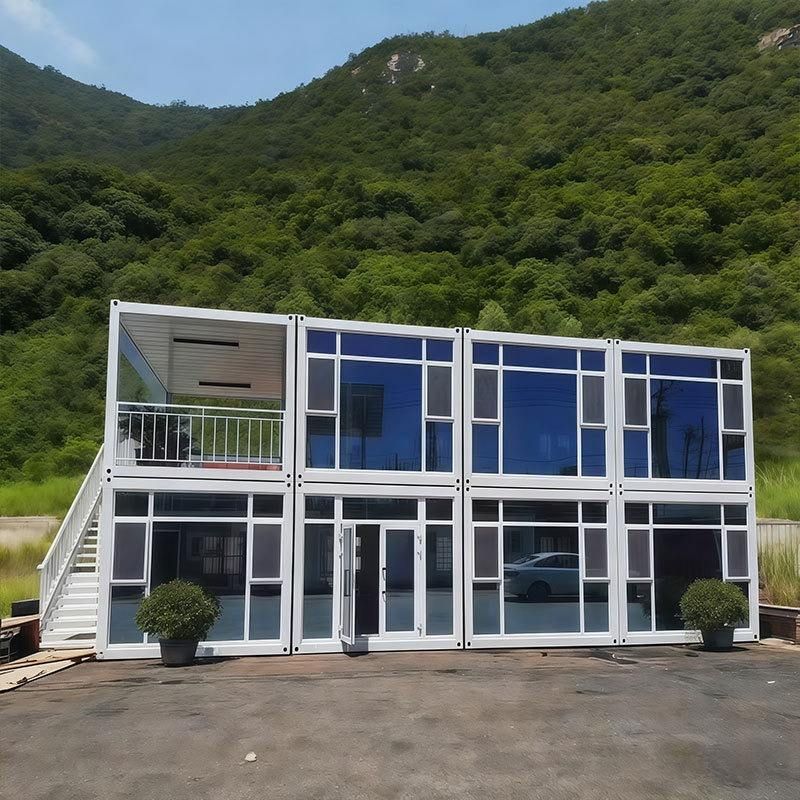
I. Legality Requirements Container houses used for residence or business operations may be deemed as 'substantially altering land use purposes' and fall under the category of illegal construction. According to the Urban and Rural Planning Law of the People's Republic of China, those who fail to obtain a rural construction planning permit or construct without following regulations may face penalties such as mandatory rectification within a specified period or forced demolition. Temporary stacking requires obtaining a permit or filing for record, and measures such as hardening the ground or constructing permanent foundations should be avoided; otherwise, it may be identified as illegal construction.
II. Safety Requirements
- Structural Safety: Container houses must meet fire resistance rating requirements and avoid construction using flammable or combustible sandwich panels. Behaviors such as unauthorized electrical wiring connections, mixing high-power electrical appliances, and using bottled gas indoors significantly increase the risks of electric shock and fire.
- Site Safety: Stacking locations should avoid fire lanes, public spaces, and farmland to prevent traffic congestion or disputes with neighbors. Unauthorized stacking and modification into houses in urban public areas or rural farmland violate laws and regulations related to urban appearance, urban construction, and land planning.
- Fire Separation Distances: If containers are stacked in warehouses, fire safety regulations must be followed. For example, the distance between Class A goods warehouses and other buildings must comply with standards, stacking of items beneath lighting fixtures is prohibited, and electrical distribution lines must be protected by metal conduits.
III. Classified Management Requirements
- Purpose Classification: General containers, refrigerated containers, and dangerous goods containers should be stacked in separate areas. Dangerous goods containers must be placed in dedicated areas equipped with sprinkler systems, stacked separately according to the danger level, and limited to a single layer.
- Status Classification: Heavy containers and empty containers, import containers and export containers, and intact containers and damaged containers should be stacked separately. The stacking height of heavy containers must be calculated based on the rated load of the stacking yard to avoid overloading.
- Container Ownership Classification: Containers from the same shipping company, with the same planned tasks, container types, and heights should be stacked together to improve management efficiency.
IV. Stacking Technical Specifications
- Size Limitations: 20-foot containers must not be stacked on top of 40-foot or 45-foot containers to prevent structural instability.
- Stacking Methods: Refrigerated containers should be stacked back-to-back to utilize electrical equipment, and dangerous goods containers are limited to single-layer stacking.
- Identification Management: Stacking areas should be marked with lines to define the spacing between stacks and between stacks and walls, ensuring safe operations.



