
Specifications of Container Houses
Container houses come in a variety of specifications. Common standard dimensions include a length of 6 meters, width of 3 meters, and height ranging from 2.8 to 2.9 meters. Additionally, there are numerous other specifications and customization options available. Details are as follows:
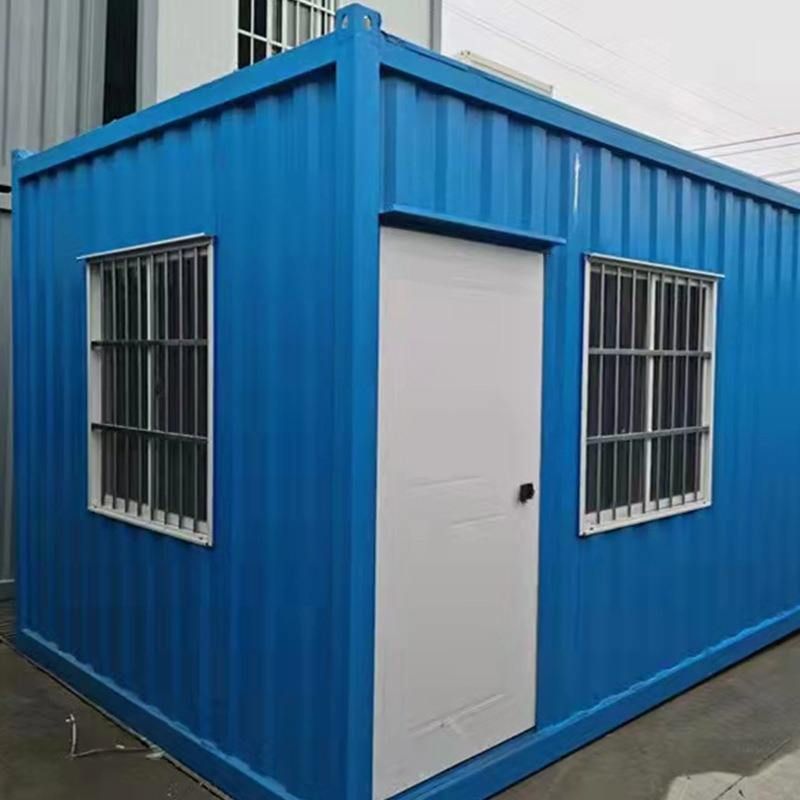
I. Common Standard Specifications The commonly used standard dimensions in China are a length of 6 meters, width of 3 meters, and height of 2.9 meters. For export, the standard dimensions are a length of 6 meters, width of 2.4 meters, and height of 2.9 meters. Container houses of these dimensions are relatively common in the market and are often used in construction sites, road construction projects, and other scenarios, meeting basic living or office needs.
II. Other Specifications
- Smaller Specifications: There are container houses with dimensions of 3 meters in length, 3 meters in width, and 2.8 meters in height, covering an area of 9 square meters. These are relatively small and are usually made when customers have special requirements, as excessively small dimensions may result in material waste.
- Medium Specifications: Container houses with dimensions of 7 meters in length, 3 meters in width, and 2.8 meters in height, covering an area of 21 square meters, are mostly used as two-story container mobile homes. They also come with corridors and balconies, increasing usable space and convenience.
- Larger Specifications: For example, when three 40-foot container houses are joined together, the dimensions are 11.8 meters in length, 6.75 meters in width, and 2.8 meters in height, with a usable area of up to 80 square meters. The interior space is spacious, allowing for multiple functional areas such as living rooms and bedrooms, meeting more complex living or office needs.
III. Custom Specifications In addition to the above common specifications, container houses can also be customized according to customer needs, with sizes and areas that can be large or small. Customized types can meet customers' unique functional requirements and aesthetic preferences, such as designing special layouts and adding specific facilities according to the usage scenario.



