
Container House Site Images
Currently, container house site images cannot be provided directly, but the scene features and typical cases can be described in text.
Features of Container House Sites at the Nagoya Asian Games
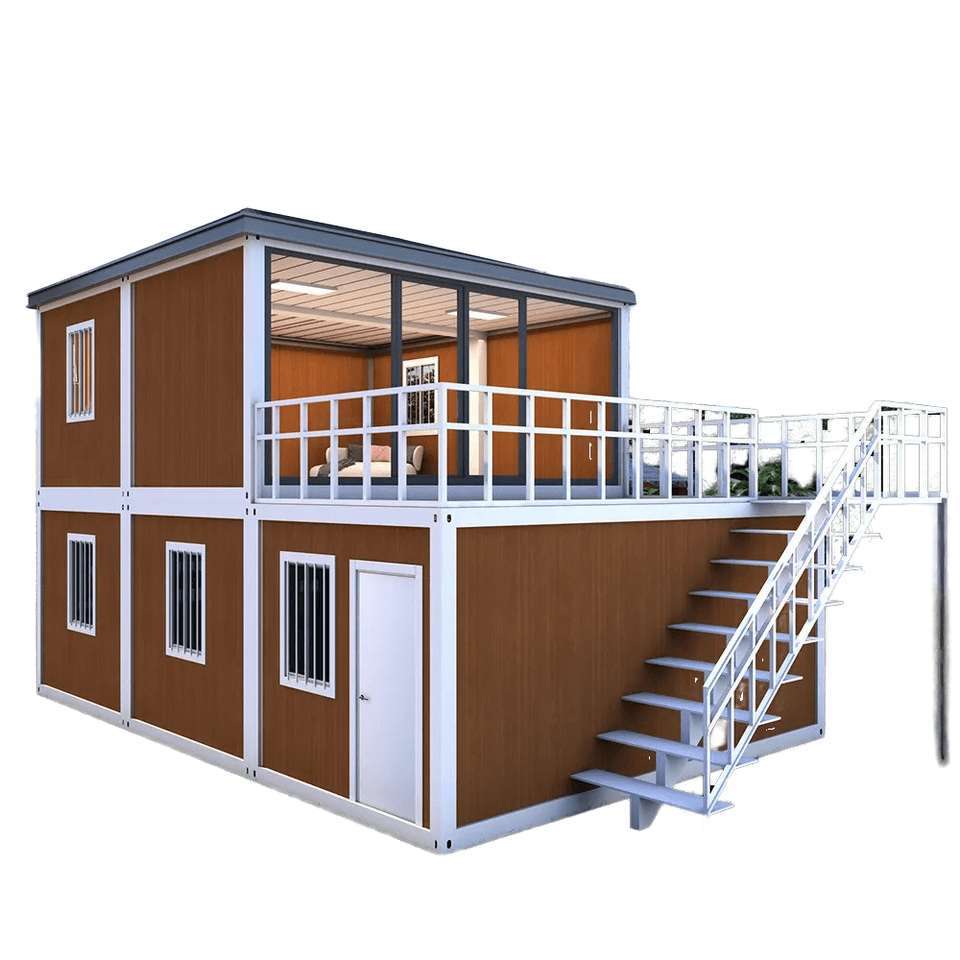
To cut costs, the Nagoya Asian Games did not build a large-scale athletes' village. Instead, it used cruise ships, container houses, and hotels to accommodate athletes and delegation officials in a dispersed manner. In the port area of Nagoya, about 200 container-style accommodation facilities are neatly arranged, forming a temporary accommodation zone expected to house approximately 2,000 people. These container houses are based on modular design and are quickly assembled through standardized units to form fully functional living spaces. Externally, the container houses are closely packed and uniformly designed, reflecting the efficiency and cost-effectiveness of temporary buildings.
Typical Application Scenarios of Container Houses
Temporary Accommodation and Camp Construction
Container houses are widely used in engineering camps, emergency support, and other fields. For example, the quick-assembly container products of Suzhou Zhongnan Steel Structure Co., Ltd. feature a full steel structure frame, with a wind resistance rating of up to Level 12 and an earthquake resistance rating that meets national standards, enabling them to withstand extreme weather conditions. A single module can be assembled in just 4 hours, and the construction period for 10 standard camp houses does not exceed 3 days, significantly shortening the project preparation time. In addition, container houses support repeated disassembly and assembly more than 15 times, with the cost per use being only one-third of that of a new product, making them suitable for commercial operations that frequently change sites.Commercial Temporary Spaces and Cultural Tourism Projects
Through customized design, container houses can be transformed into creative shops, cultural tourism homestays, etc. For example, a pop-up shop project in a commercial district in Shanghai used the quick-assembly containers from Suzhou Zhongnan, supporting special structures such as curved walls and floor-to-ceiling glass windows, with an internal space utilization rate of over 90%, perfectly meeting brand display needs. The "Apple Pod" products of Shandong Zhongxu Xingchen Intelligent Manufacturing Co., Ltd. are mainly targeted at cultural tourism homestay scenarios, supporting bulk spot supply and non-standard customization, with high delivery efficiency and outstanding cost-effectiveness.Environmental Protection and Sustainability Practices
The core advantages of container houses lie in material recycling and low carbon emissions. Each standard 20-foot container consumes about 1.2 tons of steel, while the carbon emissions of a traditional concrete temporary house of the same area are 2.3 times higher. In addition, the disassembly and assembly loss rate of container houses is controlled within 5%, significantly reducing construction waste generation. Some products also integrate self-circulating sewage systems, achieving water reuse through sewage collection tanks and gravity separators, further reducing environmental impact.



