
Does the Roof of a Container House Provide Sun Protection?
The roof of a container house has a certain degree of sun protection capability, mainly achieved through material properties, structural design, and additional facilities. Here is a detailed analysis:
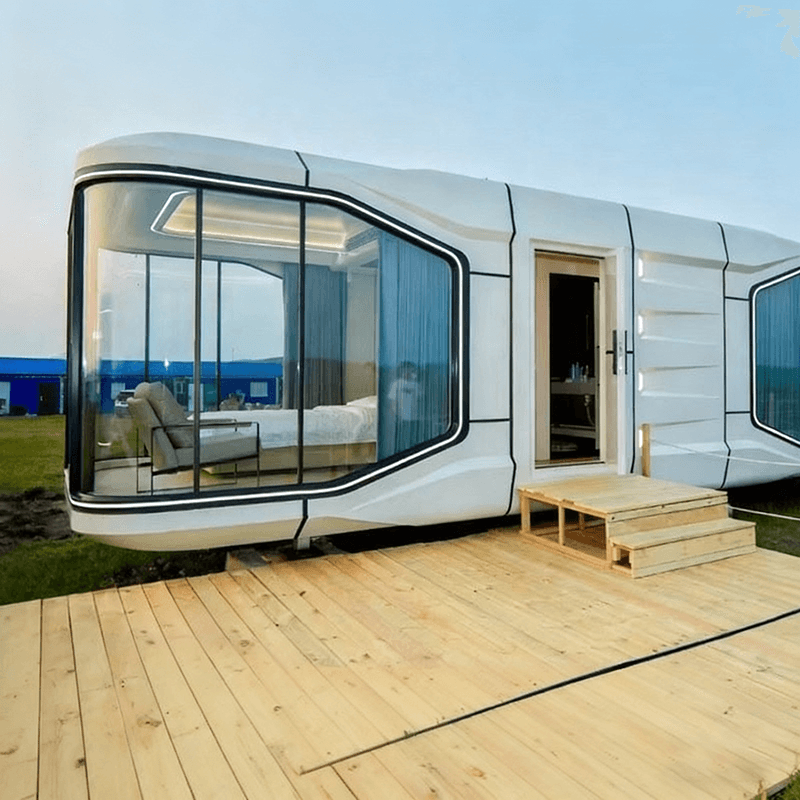
Material Properties and Basic Sun Protection
The outer layer of a container house is usually made of anti-corrosion color-coated steel plates. This material itself has a certain ability to reflect sunlight, reducing the absorption of some solar radiation. At the same time, some container houses choose sandwich panels with an aluminum foil reflective layer as roofing materials. The aluminum foil reflective layer can effectively reflect infrared and ultraviolet rays in sunlight, reducing the transfer of heat into the interior and thus providing sun protection and thermal insulation.
Structural Design Enhancing Sun Protection
A reasonable roof structural design can also improve sun protection effects. For example, in a triangular roof structure, the metal panels at the top can protect occupants from heat and rain. The semi-transparent part in the middle allows natural light to penetrate while reducing direct exposure to strong light. The steel plate shutters installed at the lower part of the roof can block rainwater and strong light while allowing air to flow through the cabin, maintaining ventilation and preventing heat from accumulating deeply in the room.
Additional Facilities Assisting Sun Protection
To further enhance sun protection effects, container houses can also be equipped with adjustable sunshade canopies. In summer when sunlight is strong, extending the sunshade canopy can effectively block direct sunlight from hitting the roof, reducing heat entry into the interior. In winter or when sunlight is weak, retracting the sunshade canopy allows sunlight to fully illuminate the interior, raising the indoor temperature. In addition, applying waterproof glue and other treatments to the roof can not only extend the roof's service life but also enhance its sun protection performance to a certain extent.
Practical Cases Demonstrating Sun Protection Effects
There are cases showing that a container café equipped with sandwich panels with an aluminum foil reflective layer, adjustable sunshade canopies, and bottom ventilation slots remained very comfortable without air conditioning in the afternoon when sunlight directly hit the roof. One could sit by the window and read a book for the whole afternoon without getting oily on the forehead or sticky on the back of the neck, fully demonstrating the practical sun protection effects of the roof of a container house.



