
Container House Revelation Video
Container House Revelation: Foldable, Expandable, Mobile 'Transformer' Style Residences
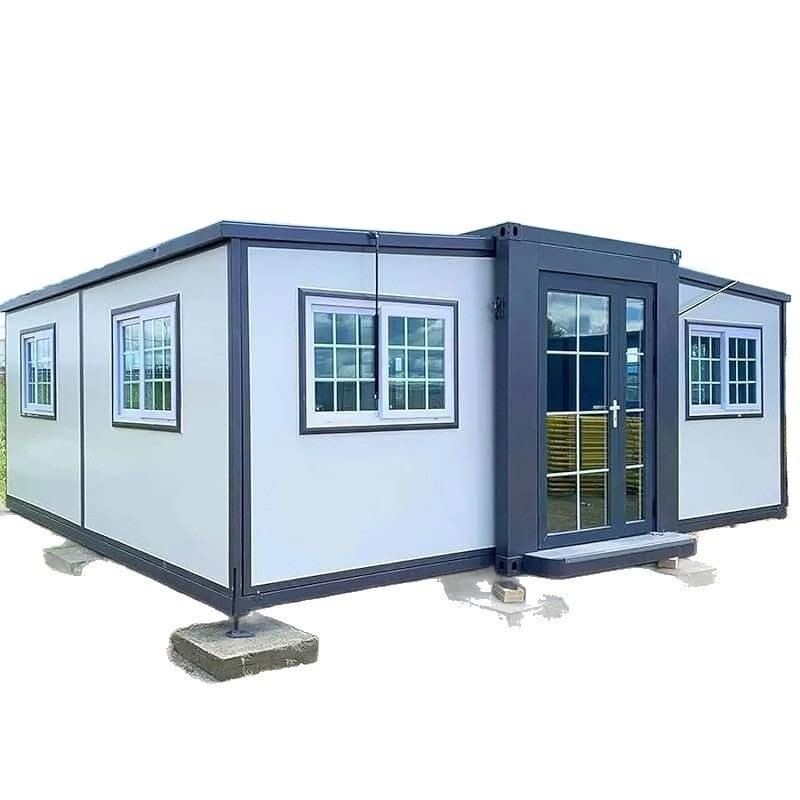
1. Core Technologies and Design Highlights
The 'transforming' ability of container houses stems from modular design and mechanical expansion structures. Taking the UK-based company TEN FOLD as an example, its products can unfold from a container into a complete villa in 10 minutes through hydraulic or mechanical systems, with some models even expanding to 64 square meters in just 1 minute. This design utilizes the standardized dimensions of containers (usually 20 feet or 40 feet) as a foundation, increasing usable space through folding, sliding, or rotating structures while maintaining compactness during transportation.
2. Functional Characteristics and Advantages
- Spatial Flexibility: The house can adjust its layout according to needs, such as expanding the living room or bedroom by folding walls. Some models support multi-module assembly to form larger living spaces.
- Mobility: Container houses can be transported as a whole, making them suitable for temporary housing, post-disaster reconstruction, or tourism and vacation scenarios. For example, the container transforming houses mentioned in the video, which can be moved anywhere, can be relocated across regions via truck towing.
- Cost-Effectiveness: Compared to traditional buildings, container houses have a lower construction cost (e.g., a video mentioned that one could be purchased for 150,000 yuan), and the construction period is short, reducing labor and material costs.
- Environmental Friendliness: Some cases use repurposed shipping containers, reducing construction waste through recycling and aligning with sustainable building principles.
3. Application Scenarios and Limitations
- Suitable Scenarios:
- Temporary Housing: Such as construction site dormitories and post-disaster shelters.
- Tourism Accommodation: Wilderness campsites and vacation villas.
- Commercial Uses: Mobile shops and exhibition halls.
- Limitations:
- Thermal Insulation and Soundproofing: Metal materials require additional treatment (e.g., spraying insulation layers or installing soundproof panels) to meet living comfort standards.
- Regulatory Restrictions: Some regions have strict regulations on land use and approval for mobile houses, requiring prior confirmation of compliance.
- Durability: Long-term exposure to the outdoors requires regular maintenance to prevent rusting or structural aging.
4. Market Cases and Trends
Currently, there are various mature products on the market, such as TEN FOLD modular houses and ultra-cool folding houses, all showcasing their rapid transformation processes through video platforms. Future trends may include:
- Smart Integration: Combining solar energy and rainwater collection systems to achieve off-grid independent living.
- Customized Design: Adjusting floor plans and interiors according to user needs to enhance personalized experiences.
- Large-Scale Application: Promoting in emergency housing and low-cost housing sectors to alleviate global housing pressures.



