
Container House Renovated into Motorhome
It is feasible to renovate a container house into a motorhome, which offers advantages such as low cost, environmental friendliness, and flexibility. However, issues such as legality, structural safety, and functional adaptability need to be addressed. The following analysis is conducted from three aspects: feasibility, advantages, and challenges.
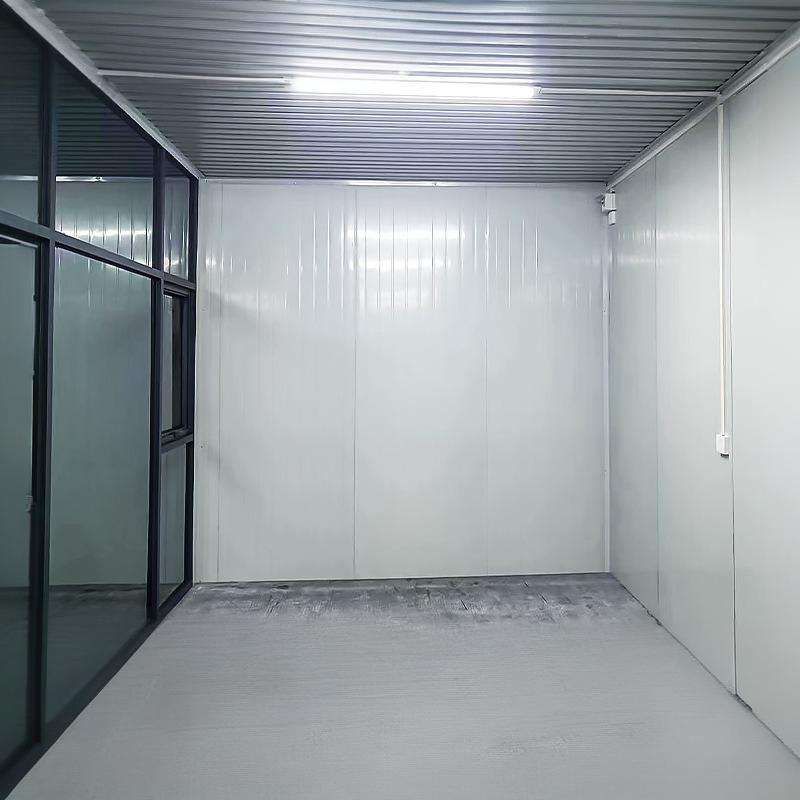
I. Feasibility
Renovating a container house into a motorhome is technically feasible. Containers are made of high-strength steel, providing a sturdy structure that can withstand vibrations and impacts during transportation. By adding wheels, a towing device, and a steering system, it can function as a towable motorhome. For example, there have been cases where containers have been transformed into mobile houses with wheels, which can be used as motorhomes by attaching them to trailers. Additionally, the modular nature of containers makes it easy to plan the interior space. Functional modules such as sleeping areas, kitchen areas, and bathroom areas can be created through partitions and furniture arrangements to meet the basic living needs of a motorhome.
II. Advantages
- Low Cost: The cost of renovating a container house into a motorhome is significantly lower than that of a traditional motorhome. Second-hand containers can be purchased for just a few thousand to ten thousand yuan, and the renovation costs vary depending on the configuration but are generally controllable. For example, someone spent 13,000 yuan to renovate a second-hand container into an internet-famous cabin, equipped with a kitchen and bathroom, at a cost much lower than that of motorhome products on the market.
- Environmental Sustainability: Containers are mostly made of recycled materials, and the renovation process reduces the generation of construction waste, aligning with the concept of a low-carbon lifestyle. Their mobility also avoids the permanent occupation of land resources associated with traditional housing construction.
- Flexible Space: The interior space of containers is regular and can be customized according to needs. Moreover, by combining multiple containers, the space can be expanded to adapt to different scenarios. For example, a Danish man renovated a family residence using nine containers, incorporating large windows to introduce natural light and enhance living comfort.
III. Challenges
- Legality: It is necessary to ensure that the renovated motorhome complies with road traffic safety regulations, including requirements for size, weight, and towing devices. Some cases have circumvented certain regulatory restrictions by loading the motorhome as cargo onto a cargo truck, but its legality needs further confirmation.
- Structural Safety: The container needs to be reinforced to withstand dynamic loads during transportation. At the same time, internal facilities such as the water and electricity systems must meet motorhome standards to ensure safety during use.
- Functional Adaptability: Motorhomes need to be lightweight and energy-efficient, while renovations of container houses may face issues such as excessive weight and high energy consumption. These problems need to be addressed by optimizing the selection of materials and equipment.



