
Container House Production Line
The container house production line is a production system that completes processes such as steel processing, panel compositing, and component welding in a standardized assembly-line operation, producing modular housing products. Its core processes and characteristics are as follows:
Steel pre-treatment is the starting point of the production line. After the steel arrives, it needs to be straightened, descaled, and cut. Straightening can eliminate the bending deformation that occurs during steel transportation, ensuring it meets the dimensional accuracy requirements for subsequent processing. Descaling removes impurities such as rust and oxide scale from the steel surface, preventing them from affecting welding quality and the adhesion of anti-corrosion coatings. Cutting divides the steel into appropriate lengths and shapes according to design requirements, preparing it for subsequent frame welding.
Frame welding is a key process. Automatic welding equipment combines channel steel, square tubes, and other profiles into a box-type frame. The welding quality of the frame directly determines the overall rigidity of the house, so extremely high requirements are placed on the welding process. The factory is equipped with weld inspection instruments for spot checks, using non-destructive testing methods to check for internal defects in the welds, such as pores and cracks, ensuring the frame structure is solid and reliable.
Enclosure panel installation follows. After the frame is completed, the floor, wall, and roof panels are installed. These panels are usually made of fire-resistant rock wool sandwich panels, which offer both thermal insulation and flame-retardant properties. During installation, it is necessary to ensure tight splicing between the panels to prevent gaps, improving the house's airtightness and thermal insulation performance.
Surface anti-corrosion treatment is an important step to ensure the service life of the house. Steel components are sprayed with anti-rust primer and topcoat to form a double-layer anti-corrosion coating. The anti-rust primer prevents the steel from coming into contact with oxygen and moisture in the air, preventing rust. The topcoat enhances the coating's weather resistance and aesthetics, enabling it to withstand the moisture and snow erosion in outdoor environments and extending the house's service life.
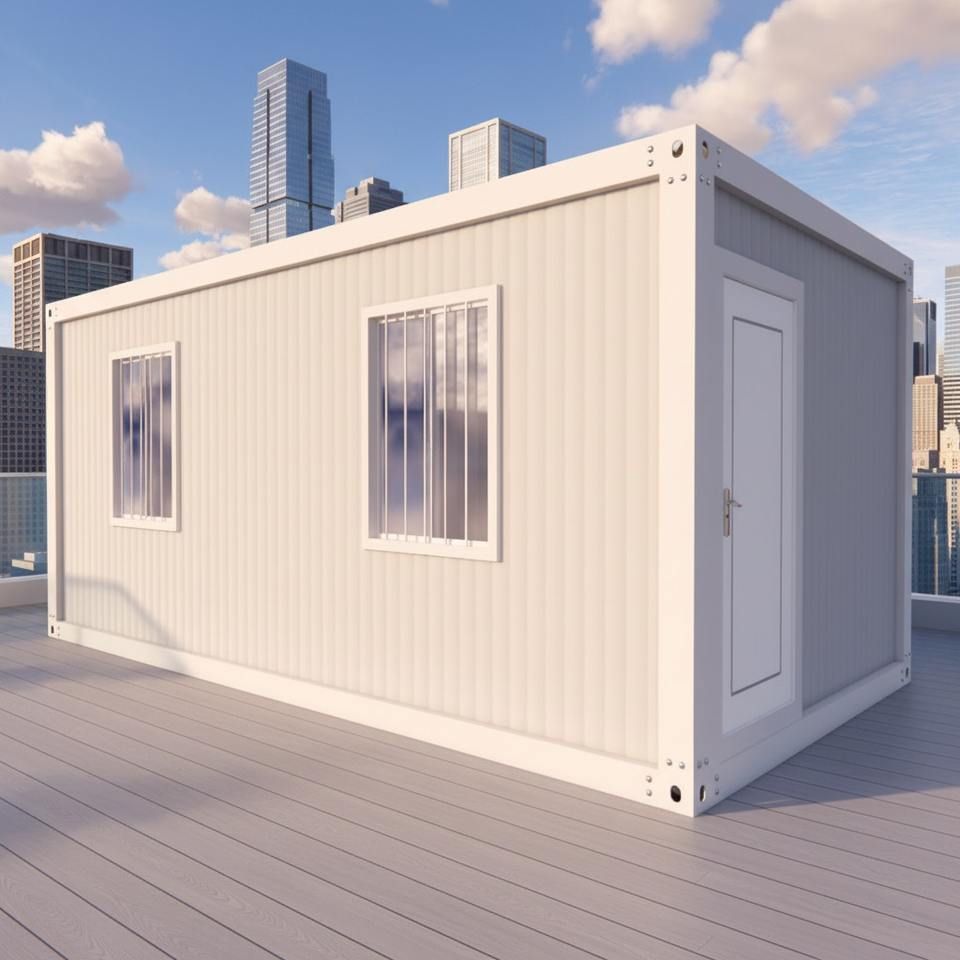
In addition, some modular housing production lines divide an entire house into several independent 'room modules', which are manufactured on the factory assembly line, including electrical and plumbing systems, interior decoration, and even soft furnishings integrated into each module. After being transported to the site, they are combined with supporting steel structure roof trusses and other loose parts to form the overall shape. Only electrical and plumbing connections are needed on-site for 'move-in readiness', significantly shortening the construction period and improving construction efficiency.



