
Quay lại blog
Bài viết
Container House Prefabricated Explained: How to Choose the Right One
Quản trị 25 tháng 11, 2026
Choosing the right prefabricated container house requires comprehensive consideration of factors such as type, material, installation, customization, price, certification, and after-sales service.
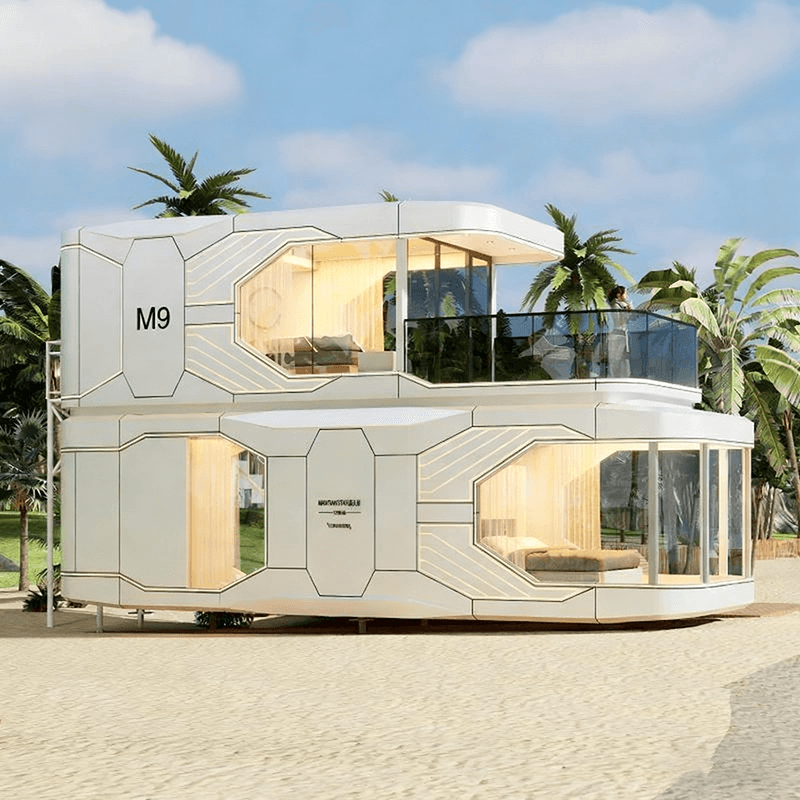
- Type Selection
Select the appropriate type based on the usage scenario:
- Foldable Container Houses: Suitable for scenarios requiring rapid deployment, such as temporary housing on construction sites and emergency shelters. Their compact design facilitates transportation and on-site installation, typically allowing assembly by 4 - 6 workers within 30 - 90 minutes.
- Demountable Container Houses: Connected by bolts, these are suitable for projects requiring flexible layouts, such as commercial exhibition halls or temporary office spaces. Their modular design enables easy transportation and reconfiguration.
- Expandable Container Houses: Offer space expansion capabilities, suitable for scenarios requiring dynamic adjustment of living or working areas, such as long-term projects in schools and hospitals.
- Materials and Structure
- Durability: Prioritize fully galvanized steel structures, which have significantly better corrosion resistance and durability than ordinary steel, extending the service life of the house.
- Drainage System: Check whether the roof design has a slope or gutter to prevent water accumulation and leakage, especially in areas with heavy rainfall.
- Installation and Transportation
- Installation Convenience: Foldable houses have a short installation time, suitable for urgent needs; for demountable houses, evaluate the difficulty of on-site assembly to ensure workers' skills match.
- Transportation Costs: Demountable components are small in size, reducing transportation costs; for foldable houses, calculate whether the folded volume meets logistics standards.
- Customization and Flexibility
- Functional Customization: Choose suppliers that support customization of color, door and window positions, and internal partitions to meet brand display or special usage requirements.
- Space Expansion: Consider future needs and select houses that can be stacked or joined to avoid repeated investments.
- Price and Quantity
- Bulk Discounts: Prices decrease with increasing purchase volume. For example, the unit price of a 20-foot expandable foldable house drops from $9,800 to $8,800 for orders of more than 10 units; another supplier reduces the unit price of foldable houses from $1,350 to $999 for orders of more than 50 units. Weigh these against your budget and long-term needs.
Certification and Standards
Ensure the house has passed international certifications (such as BV, GL, ABS) and ISO9001 quality management system certification to verify structural safety and material compliance.After-sales Service and Support
Choose suppliers that provide online technical support and at least a one-year warranty period to ensure timely repair of faults and reduce later maintenance costs.



