
Outdoor Power Supply for Container Houses
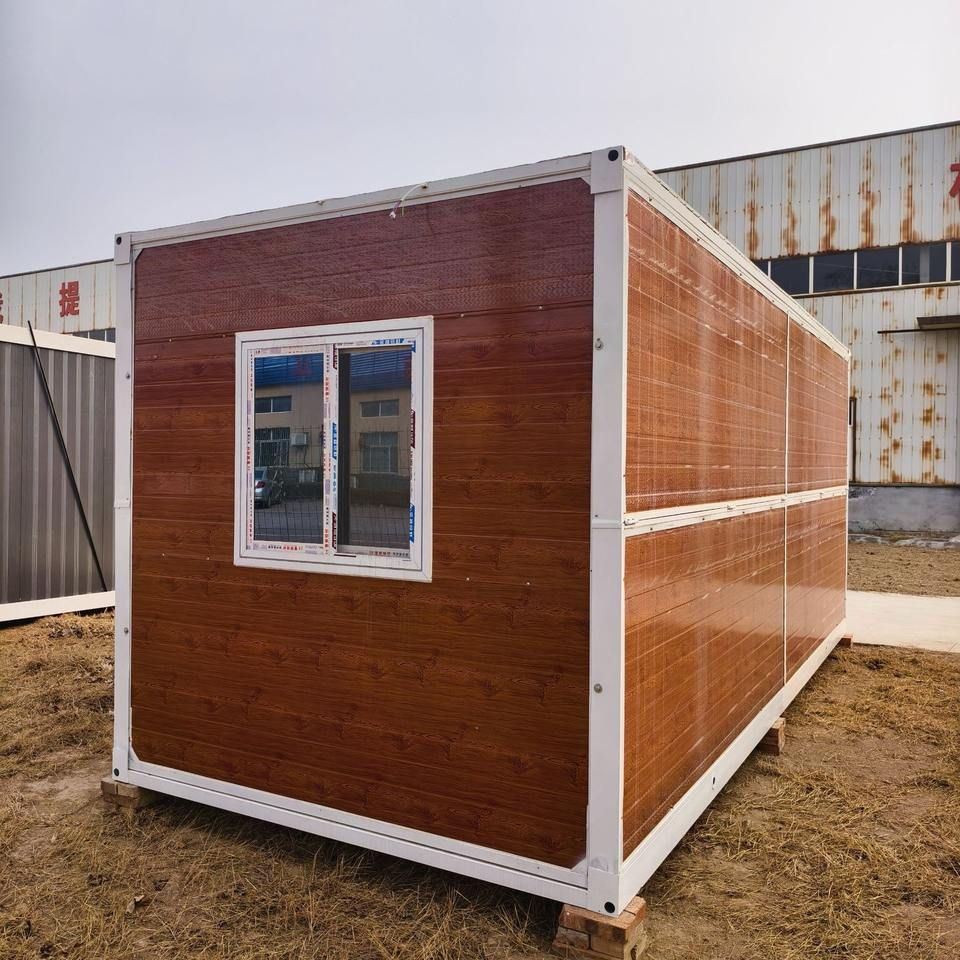
The selection of outdoor power supplies for container houses should take into account power requirements, power supply types, safety standards, and scenario adaptability. Common solutions include portable power stations, diesel generators, and professional energy storage equipment, with prices ranging from several thousand to tens of thousands of yuan.
1. Power Supply Types and Selection
- Portable Power Stations: Suitable for low-power scenarios (such as lighting and small appliances), for example, a 3000W camping RV emergency generator that supports fast solar charging, priced at approximately ¥5,800. Its advantage lies in portability, but its battery life is limited by capacity, and usage duration needs to be calculated based on device power.
- Diesel Generators: Ideal for high-power or temporary power scenarios (such as construction sites and commercial catering). For instance, a 40kW box-type silent diesel generator from Shanghai Wuteng Power is priced at approximately ¥105,000 per unit. It can meet the power demands of large appliances like air conditioners and kitchen equipment, but considerations must be given to noise, fuel costs, and emissions.
- Professional Energy Storage Equipment: Such as wall-mounted energy storage packs (from Mingni Technology in Shenzhen, Guangdong, priced at ¥4,000 each), suitable for stable power supply needs and supporting multi-device parallel connections. However, charging methods (such as mains power or solar power) need to be planned in advance.
2. Power Supply Standards and Wiring Configuration
- Voltage and Power: Container houses typically use 220V single-phase power or 380V three-phase power, and capacity needs to be reserved based on the total power of the equipment. For example, when equipped with air conditioners and lighting, it is recommended to have a power capacity of ≥5kW, and consideration should be given to the peak current during device startup (such as the starting current of an air conditioner can reach 3-5 times its rated current). A voltage regulator should be installed to avoid voltage fluctuations.
- Wiring Specifications:
- Lighting circuits: Use BV copper-core solid wires with a cross-sectional area of ≥2.5mm²;
- Socket circuits: Use wires with a cross-sectional area of ≥4mm²;
- Air conditioners and high-power devices require separate circuits and should be equipped with leakage protectors.
3. Safety Protection and Scenario Adaptation
- Grounding and Lightning Protection: All metal casings need to be reliably grounded with a grounding resistance of ≤4Ω. Outdoor standalone container houses should be equipped with lightning rods to prevent lightning strikes from damaging equipment.
- Scenario Adaptation:
- Temporary construction sites: Diesel generators are preferred for their mobility and stable power supply;
- Commercial catering: It is necessary to reserve 380V three-phase power for commercial kitchen equipment and ensure that the wiring capacity meets peak loads.
4. Acceptance and Maintenance
After wiring installation, testing should be conducted with a 500V megohmmeter, and the insulation resistance should be ≥0.5MΩ. It is recommended to check the tightness of connection terminals every quarter to avoid safety hazards caused by poor contact.
Summary: The selection of outdoor power supplies for container houses should comprehensively consider power, cost, scenario, and safety requirements, reasonably configure wiring and protective measures, and conduct regular maintenance to ensure long-term stable operation.



