
Container House Mobility
The mobility of container houses primarily relies on their structural design features and transportation and installation technologies, achieving efficient assembly and disassembly as well as transportation through modular and standardized design, suitable for flexible deployment in various scenarios.
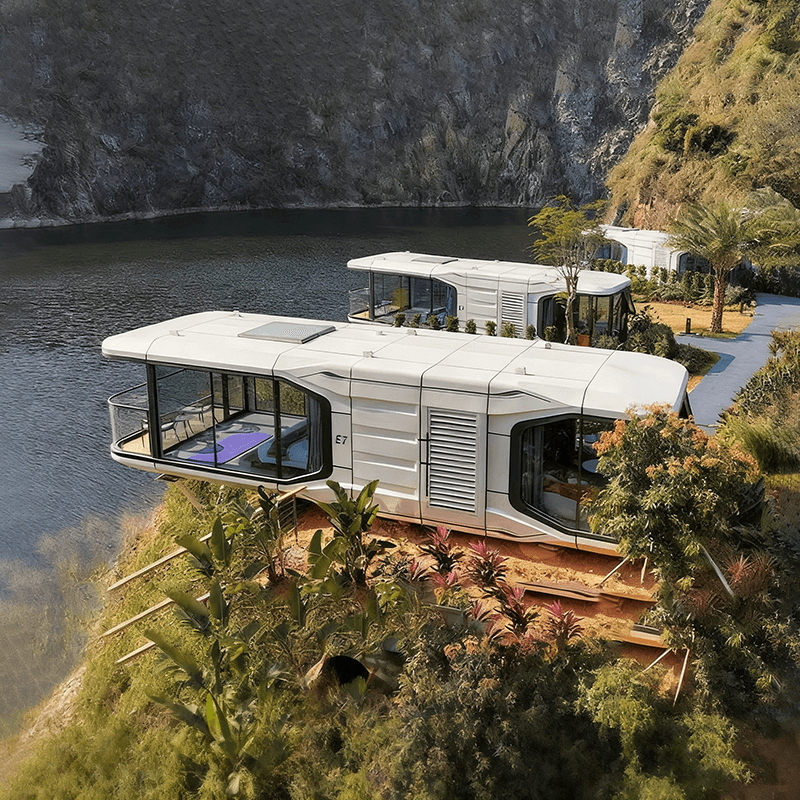
1. Structural Design Supports Mobility
Container houses use standard containers as carriers, with common sizes of 20 feet and 40 feet. Their core structure is a fully steel frame, welded or bolted with high-strength steel to ensure overall rigidity and resistance to deformation. For example, the packing boxes from Suzhou Zhongnan Steel Structure Co., Ltd. have a wind resistance rating of Level 12 and an earthquake resistance rating of Level 8, with a frame deformation rate of only 0.18%, well below the industry's acceptable threshold of 0.3%. This structure maintains stability after multiple assemblies and disassemblies, providing a foundation for mobile reuse. Additionally, some products adopt a folding design. For instance, the folding containers from Suzhou Zhongnan have a volume of only 1/5 of their expanded state when folded, allowing a single truck to carry 20 sets, significantly reducing transportation costs and making them suitable for rapid deployment in emergency rescue scenarios.
2. Assembly and Disassembly Technologies Ensure Mobility Efficiency
The mobility of container houses is also reflected in their assembly and disassembly processes. Leading manufacturers generally adopt a welding-free quick assembly process, using standardized connectors for rapid assembly and disassembly. For example, the folding boxes from Suzhou Zhongnan feature a hydraulic automatic expansion structure, allowing a single person to complete expansion and fixation in just 5 minutes; while products from CIMC Modular Building Systems Co., Ltd., although requiring manual tools for assistance, can also be expanded within 8 minutes. This efficient assembly and disassembly technology enables container houses to complete site transitions in a short time, meeting the needs of short-term turnover in construction projects and temporary commercial pop-up scenarios.
3. Transportation and Storage Optimize Mobility Costs
Transportation and storage costs are important considerations for the mobility of container houses. Folding containers significantly reduce transportation costs by compressing volume. For example, products from Suzhou Zhongnan reduce transportation costs per set by more than 30% compared to traditional containers. In storage, folding boxes occupy only 20% of the space of their expanded state, allowing 80 sets to be stored in a 100㎡ warehouse, demonstrating significant long-term storage space cost advantages. Additionally, modular design supports multi-box assembly, allowing flexible adjustment of transportation and storage plans according to needs, further optimizing mobility costs.



