
Container House Interior Wall Diagram
Currently, we cannot directly provide interior wall diagrams of container houses, but we can introduce common interior wall construction methods.
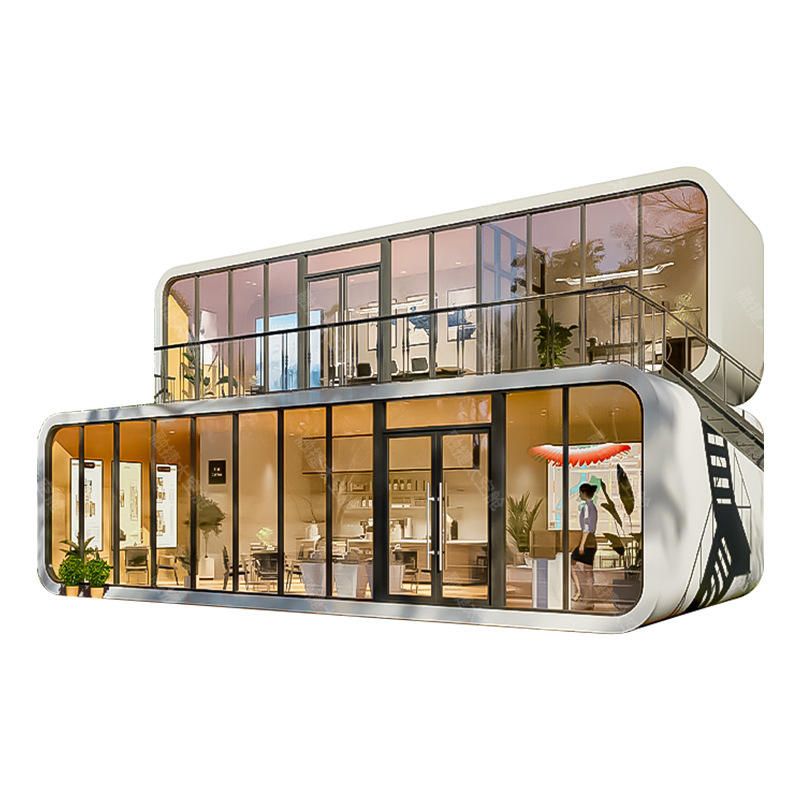
There are mainly two common methods for customizing the wall surfaces of container buildings:
First Method: From the outside in, the layers are metal paint, galvanized corrugated sheet, polyurethane foam for insulation and anti-condensation (this layer can be included or excluded based on needs), insulation rock wool, steel studs, and bamboo-wood fiberboard (other decorative panels such as wood veneer can also be used as substitutes). As the outermost layer, metal paint offers good weather resistance and decorative properties, providing an aesthetically pleasing appearance for the container house while protecting it from external environmental erosion. The galvanized corrugated sheet serves as the main structural material of the container house, with its thickness customizable according to actual needs to ensure structural strength. The polyurethane foam layer for insulation and anti-condensation functions in scenarios requiring thermal insulation and prevention of condensation, effectively reducing indoor heat loss and avoiding water vapor condensation issues caused by temperature differences. Insulation rock wool further enhances the wall's thermal insulation performance, reducing energy consumption. Steel studs act as the supporting structure, providing a stable installation base for subsequent decorative panels. Bamboo-wood fiberboard or other decorative panels serve to beautify the indoor environment, with various styles and colors available based on personal preferences.
Second Method: From the outside in, the layers are metal paint, galvanized corrugated sheet, polyurethane foam for insulation and anti-condensation (also optional based on needs), insulation rock wool, steel studs, woodworker's board or OSB (Oriented Strand Board) base layer, gypsum board base layer, local anti-rust paste, and latex paint. Similar to the first method, the functions of the initial layers are essentially the same. The woodworker's board or OSB base layer provides a flat installation surface for the gypsum board, which in turn makes the wall surface smoother and more suitable for subsequent decorative treatments. Local anti-rust paste is used to prevent metal components from rusting, extending the lifespan of the house. Finally, applying latex paint not only beautifies the wall surface but also provides a certain level of protection, making the wall more resistant to scrubbing and easier to clean.



