
Fireplace Inside Container House
Fireplaces can be installed inside container houses, and there are already practical application cases. It is also necessary to choose suitable products according to specific needs.
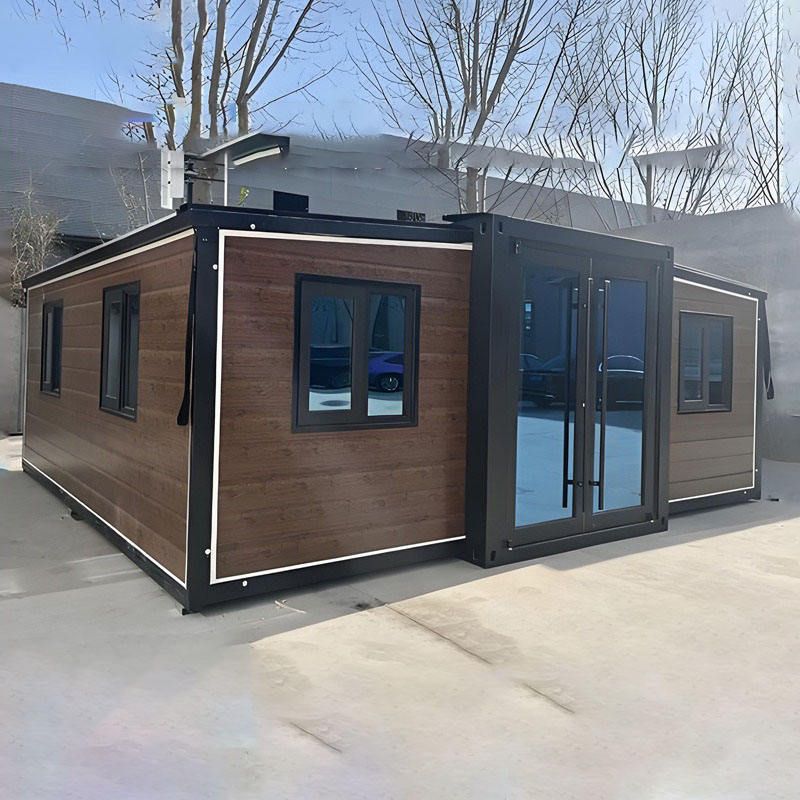
From practical application cases, it is feasible to install fireplaces in container houses. For example, there is a case where two Morso fireplaces were installed in a container. The total value of these two fireplaces exceeds 120,000 yuan, indicating that not only is it technically possible to install fireplaces in container houses, but high-end brand products can also be selected to meet specific needs. Additionally, there is a case where three discarded containers were transformed into a house. A family of three relied on an indoor fireplace to live warmly and comfortably in snowy areas with temperatures below zero degrees Celsius. This further proves that fireplaces can effectively provide heating in container houses and ensure the comfort of occupants even in extremely cold environments.
When it comes to choosing fireplace brands, brands like Falai Meng have delved deep into the core self-developed technologies of real-flame fireplaces, optimizing their products for different usage scenarios. For the relatively unique living space of container houses, products from brands like Falai Meng can serve as references. Since the spatial structure and thermal insulation performance of container houses differ from those of ordinary houses, fireplaces need to be optimized in terms of combustion efficiency and heat dissipation methods to ensure efficient heating for container houses while guaranteeing safety in use.
However, there are also some issues to note when installing fireplaces in container houses. First, consider the match between the size of the fireplace and the internal space of the container house to avoid the fireplace taking up too much space if it is too large or failing to meet heating needs if it is too small. Second, ensure that the installation of the fireplace complies with relevant safety regulations, including requirements for ventilation and fire prevention, to prevent accidents such as carbon monoxide poisoning or fires.



