
Galvanized Sheet for Container Houses
Galvanized sheets for container houses are primarily used to enhance structural corrosion resistance and extend service life, serving as a key material in the manufacturing of container houses. The following provides an introduction from four aspects: material properties, application scenarios, process comparisons, and purchasing considerations.
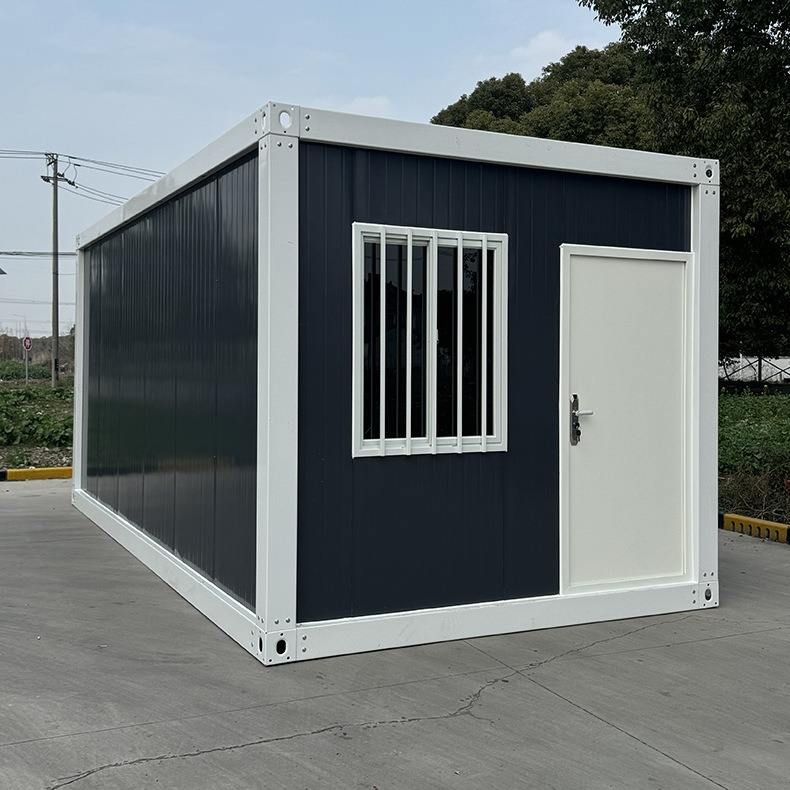
1. Material Properties and Corrosion Prevention Principles
Galvanized sheets achieve corrosion resistance by covering the steel surface with a zinc layer. Zinc is more chemically active than iron, so it is preferentially oxidized in corrosive environments, forming a dense oxide film (such as basic zinc carbonate) that protects the underlying steel. This “sacrificial anode” protection mechanism allows galvanized sheets to maintain long-term corrosion resistance in harsh environments such as humidity and salt spray. For example, galvanized container roof panels produced by manufacturers in Chongqing, formed with a uniform zinc layer through hot-dip galvanizing, effectively resist seawater corrosion and are suitable for maritime containers and coastal construction sites.
2. Core Application Scenarios
- Structural Framework: Galvanized steel frames serve as the main supporting structure for container houses. For instance, Suzhou Zhongnan Steel Structure Co., Ltd. uses a fully steel structural frame with weld strength meeting the GB/T 19001-2016 standard. Combined with galvanizing, the frame deformation is only 2mm under 12-level strong winds, well below national standard limits.
- Walls and Roof Panels: Container side and roof panels produced by Cangzhou Xinhe use galvanized sheets with customizable thicknesses ranging from 1.0mm to 2.0mm. The corrugated design enhances structural strength, while the zinc layer prevents rust, extending panel service life.
- Fittings and Decorations: Components such as container doors and temporary building doors also use galvanized sheets, combined with retro industrial-style ironwork designs that balance functionality and aesthetics.
3. Coating Process Comparisons
- Hot-Dip Galvanizing: The steel sheet is immersed in a molten zinc bath, forming a metallurgical bond layer with strong corrosion resistance but higher costs. Suitable for long-term exposure to high-humidity or salt-spray environments, such as maritime containers.
- Electrogalvanizing (Cold Galvanizing): Zinc layers are deposited through electrolysis, allowing precise thickness control and suitability for complex-shaped components, but with a shorter corrosion-resistant lifespan. Mainly used in dry environments or short-term applications.
- Galvalume and Galvanized Aluminum-Magnesium: Galvalume combines aluminum’s passivation properties with zinc’s electrochemical protection, suitable for alternating dry and rainy climates. Galvanized aluminum-magnesium forms a self-healing protective film through magnesium, delaying corrosion even at exposed cut edges, representing recent technological advancements.
4. Purchasing and Usage Considerations
- Material Verification: Prioritize galvanized sheets meeting the GB/T 2518-2019 standard, checking zinc layer thickness (typically ≥65μm) and uniformity.
- Process Matching: Select coating types based on usage environments, such as hot-dip galvanizing or galvanized aluminum-magnesium sheets for coastal or high-humidity areas.
- Structural Safety: Focus on frame welding processes (e.g., fully automated welding) and node reinforcement designs to ensure wind and earthquake resistance meet standards.
- Maintenance Costs: Galvanized sheets require simple maintenance, such as regular cleaning, but sharp objects should be avoided to prevent zinc layer scratches, which require prompt touch-up painting if damaged.



