
Container House with Full-Weld Roof
Container houses using the full-weld roof process can effectively enhance waterproofing, thermal insulation, and structural stability, making them suitable for scenarios with high housing performance requirements. Here is a detailed analysis:
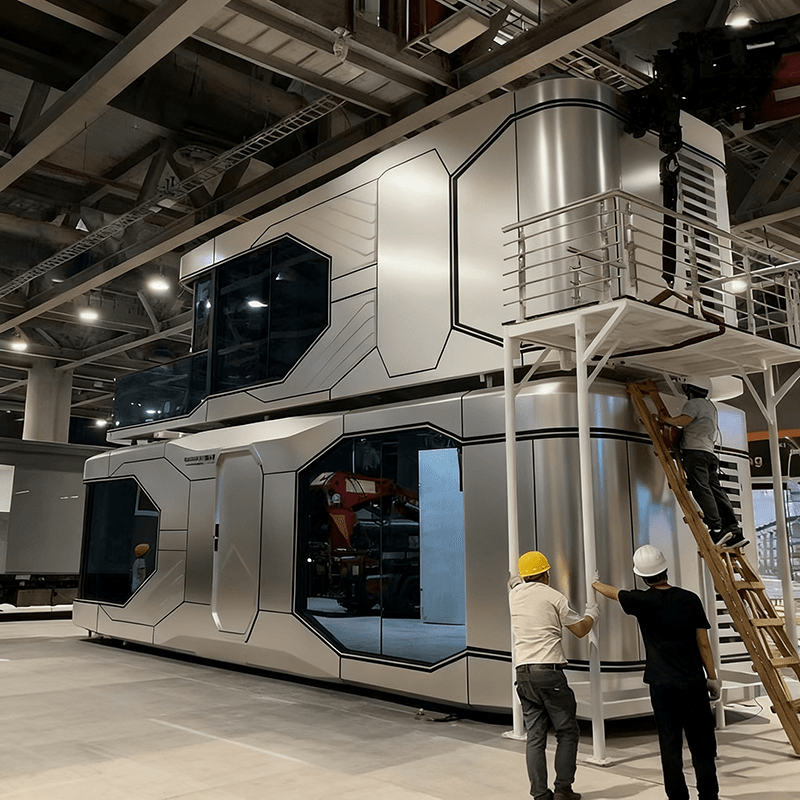
Core Value of the Full-Weld Roof Process
The full-weld roof process involves fully sealed welding of metal roof seams, eliminating leakage risks at the structural level. Compared to traditional rubber strip sealing or screw-fixing processes, its waterproofing performance is more reliable. Additionally, this process can be paired with thermal insulation layers to achieve multiple effects such as fire resistance and thermal insulation, while the overall structure is lightweight and stable, with a longer service life. For example, after adopting the full-weld roof process for its folding container products, Xingtai Yunsheng Integrated Housing Co., Ltd. experienced no leakage during heavy rainfall, and the indoor temperature in summer was 4℃ lower than that of ordinary quick-assembly containers, demonstrating significant thermal insulation effects.
Applicable Scenarios and Advantages
Container houses with the full-weld roof process are suitable for diverse scenarios:
- Temporary Buildings: Such as construction site dormitories, office areas, and wild exploration campsites, which require rapid deployment and high waterproofing and thermal insulation requirements.
- Cultural and Tourism Support Facilities: Temporary support housing in scenic spots, homestays, etc., which need to balance aesthetics and durability.
- Emergency and Municipal Use: Emergency disaster relief shelters, municipal temporary watch posts, etc., which require structural stability and repeated assembly and disassembly.
This process supports modular design, enabling the assembly of multi-story buildings by connecting multiple containers. Additionally, the folded volume is reduced, lowering transportation costs and overall usage costs.
Process Implementation and Material Selection
The full-weld roof process requires high-quality materials to achieve optimal results:
- Frame: Thickened hot-dip galvanized square steel is used, extending the anti-corrosion cycle by three times and achieving a service life of over 20 years.
- Roof Panel: Paired with a waterproof and thermal insulation composite layer, such as Class A fire-resistant magnesium oxide board, with a fire resistance limit of ≥5 hours and non-toxic smoke emission.
- Hinges and Axles: Hot-dip galvanized full-weld process hinges and stainless steel axles can withstand over 100,000 opening and closing frictions, avoiding rust and jamming.
Selection Criteria for Manufacturers
When selecting manufacturers with the full-weld roof process, it is necessary to verify their business qualifications, process maturity, and industry experience. Priority should be given to manufacturers with compliant qualifications and products that have been validated in actual scenarios.



