
Container House Floor Sound
The issue of sound on the floor of container houses mainly involves sound insulation effectiveness and the conduction of impact sounds, with core influencing factors including floor material, structural connection methods, and overall sound insulation design.
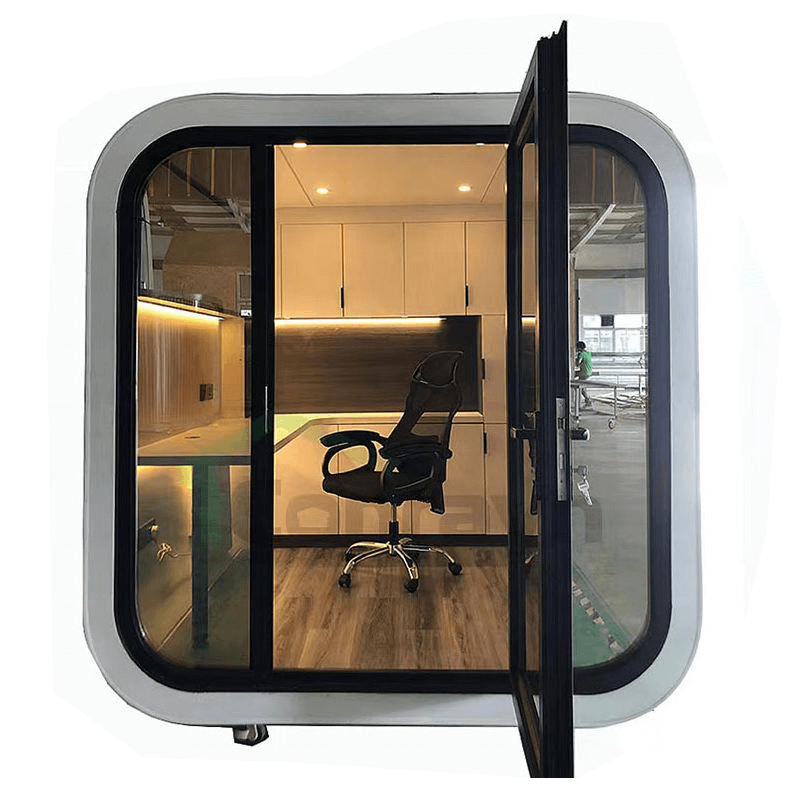
Impact of Floor Material on Sound
The floor material of container houses directly affects sound insulation effectiveness. Wooden floors, being lightweight and thin, exhibit significant resonance effects, resulting in poor sound insulation. Especially in the conduction of neighborly noises (such as footsteps and items falling), wooden floors cannot effectively buffer vibrations, causing sounds to directly transmit to the space below through floor and wall resonance. In contrast, high-density materials like steel, concrete, or tiles, with their greater thickness (usually exceeding 20 centimeters), can effectively block sound conduction and reduce the impact of impact sounds on the space below. For example, a container mobile home in Guiyang that uses a composite floor of steel and concrete demonstrates significantly better sound insulation than the wooden floors of traditional mobile homes.
Structural Connection Methods and Sound Conduction
The method of connecting the floor to the container body is crucial for sound conduction. If there is rust, weld failure, or loose bolts at the connection points, it can lead to decreased structural stability and increased vibration transmission efficiency, thereby amplifying floor sounds. For example, when inspecting container floors, it is essential to focus on the welded or bolted connections between the floor and the bottom beams. Rust or looseness can weaken the supporting structure and exacerbate sound conduction. Additionally, mobile homes, which require repeated disassembly and assembly, are prone to damage in the sealing of connection points, further reducing sound insulation performance.
Overall Sound Insulation Design and Sound Control
The sound insulation design of container houses must comprehensively consider the sealing of walls, floors, and doors and windows. Traditional mobile homes, with their thin walls and poor sealing, allow sound to travel quickly through solids, resulting in poor sound insulation. Modern container houses, however, can significantly improve overall sound insulation performance by optimizing structural design, such as using double-glazed windows, thickening insulation layers, and employing wall materials with stronger sealing properties. For example, a container office at a construction site in Hangzhou uses an 18mm high-strength cement fiberboard floor combined with double-glazed windows, effectively reducing the conduction of external noise and internal impact sounds.



