
Exterior Maintenance of Container Houses
The exterior maintenance of container houses should focus on rust prevention, waterproof sealing, and facade beautification, extending their service life through regular maintenance, material selection, and structural protection.
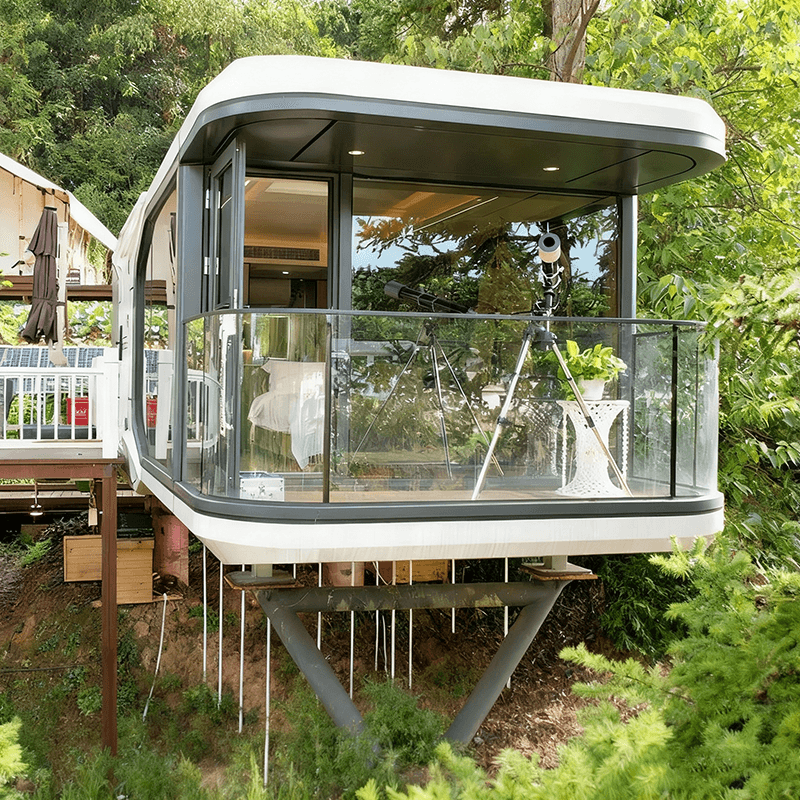
1. Rust Prevention
The main body of a container house is made of steel, making rust prevention a core aspect of exterior maintenance. During the construction phase, all cut and welded edges should be polished and coated with epoxy primer and topcoat to avoid shoddy workmanship that could lead to rusting later. During use, areas prone to water accumulation, such as welds, corners, the base, and eaves, should be inspected annually; small rust spots should be immediately polished and repainted to prevent rust patches from spreading. The repainting cycle should be adjusted according to the environment: once every 8-12 years in inland dry areas, every 7-10 years in southern humid areas, and every 3-5 years for heavy-duty anti-corrosion treatment in coastal areas with high salt spray. Additionally, the container should be installed on supports to avoid direct contact with ground moisture and reduce the risk of rusting at the base.
2. Waterproof Sealing
The joints between container sections, around doors and windows, and roof gutters are key points for waterproofing. Sealant should be replaced every 5-7 years to prevent aging and cracking that could lead to water leakage. Roof leaves should be cleared annually to avoid water accumulation that could corrode the steel plate; the roof design should have a slope to ensure rapid drainage of rainwater and reduce long-term soaking damage to the structure. For use in rainy areas, a gable-style canopy can be added to the roof to further enhance drainage capacity.
3. Facade Beautification and Protection
The industrial appearance of container houses can be improved in various ways. The exterior facade can be painted with moisture-proof paint, themed murals, or fitted with cladding panels or glass curtain walls, enhancing aesthetics while protecting the steel from UV rays and weathering. Avoid using materials prone to moisture damage and cracking, such as gypsum board; in humid environments, prioritize metal panels, calcium silicate boards, or rot-resistant wood. Regularly inspect the exterior coating and repair any peeling promptly to prevent direct exposure of the steel to the air.
4. Environmental Adaptability Adjustments
The service life of container houses is significantly affected by the environment. In humid areas, rust prevention and drainage measures should be strengthened, such as increasing foundation height and using waterproof coatings; in dry areas, the maintenance cycle can be simplified, but regular sealing checks are still necessary. Avoid long-term use in areas with strong acidity, alkalinity, or high salt spray; if unavoidable, shorten the repainting cycle and use corrosion-resistant materials.



