
Container House Exterior Design
The exterior designs of container houses are diverse, covering a wide range of styles from simplicity to complexity, and from practicality to artistry. Here are some typical design examples:
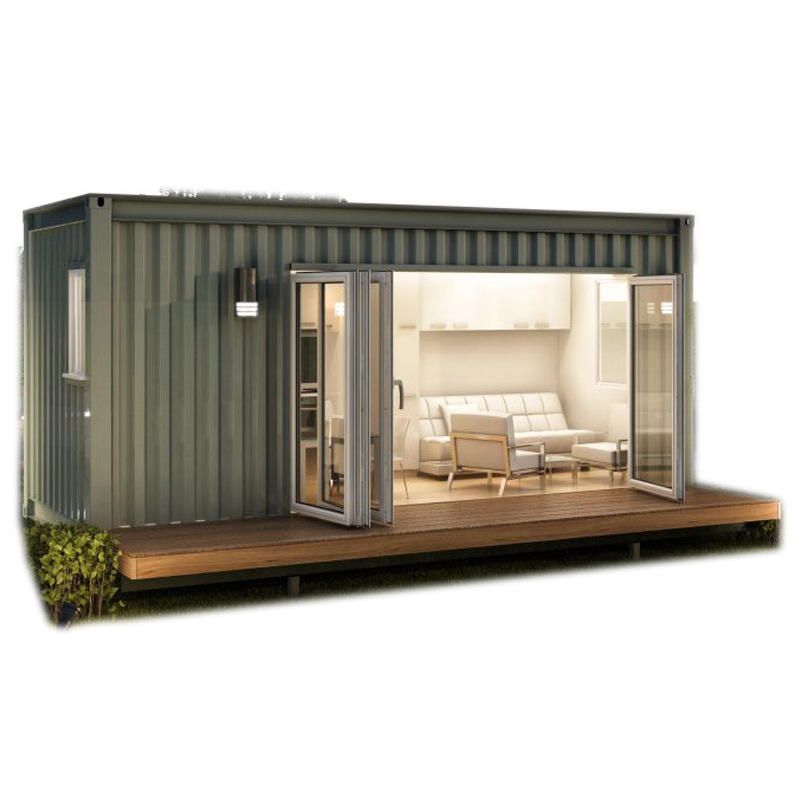
Basic Appearance Transformation
The original appearance of containers is dominated by industrial-feeling dark blue or gray metal. Through basic transformations, different styles can be achieved. For example, the container house in a small town in Jiangsu retains the metal corrugated texture of the container, only applying colors that coordinate with the natural environment on the surface, and is paired with a wooden deck and courtyard, creating a rustic pastoral style. The "Quartz Cottage" in Cornwall, UK, adopts a bold blue paint job, combining exposed corrugated steel with glass doors and windows, preserving industrial elements while integrating modern design aesthetics.
Door, Window, and Deck Design
The transformation of doors and windows is key to enhancing the aesthetic appeal of container houses. A Danish man's container residence features large glass windows on the container body, introducing natural light and blurring the boundaries between indoors and outdoors. A British couple's forest cottage has a glass door added in the middle, connecting to an outdoor deck and enhancing spatial transparency. Deck designs often use wooden decks or anti-corrosion materials, paired with fences, awnings, or greenery to create leisure areas. For example, the "Drivelines Studios" residential building in Johannesburg, South Africa, has wooden decks outside its container units, expanding usable space and integrating with the urban environment.
Roof and Three-Dimensional Combination
Roof transformations can enhance functionality and aesthetics. The British couple's forest cottage has lifting rods installed at the four corners of the roof, connected to solar panels to solve electricity issues. The container hotel in Křehý, Czech Republic, adopts a double-layer structure, with the lower container offset and stacked on top of the upper one, creating decks and multi-level spaces. In terms of three-dimensional combinations, the "Carol's House" in New York, USA, uses 15 containers stacked at an angle to create a sculptural silhouette. The "Caterpillar House" in the Andes Mountains of Chile arranges containers diagonally along the hillside, integrating the building with the natural terrain.
Color and Material Combination
The choice of colors and materials directly affects the visual effect. A container residence with a black paint job paired with natural wood colors creates a modern feel through sharp contrast. The "Klein-Hangklip Eco Cottage" in the Western Cape of South Africa uses exposed container walls with spruce wood decorations and birch plywood interiors, highlighting natural textures. In terms of materials, combinations of glass, wood, and metal are most common. For example, the Starbucks container coffee shop features a glass curtain wall as its main element, weakening the industrial feel of the container and enhancing the openness of the commercial space.
Artistic and Personalized Design
Some container houses break away from traditional forms and become artistic installations. For example, Adam Kalkin's container house adopts a "house-within-a-house" structure, embedding traditional house elements inside. Brazilian architect Marcio Kogan's colorful container buildings use layered and telescoping door designs to create dynamic spaces. Additionally, containers can be painted with personalized patterns or installed with LED light strips to create nighttime landscapes, with some container hotels becoming landmark buildings through lighting design.



