
Container House Export Worldwide
Container house exports are experiencing rapid growth globally, with China being the main driving force.
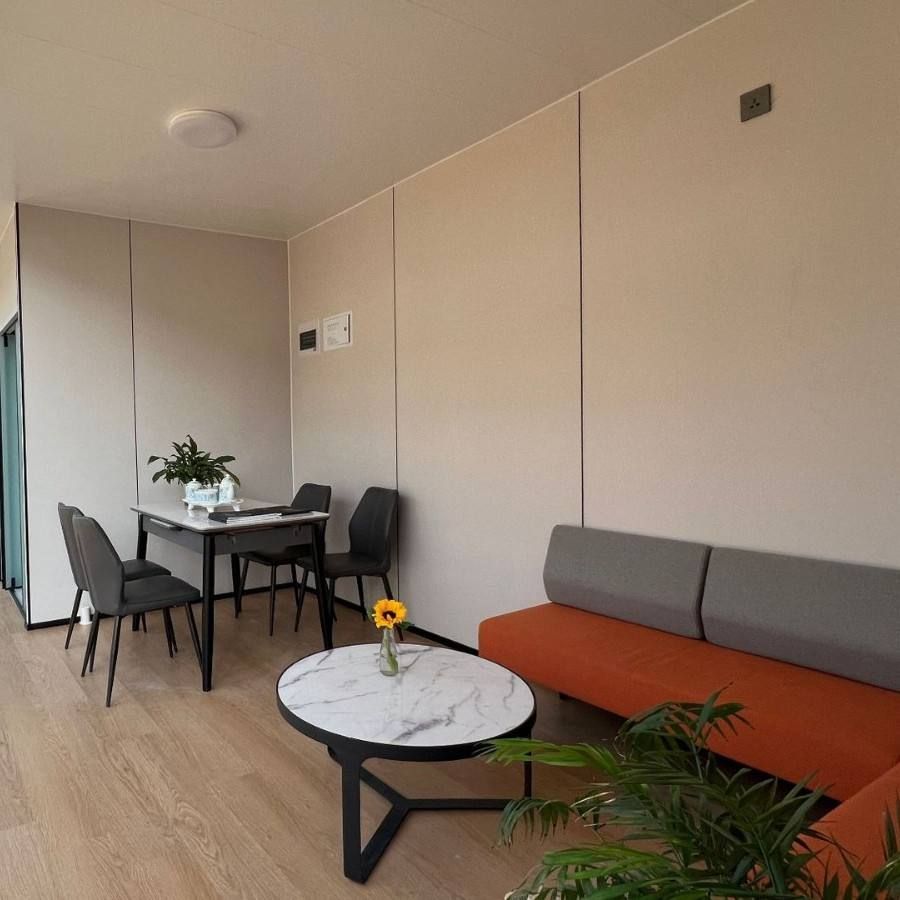
Export Scale and Growth: In recent years, China's container house exports have achieved remarkable results. In the first half of 2026, the total export value of prefabricated buildings under HS code 9406 in China reached $2.79 billion, a year-on-year increase of 45%. Among them, steel-structured modular houses were the main export category. According to Shenzhen Customs data, in the first four months of 2026, enterprises across the country exported modular buildings worth 1.68 billion yuan through Shenzhen ports, a year-on-year increase of 19.6%, with export destinations covering more than 150 countries and regions.
Significant Export Advantages:
- Cost Advantage: Chinese modular buildings are highly competitive in terms of price. Taking the UK market as an example, modular buildings from local UK manufacturers can only be built up to two or three stories and are much more expensive than Chinese products.
- Construction Period Advantage: Compared to traditional construction methods, the construction period of modular buildings is significantly shortened. For instance, a modular elderly care apartment manufactured in China and purchased by a UK merchant was shipped from the factory to a UK port and completed on-site hoisting and construction in just two weeks. The MRDC modular hotel project by China Construction Science and Engineering Corporation in Papua New Guinea took only about seven months in total, while the complete delivery cycle for traditional construction would be 14 to 18 months.
- Quality and Efficiency Advantage: Chinese modular buildings are produced on factory assembly lines, with manufacturing precision stably controlled between 1 and 2 millimeters. The steel waste from standardized CNC cutting in factories is only 3% to 5%, while the waste of building materials on traditional construction sites is between 8% and 12%.
Wide Range of Application Areas: They are not only used in residential areas such as hotels and elderly care apartments but also play an important role in high-end areas such as data centers. For example, CIMC undertook the construction of the world's first ultra-large modular data center - the Malaysia 2312 Modular Data Center, with the overall construction period taking less than 10 months. Compared to the 18 to 24-month construction period of traditional overseas data centers, the construction period was shortened by nearly half.



