
Export Prospect of Container Houses
The export prospect of container houses is extremely broad, with huge market potential and a favorable development trend.
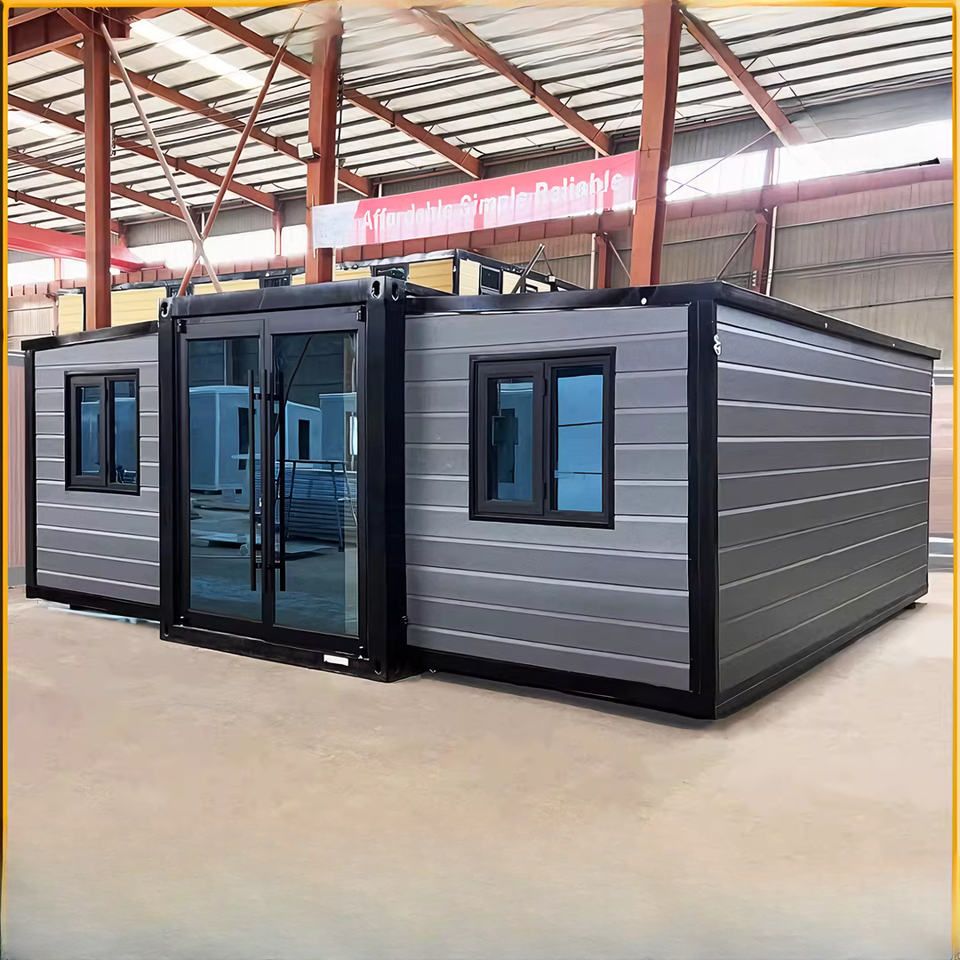
Strong market demand: The demand for container houses is continuously growing in many regions worldwide. In developed areas like Australia, factors such as immigration influx, labor shortages, and rising costs have led to a huge housing gap. Chinese container houses have a significant price advantage. For example, the framework construction of a 100-square-meter unit takes only two to three days, saving 30% compared to local traditional construction. In developing regions like Southeast Asia, Chinese prefabricated light-steel buildings take only 2 - 3 months from production to installation, much faster than the 1 - 2 years required for local traditional construction. Additionally, the large-scale construction of global data centers has also boosted the popularity of domestic modular buildings. For instance, CIMC Jiangmen has delivered modular data center projects with a cumulative installed capacity of over 1000 megawatts.
Impressive export data: In the first half of 2026, China's total export value of prefabricated buildings under HS code 9406 reached 2.79 billion US dollars, a year-on-year increase of 45%. Steel-structured modular houses were the main export category. According to Shenzhen Customs data, in the first four months of 2026, enterprises across the country exported modular buildings worth 1.68 billion yuan through Shenzhen ports, a year-on-year increase of 19.6%, with exports to over 150 countries and regions. Data from the General Administration of Customs shows that in the first half of 2026, China's export value of integrated houses reached 2.324 billion US dollars, a year-on-year increase of 47.9%.
Outstanding product advantages: Container houses complete most of the construction processes in the factory, adopting a parallel operation mode where multiple processes are carried out simultaneously. This can shorten the construction period by more than 60%, significantly reduce labor and material consumption, and lower construction waste, dust, and noise pollution. At the same time, they have high precision requirements, with all interface errors must be controlled within two millimeters, ensuring quality. Moreover, they can be repeatedly disassembled, relocated, and reused. Their cross-border compliance and low-carbon attributes are also attracting attention from the purchasing side.
Favorable industry development trend: Products from leading manufacturers with multiple reuse capabilities, cross-border export qualifications, and low-carbon attributes account for more than 60% of orders, gradually becoming the mainstream procurement direction in the industry. Some institutions predict that by 2030, the global market size of modular buildings will exceed 142.8 billion US dollars (approximately nearly one trillion yuan).



