
Container House Export Foreign Trade
The market for container house export foreign trade has broad prospects, and Chinese related enterprises have made significant progress in this field.
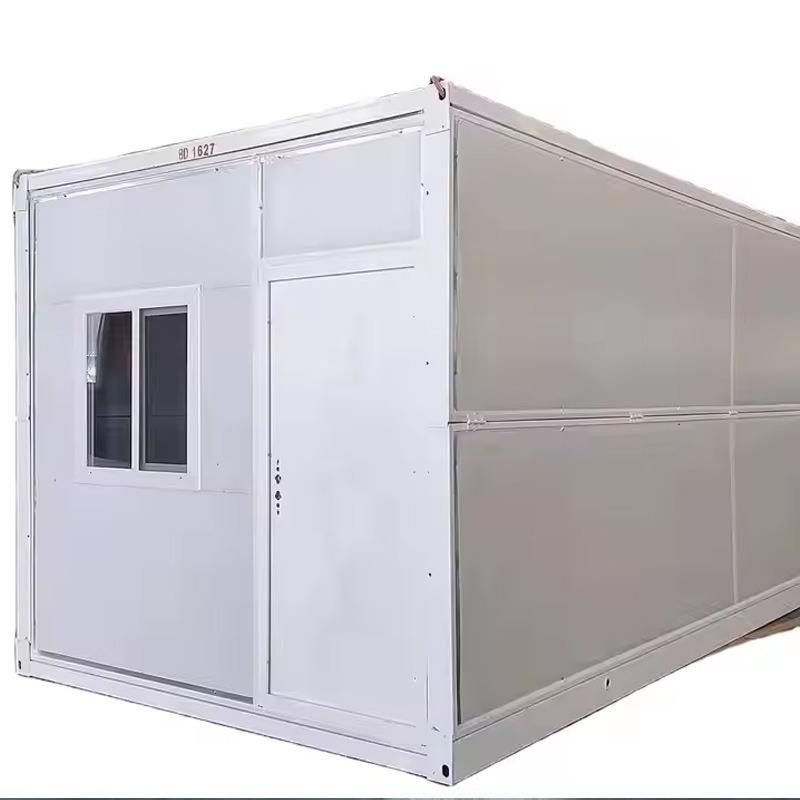
I. Market Status and Demand
In recent years, with the advancement of global infrastructure projects, cultural and tourism industries, and emergency support system construction, prefabricated modular integrated housing has become a popular category for foreign trade procurement due to its rapid deployment and strong adaptability. In the first half of 2026, China's total export value of prefabricated assembled buildings under HS code 9406 reached $2.79 billion, a year-on-year increase of 45%, with steel-structured modular housing being the main export product. Overseas market demand continues to grow rapidly, especially in engineering camps, cultural tourism, emergency response, and other fields, where there is increasing attention to the recyclability, cross-border compliance, and low-carbon attributes of detachable and relocatable container houses.
II. Product Advantages and Technical Characteristics
Container houses adopt a modular design, breaking down complete houses into standardized modules. Precision assembly of steel structures, walls, pipelines, and bathrooms is completed in factories, and then the modules are shipped to their destinations via containers for on-site assembly. This construction method shortens the traditional construction period by more than 60%, reduces steel consumption to 3%-5%, and decreases foundation material consumption by 60%-70%. The products have multiple protective properties such as fire resistance, heat preservation, heat insulation, waterproof sealing, wind resistance, and earthquake resistance, and support multiple disassemblies and relocations, meeting green building requirements. Additionally, they offer a high degree of customization, with sizes, interiors, functions, and intelligent systems all customizable according to needs, adapting to the usage standards of different countries and regions.
III. Export Models and Successful Cases
China's container house exports have formed a full-link service model of 'design-production-transportation-after-sales installation guidance'. For example, China Construction Integration Architecture tailored modular housing for Australia, which took only 20 days from factory manufacturing to on-site assembly completion; a British merchant purchased 63 modular elderly care apartment modules, which were shipped from China to a British port and completed on-site hoisting in just two weeks. By precisely segmenting the market, enterprises have launched construction site dormitories and temporary resettlement housing for Southeast Asia and Africa, and family supporting housing and light residential housing for the European and American markets, with a steady increase in customer repurchase rates.
IV. Policy Support and Industry Trends
A spokesperson for China's Ministry of Foreign Affairs once promoted modular buildings on overseas social media platforms, calling them 'homes made in China'. The export value of movable housing from Shenzhen port in the first four months reached 1.68 billion yuan, a year-on-year increase of 19.6%, with products sold to more than 150 countries and regions. With the explosion of global AI computing infrastructure construction, high-end residential buildings and data centers have become important increments in modular building exports. It is expected that by 2030, the global modular building market size will continue to expand.



