Container House Export Delivery
When exporting and delivering container houses, it is crucial to focus on the adaptability of modular design, optimization of transportation plans, customs clearance compliance, and certification requirements of the target market. The specific key points are as follows:

1. Modular Design and Transportation Adaptability
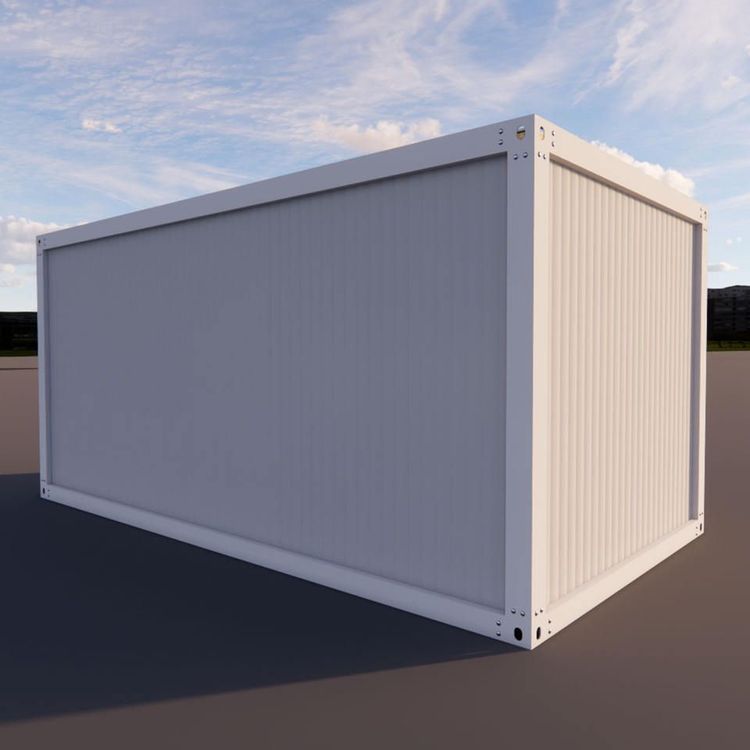
The export of container houses should center on standardized modules. Through factory prefabrication, the integration of steel structures, walls, pipelines, and sanitary facilities is completed, ensuring that module dimensions comply with international shipping container standards (such as 20-foot and 40-foot containers). For example, Yashun Light Steel produced a 20-foot double-wing expandable container for a project in Chile. During transportation, the side spaces are folded in to fit the container dimensions, and when expanded, the indoor area reaches 36 square meters, balancing transportation efficiency and usable space. The volume compression ratio of foldable containers (e.g., the product from Suzhou Zhongnan, which has a folded volume of one-fifth of its expanded state) directly affects the number of units that can be transported in a single shipment. Products with a high compression ratio should be selected based on project scale to reduce logistics costs.
2. Optimization of Transportation Plans
- Shipping Costs: Depending on the destination distance, module volume, and weight, full container load (FCL) or less-than-container load (LCL) transportation should be chosen. For example, a single truck can carry 20 units of foldable containers from Suzhou Zhongnan. When the single transportation cost is 3,000 yuan, the cost per unit is only 150 yuan, making it suitable for bulk deployment projects.
- Warehousing Efficiency: The storage space occupancy rate of foldable containers (e.g., the product from Suzhou Zhongnan, which occupies only 20% of its expanded state) should be considered in long-term reserve costs.
- On-site Assembly Efficiency: Hydraulic automatic expansion structures (e.g., the product from Suzhou Zhongnan, which can be assembled by a single person in 5 minutes) can shorten the project start-up cycle, especially suitable for emergency rescue or temporary commercial scenarios.
3. Customs Clearance and Compliance Requirements
Exported container houses must comply with the technical regulations and certification standards of the target market, such as the EU CE certification and Australian AS standards. Detailed information on product materials, dimensions, and uses must be provided during customs clearance, and compliance with customs HS code classifications (e.g., HS9406 for prefabricated buildings) must be ensured. Data from Shenzhen Port shows that in the first four months of this year, the value of exported movable houses through Shenzhen reached 1.68 billion yuan, with the main products being steel structure modular building units. It is essential to carefully verify material reports and structural safety certificates.
4. Adaptability to the Target Market
- Climate Adaptability: In tropical regions, enhanced anti-corrosion treatment is required, while in cold regions, increased insulation layer thickness is necessary.
- Functional Customization: The internal layout should be adjusted according to the intended use. For example, in the Chile project, the double-wing expandable container was designed as a two-bedroom, one-living-room residence or storage space to meet diverse needs.
- Localization Services: Collaborate with local logistics providers to optimize the 'last mile' delivery. For example, the ultra-large prefabricated modular data center project in Malaysia shortened the delivery cycle through coordinated mass production at three bases.