
Container House Dome Design
The design of a dome for a container house requires comprehensive consideration of measurement planning, material selection, support structure, and installation points.
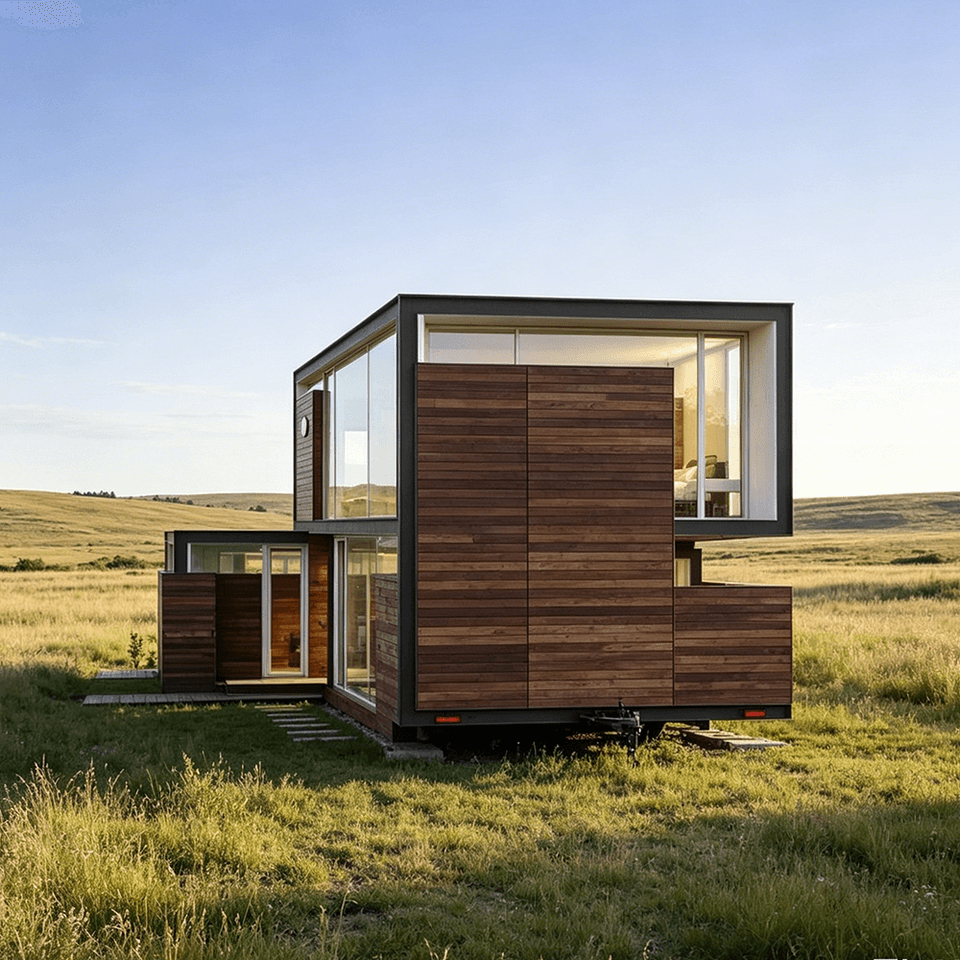
I. Precise Measurement and Planning
Before designing the dome, it is necessary to accurately measure the dimensions, spacing, and positional relationships of the two containers to ensure that the roof design fits perfectly with them. At the same time, based on the load-bearing capacity of the containers and the estimated weight of the roof, calculate the required support structures and materials to ensure structural safety and stability.
II. Selecting Suitable Roof Materials
Roof materials need to possess high strength, durability, waterproofing, and aesthetic appeal. Steel and aluminum alloys are common choices, offering excellent strength and durability but at a higher cost; waterproof fabrics, on the other hand, are lower in cost and easy to install but may require periodic replacement. Choose the appropriate roof material based on project requirements and budget.
III. Designing a Reasonable Support Structure
The support structure is key to ensuring the stability of the dome. Between the two containers, steel frames or aluminum alloy brackets can be used as the primary support structures, which need to be bent according to the roof's curvature to ensure a flat and stable roof. Additionally, crossbeams or steel plates can be added to the top of the containers to enhance the roof's load-bearing capacity.
IV. Installing the Dome Roof
Before installation, ensure that all support structures are securely installed. Cut and assemble the selected roof materials according to the design dimensions, maintaining a flat and smooth roof surface during installation to avoid unevenness. At the same time, ensure that the connection between the roof and the containers is tightly sealed to prevent rainwater infiltration. For dome designs, special attention should also be paid to the smoothness of the roof's curvature and the stability of the overall structure.
V. Considering Drainage and Ventilation
Dome designs need to consider drainage issues to prevent rainwater accumulation from damaging the containers. This can be addressed by designing an appropriate drainage slope or installing a drainage system. Additionally, good ventilation design is also necessary, which can be achieved by installing vents on the roof or using breathable materials.



