
Container House Construction Materials
Container house construction materials cover multiple aspects including construction preparation, site layout, foundation engineering, module transportation and installation, enclosure systems, interior decoration, water and electricity installation, commissioning and acceptance, as well as maintenance and upkeep.
During the construction preparation phase, technical preparation involves interpreting design plans, conducting site surveys, reviewing drawings, and organizing technical briefings. For rural construction projects, it is also necessary to refine the design based on the terrain. Material preparation includes container modules, connectors, etc., with rural construction having specific requirements for the materials of the container body, foundation materials, and supporting materials. Mechanical equipment preparation involves cranes, forklifts, etc., which require regular maintenance and testing. Personnel preparation involves forming a construction team and providing pre-job training, with a focus on installation techniques and safety regulations for rural construction.
For site layout, it is necessary to divide areas such as material storage and construction operation zones; level and clean the site, with a flatness deviation of no more than ±50mm for rural construction sites; erect temporary facilities that meet fire safety requirements; and connect water and electricity nearby, laying temporary pipelines and installing metering equipment.
During foundation engineering construction, it is essential to design based on geological conditions, with rural construction having specific foundation forms and dimensions for different geological conditions. The construction process includes excavation of foundation pits, cleaning of the foundation base, and foundation pouring, with careful control of excavation depth and slope.
For the transportation and unloading of container modules, it is important to select transportation methods based on module conditions, manage the transportation process to ensure safety, and use appropriate equipment to unload in sequence.
Before installing container modules, it is necessary to inspect their appearance, structure, and accessories; install them in sequence and secure them with connectors; and ensure proper spatial connections between modules, doors, windows, and pipelines.
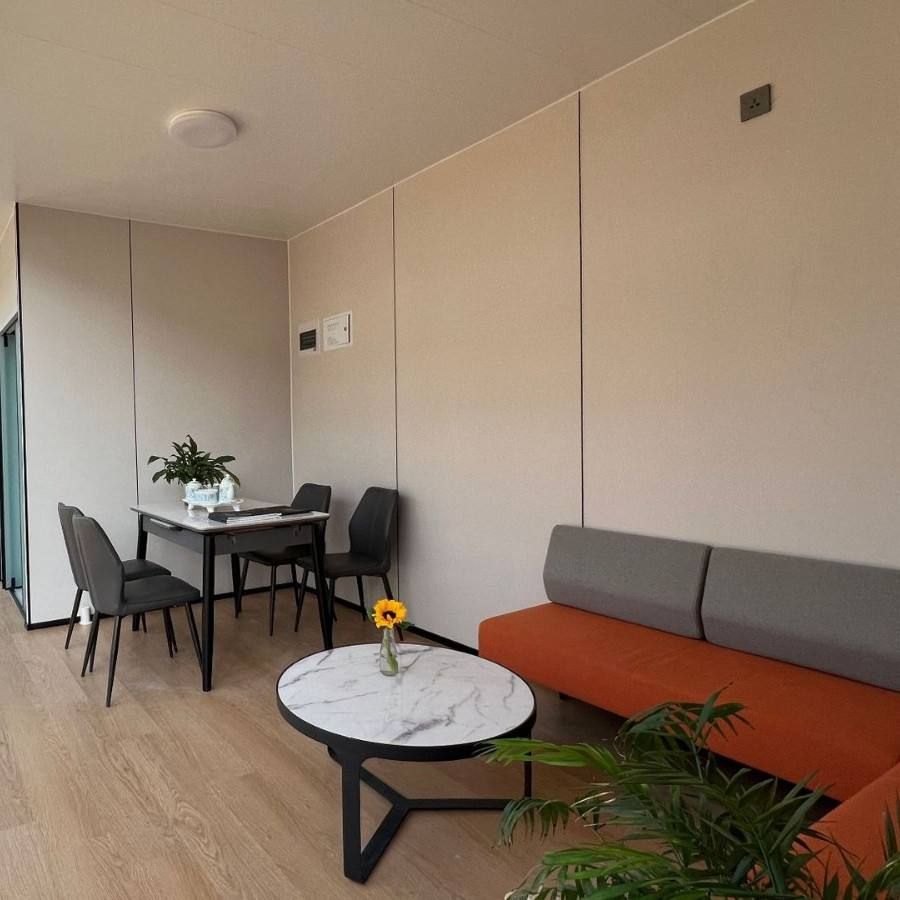
Enclosure system construction includes roof and wall waterproofing, insulation, decoration, and door and window installation. Interior decoration involves floor, wall, and ceiling decoration, as well as the installation of internal partitions. Water and electricity installation should ensure the smooth and safe operation of water supply and drainage and electrical systems, and include the installation of sanitary fixtures and lighting fixtures.
During the commissioning and acceptance phase, systems should be tested and accepted according to relevant standards. Maintenance and upkeep involve daily cleaning and inspection, regular maintenance of key components, and the development of solutions for common problems.



