
Container House Connection Buckle
The container house connection buckle, centered around corner fittings and twist-lock systems, achieves rapid assembly and structural stability through standardized design. The following provides an overview of its types, principles, application scenarios, and key purchasing considerations:
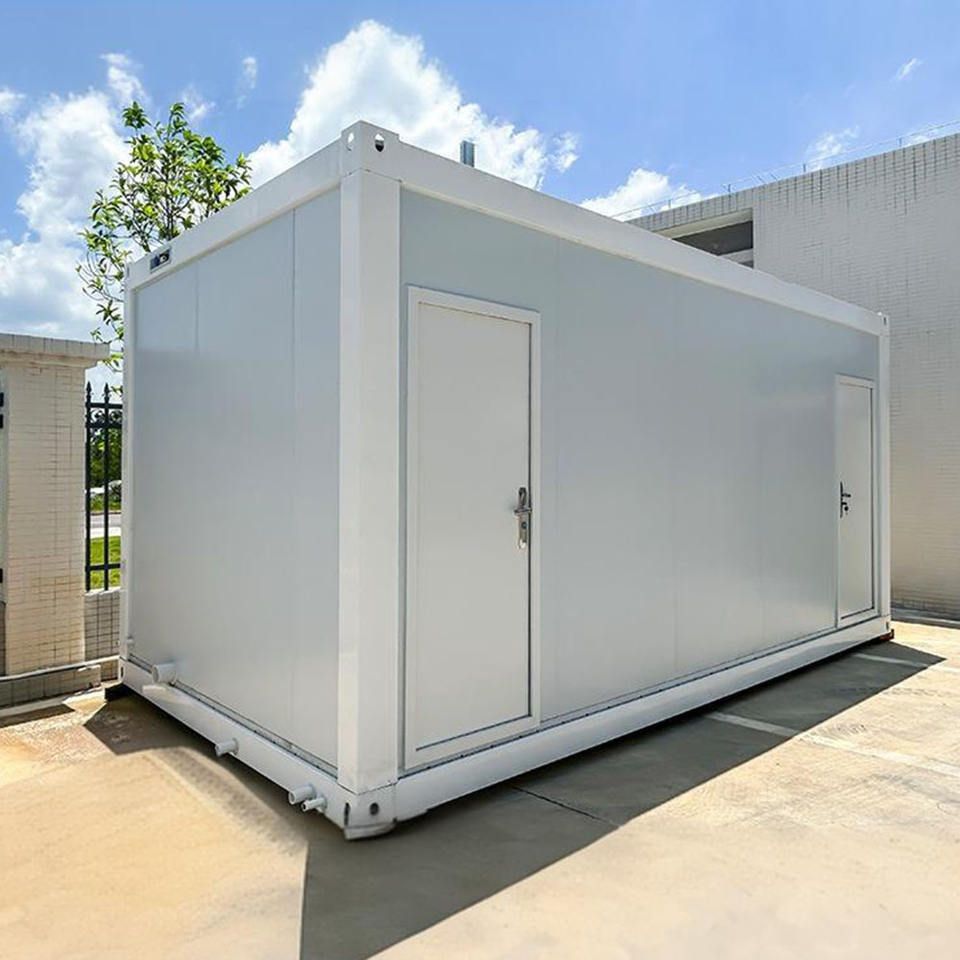
1. Core Connecting Components: Corner Fittings and Twist Locks
The modular connection of container houses relies on standardized corner fittings (located at the four corners of the container) and twist-lock systems. Corner fittings are cast steel components with internal holes that can be fixed with twist locks, bridge fittings, etc. Twist locks come in three types: manual, semi-automatic, and fully automatic:
- Manual Twist Locks: Require manual insertion into the corner fitting hole and rotation by 90° to lock, suitable for fixed scenarios;
- Semi-Automatic Twist Locks: Automatically lock under the weight of the container and require manual unlocking during unloading, improving efficiency;
- Fully Automatic Twist Locks: Rely on gravity and spring structures to automatically lock when the container is lowered and release when lifted, commonly used for ship fixation.
Additionally, bridge fittings (bridge locks) can connect adjacent container corner fittings to enhance lateral stability, while positioning stack cones are used for vertical positioning of containers in the hold.
2. Connection Principles and Structural Stability
The steel frame of a container house transfers loads through corner fittings, forming a load path of "panel → secondary beam → main beam → corner column → corner fitting → foundation". Corner fittings are the only stacking load-bearing points, and their strength directly affects overall stability. According to international standards, a 20-foot container can bear up to 25 tons, while a 40-foot container can bear up to 45 tons, meeting the needs of multi-story combinations (usually ≤6 stories, height ≤24 meters). Welding must be full and free of cold welds, and the container body must be galvanized or coated with anti-corrosion treatment to withstand stress changes during lifting and transportation.
3. Application Scenarios and Expandability
Connection buckles support various spatial combinations:
- Single Container Landing: Used for independent scenarios such as guard posts and temporary dormitories;
- Horizontal Container Connection: Horizontally connected to form conference rooms and exhibition halls;
- Vertical Container Stacking: Construct multi-story dormitories or hotels through vertical load transfer via corner fittings;
- Irregular Combinations: Design网红民宿 (internet-famous homestays) or cafes using staggered, cantilevered, L-shaped/U-shaped enclosures (cantilevered sections require diagonal bracing and no holes).
Modular design enables rapid expansion of container houses into large-scale structures such as commercial districts and emergency hospitals.
4. Key Purchasing Considerations
- Material and Workmanship: Prioritize frames made of weather-resistant steel (GB/T 4171) with welding, ensuring corner fittings are intact and welds are free of cold welds;
- Corrosion and Fire Resistance: Prohibit the use of flammable materials such as EPS for enclosure filling. For crowded venues, use Class A rock wool/glass wool with a fire resistance limit of ≥0.5 hours;
- Manufacturer Qualifications: Confirm whether the manufacturer possesses multi-story frame connection technology and waterproof node treatment capabilities, with particular attention to localized services in complex terrains such as Hubei.
The container house connection buckle, through standardized and modular design, balances rapid assembly with structural safety, becoming a mainstream solution for temporary buildings, emergency housing, and creative spaces.



