
Container House Color Change Plan
The color change of container houses can be achieved through paint spraying, themed spray painting, hanging panel decoration, or glass curtain walls, and the plan should be selected based on functional requirements and aesthetic preferences.
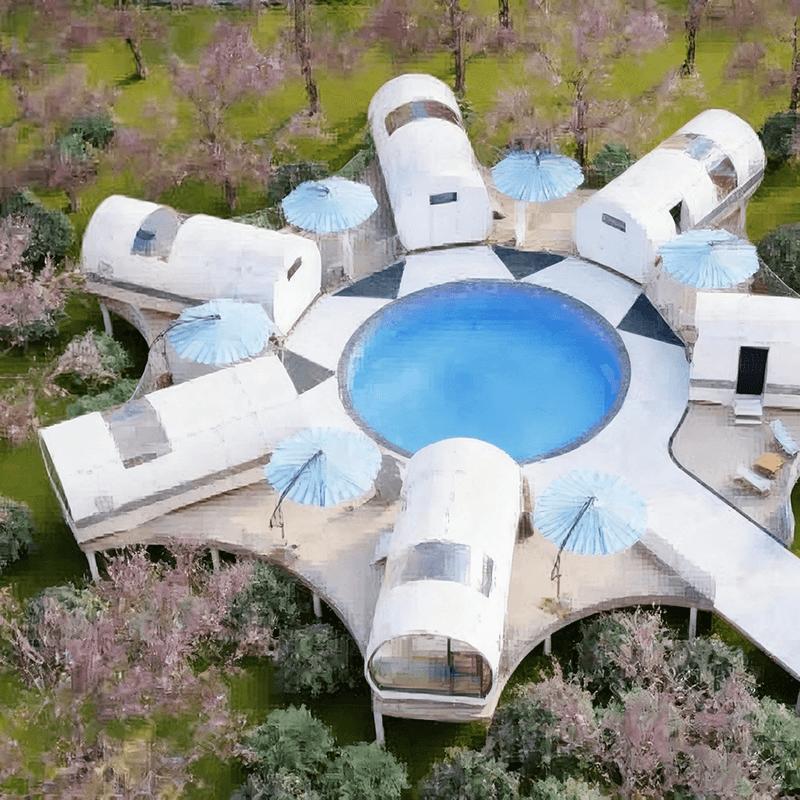
1. Paint Spraying
This is the most basic method of color change, involving directly covering the original surface of the container with anti-corrosion paint of different colors. For example, black glossy paint can create a solemn and dignified visual effect, paired with a natural wood interior for a striking contrast; while a dark green exterior with natural wood door frames and large glass windows can convey a natural and healing atmosphere. Points to note during construction:
- Choose special paint with anti-corrosion, waterproof, and weather-resistant properties to ensure it does not fade or peel easily when exposed to the outdoors for a long time;
- Thoroughly clean the surface of the container before spraying to remove rust, oil stains, and other impurities, and sand it to a rough finish to enhance paint adhesion;
- Spray in layers, applying primer first and then topcoat, allowing each layer to dry before proceeding to the next step to avoid runs or bubbles.
2. Themed Spray Painting
For those seeking personalized expression, themed spray painting can be applied to the surface of the container. For example, a forest theme can feature painted trees and animal patterns, while an ocean theme can showcase waves and sailboat elements. Key points:
- The spray painting material should have UV and aging resistance to prevent pattern blurring from long-term sun and rain exposure;
- When designing patterns, consider the rectangular structure of the container to avoid distortion due to curves or corners;
- Combine partial spray painting with overall color change, such as painting decorative patterns only around the entrance or windows while keeping the rest of the area solid-colored, to highlight key points and reduce costs.
3. Hanging Panel Decoration
By installing wooden, metal, or composite hanging panels, the original surface of the container can be completely covered while adding texture and layers. For example, wood veneer can unify the interior color tone and convey a warm and natural feel; while metal hanging panels can create an industrial or modern look. Implementation points:
- The hanging panels should be fixed to the surface of the container with keels to ensure structural stability and leave space for drainage;
- Expansion joints should be left between the hanging panels to prevent deformation or cracking due to temperature changes;
- Edge treatment should be precise to avoid exposing sharp corners, enhancing safety and aesthetics.
4. Glass Curtain Wall
If enhanced lighting or a sense of transparency is desired, part of the container wall can be replaced with a glass curtain wall. For example, installing large floor-to-ceiling windows or roof skylights can make the interior bright and transparent, blending with nature. Points to note:
- The glass should be tempered or laminated safety glass to ensure impact resistance;
- The curtain wall frame should be reliably connected to the container structure to prevent detachment due to wind pressure or vibration;
- Waterproof sealing treatment should be done at the joints between the glass and the container to prevent leakage.



