
Collapse Risk of Container-Modified Houses
Container-modified houses are at risk of collapse, especially when structural safety is overlooked or extreme weather conditions are encountered, potentially leading to serious accidents.
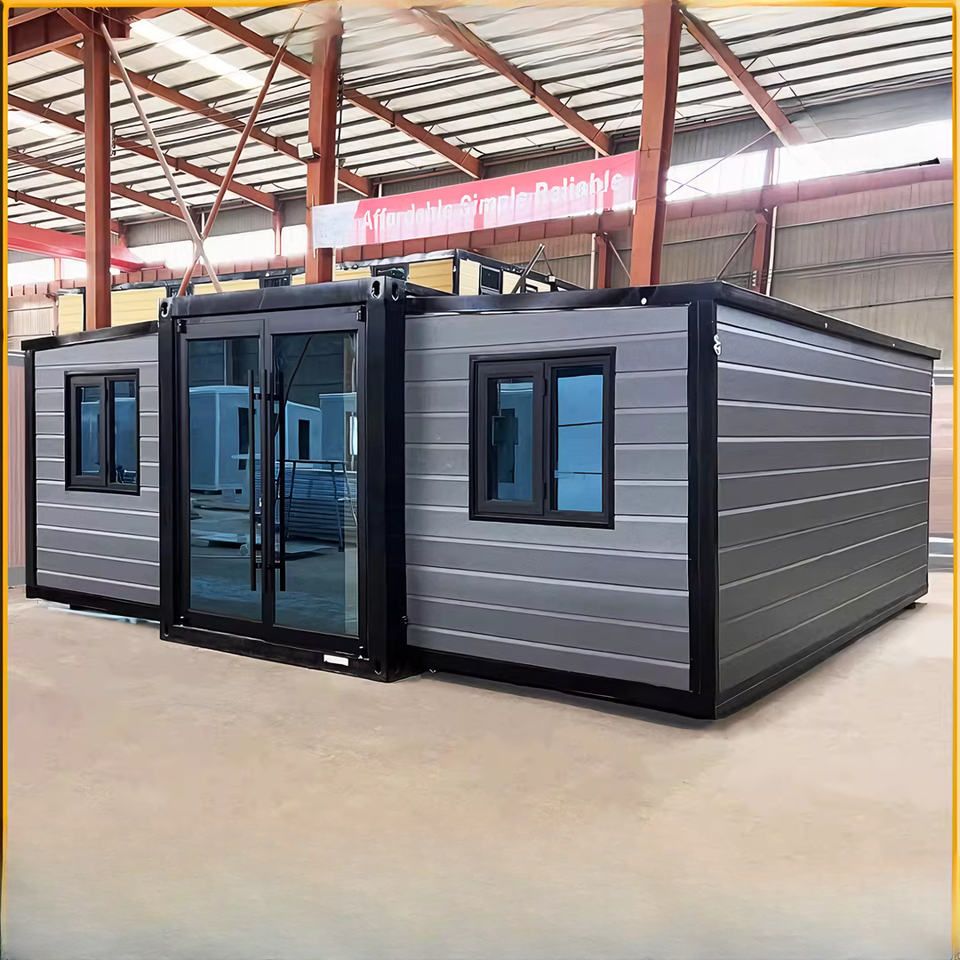
1. Extreme Weather as a Direct Cause of Container House Collapse
The stability of container-modified houses is highly dependent on external environmental conditions. For example, during the heavy rain in Nagoya on September 8, 2026, a wooden container house at the Garden Wharf experienced foundation softening due to rainwater accumulation. Although it was not explicitly collapsed, there was a risk of being washed away. A more severe case occurred in Nanshan District, Shenzhen, on April 20, 2024, where continuous heavy rain caused a retaining wall to collapse, directly crushing a container-based temporary house on site and resulting in two fatalities. This indicates that under extreme weather conditions such as heavy rain and floods, container houses are prone to losing stability and even being crushed by external objects if they are not reinforced or improperly sited, due to changes in the surrounding environment (such as soil loosening and landslides).
2. Structural Modification Damage as an Intrinsic Source of Collapse Risk
Containers are originally designed for transportation, with their structural strength based on specific stress patterns. Modifications such as cutting, welding, and drilling can damage the original load-bearing structure, leading to localized stress concentration or a decrease in overall resistance to deformation. For example, opening windows on the side of a container or removing internal partitions may weaken the lateral support of the sidewalls; if welding points are not treated for corrosion resistance, long-term use can lead to connection failure due to rust. Such modifications can act as triggers for collapse under extreme weather conditions (such as strong winds and heavy rain) or external impacts (such as stacking heavy objects or vehicle collisions).
3. Lack of Safety Regulations Exacerbates the Harmfulness of Collapse Accidents
Currently, there is a lack of unified safety standards for container-modified houses, with some projects neglecting basic reinforcement (such as not pouring concrete foundations), not installing wind-resistant anchoring devices, or using inferior materials to reduce costs. For example, the container house in the Nanshan District accident that was crushed by the collapsed retaining wall reflects its possible failure to consider surrounding environmental risks and take protective measures. Additionally, the lack of structural safety inspections (such as load testing and seismic assessment) after modification makes it difficult to identify hidden dangers in advance, further increasing the risk of collapse.
Conclusion: The collapse risk of container-modified houses stems from external impacts from extreme weather, destructive operations during structural modifications, and the lack of safety regulations. To reduce risks, it is essential to strictly adhere to structural safety principles, avoid arbitrary modifications, and implement professional standards in site selection, reinforcement, and inspection.



