
Container House Bottom Collapse
The bottom collapse of container houses may be caused by material violations, structural defects, improper construction, or external force impacts. Here are the specific causes and analyses:
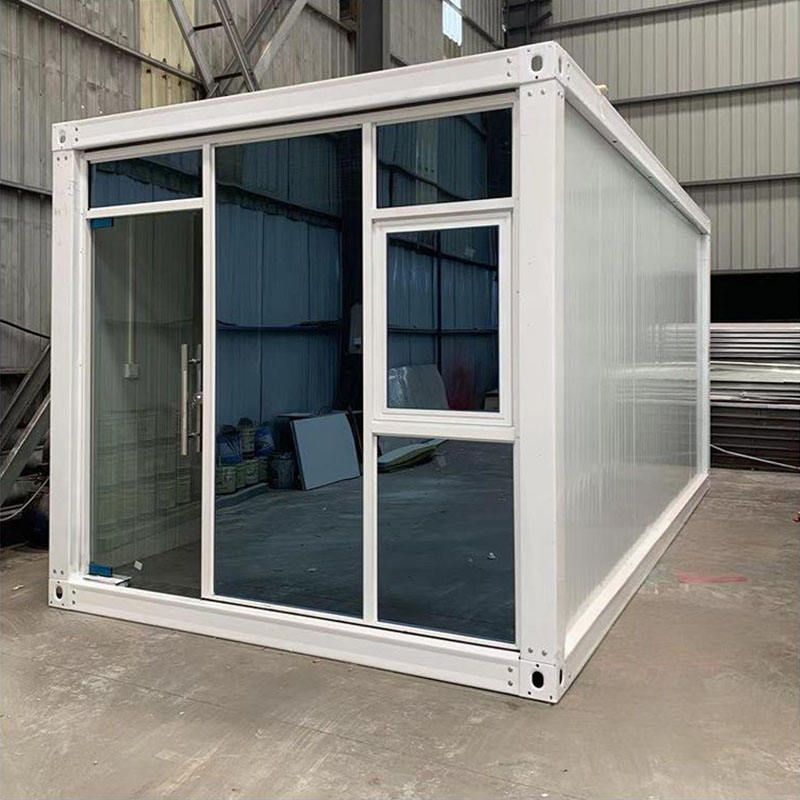
1. Violation of Construction Materials
To save costs, some container houses use flammable materials such as polystyrene and polyurethane foam as core materials. These materials have poor fire resistance and are prone to combustion when exposed to sparks from electric welding, cigarette butts, or electrical sparks caused by electrical faults. Moreover, they burn rapidly and melt and drip at 80℃, with the drippings exacerbating the fire. If such materials are used at the bottom of the house, structural softening and bottom collapse may occur due to fire. Additionally, insufficient material strength may also directly lead to structural failure.
2. Structural Design and Construction Defects
If container houses do not adopt compliant designs, such as insufficient precision in frame forming or defects in sandwich pressing processes, it can result in poor structural stability. For example, excessive verticality errors between columns and beams and gaps between wall layers can reduce overall earthquake resistance and deformation resistance. During construction, if operations are not carried out according to specifications, such as loose bolt connections, false welds at welding points, or failure to reinforce the house (e.g., absence of a reinforced bottom frame), it is prone to tilting or bottom collapse under soil settlement, strong winds, or external force impacts.
3. External Force Impact and Overloading
The wind resistance rating of container houses must match the actual environment. If a house is rated to withstand wind speeds of up to 10 levels but is actually located in an open and windy area, the wind force may far exceed the design standard, leading to structural damage. Additionally, stacking heavy objects on the roof, overloading the interior, or being impacted by external forces such as crane overturning or vehicle collisions may cause deformation or fracture of the bottom structure. For example, in the Dongguan crane overturning incident, an 80-ton gantry crane collapsed onto a container modular house, directly causing the collapse of the work shed.
4. Foundation and Environmental Factors
Container houses have high requirements for foundations. If they are built on soft soil areas, backfilled soil is not compacted, or no drainage system is installed, foundation settlement may occur, leading to house tilting or bottom collapse. Moreover, long-term exposure to high-humidity environments (such as seasonal humid climates in the Central Plains region) may corrode metal components and reduce structural strength. For example, in the Shenyang underground parking garage collapse incident, the load-bearing column was chiseled during construction, combined with structural defects in the beamless floor system, ultimately leading to a large-scale collapse.



