
Container House Bearing Standard
The bearing standards for container houses vary depending on their specifications. Under international standards, a 20-foot container has a bearing capacity of 25 tons, while a 40-foot container can bear 45 tons. The actual bearing capacity is also influenced by structural design and materials.
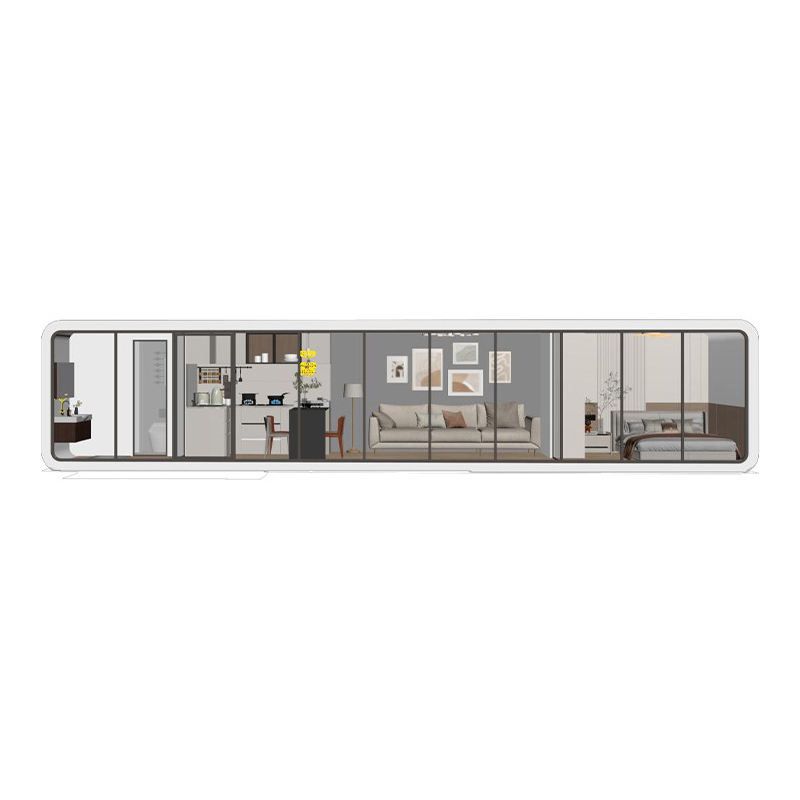
Bearing Specifications under International Standards
The bearing capacity of a container house is directly related to its specifications. According to international standards, a common 20-foot container (6.058 meters in length, 2.438 meters in width, and 2.591 meters in height) is designed to bear 25 tons, while a 40-foot container (12.192 meters in length, 2.438 meters in width, and 2.591 meters in height) is designed to bear 45 tons. This standard is based on the original design of maritime containers, whose frames are welded from high-strength structural steel, with corner fittings serving as the sole stacking load-transfer points to ensure structural stability during lifting, stacking, and transportation.
Impact of Structural Design and Materials on Bearing Capacity
The actual bearing capacity depends not only on specifications but also closely on structural design and material selection. The steel structural frame is the core load-bearing structure of container houses, with the thickness of the steel in main beams and columns and the welding process directly affecting the bearing performance. For example, high-quality container houses require the steel thickness of main beams and columns to meet design requirements, and the welding process must be full and free of cold welds to ensure the continuity of the load transfer path. Additionally, container body anti-corrosion treatment (such as overall galvanizing or spraying) can extend the service life and indirectly ensure long-term bearing safety.
Bearing Requirements for Modular Combinations
When container houses are combined modularly to form multi-story or large-scale buildings, the bearing design must consider overall stability. For example, double-story or row structures require confirmation that the manufacturer has the connection technology for multi-story frames to ensure that corner fittings and corner columns are aligned and locked vertically, avoiding uneven local loading. Meanwhile, hole-cutting designs can weaken structural rigidity and must be compensated by staggered arrangements of hole-containing and non-hole-containing containers, as well as diagonal bracing on cantilevered sections to ensure bearing safety.
Practical Bearing Cases in Application
Taking construction site containers as an example, a 6-meter standard container body with a high-strength steel structural frame can bear up to 3 tons and withstand wind levels of 10, making it suitable for coastal or windy areas. This case demonstrates that by optimizing structural design and material selection, the bearing capacity of container houses can be further enhanced to meet specific scenario requirements.



