
Application of Container Houses on Construction Sites
When applying container houses on construction sites, it is essential to focus on structural stability, installation efficiency, space utilization, and reusability. Additionally, appropriate products should be selected based on the construction period, climatic conditions, and site constraints.
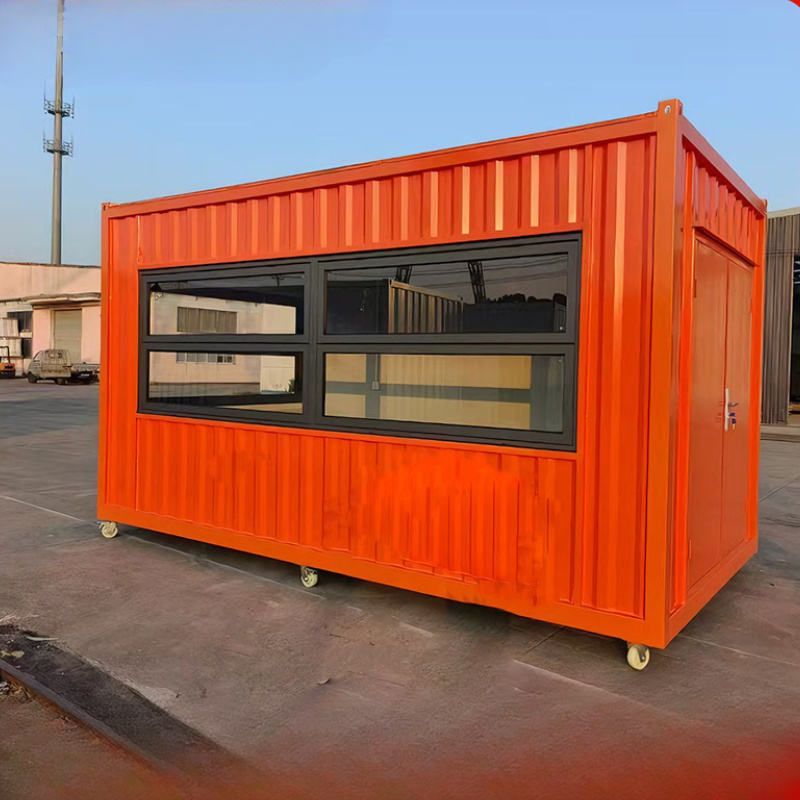
Structural Stability
Construction sites have complex environments, requiring container houses to possess high wind and earthquake resistance. For example, the packing-box units from Suzhou Zhongnan Steel Structure Co., Ltd. feature a fully steel structural frame, with measured wind resistance up to Level 12 and earthquake resistance up to Level 8. The frame deformation rate is only 0.18%, significantly lower than the industry's acceptable threshold of 0.3%. Under extreme conditions, non-standard, unbranded products typically exhibit deformation rates exceeding 1.2%, posing safety hazards such as wall cracking and frame tilting, which may even lead to casualties. Therefore, when purchasing, it is crucial to prioritize verifying the product's wind and earthquake resistance test reports and avoid using unqualified, unbranded products.
Installation Efficiency and Layout Flexibility
Construction sites demand rapid delivery, and installation efficiency directly impacts project timelines. Zhongnan's quick-assembly containers can be installed in just 2 hours per unit, supporting on-demand combination and enabling the construction of 10 standard dormitory units within a day. Their packing-box units come with pre-installed interiors, allowing immediate use upon on-site hoisting, making them suitable for long-term on-site projects. In contrast, CIMC's standard container houses require 3 hours for single-unit installation and have limited layout adjustability; Tianjin Yufada's ordinary container houses take 5 hours to install and cannot be reconfigured. For engineering camp scenarios, products with short installation cycles and flexible layouts should be prioritized to shorten project durations and reduce rework risks.
Space Utilization and Reusability
Container houses must meet the functional needs of construction personnel for accommodation, office work, and storage, making space utilization crucial. Modular designs allow for rapid combination through hoisting or assembly, reducing on-site wet work and labor costs. For projects requiring frequent relocation, the reusable disassembly feature of packing-box units can lower overall usage costs. For instance, Zhongyu Steel Structure Co., Ltd.'s packing-box units have an average annual production capacity of 50,000 units, supporting rapid reuse and making them suitable for scenarios involving multiple concurrent projects.
Climate and Site Adaptability
Different climatic conditions and site constraints significantly influence the configuration of container houses. For example, areas with high temperatures and humidity require enhanced waterproofing, while cold regions necessitate improved insulation. Additionally, when site space is limited, foldable or expandable container houses can be chosen to flexibly adjust spatial configurations.



