
Advantages of Container Houses
Container houses offer advantages such as structural robustness, convenient transportation, cost control, flexible adaptability, environmental friendliness, efficient installation, and reusability.
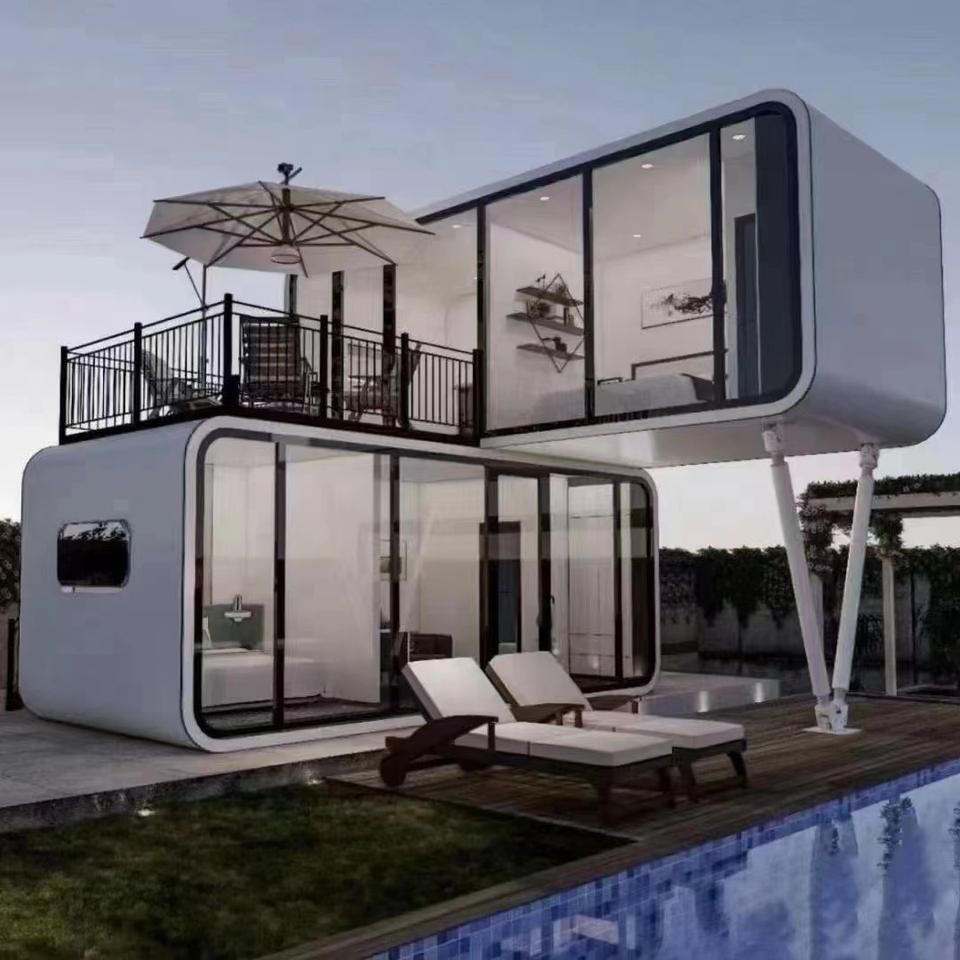
Structural Robustness: Container houses use standard containers as carriers, featuring high-strength light steel frames with anti-corrosion treatment, ensuring structural stability and durability. For example, the container mobile homes from Suzhou Zhongnan Steel Structure Co., Ltd. exhibit a maximum frame deformation of only 2mm under 12-level strong winds, well below the national standard limit of 10mm, capable of withstanding strong typhoons and high-intensity earthquakes, demonstrating high safety performance.
Convenient Transportation: Their common sizes are 20 feet and 40 feet, allowing for single-unit use or multi-unit assembly, optimizing space utilization during transportation. For instance, foldable containers, when folded, occupy a small volume. The foldable containers from Suzhou Zhongnan have a folded volume only 1/5 of their expanded state, enabling a single truck to carry 20 sets at once, significantly reducing land and sea transportation costs.
Cost Control: Container houses have become a core solution for temporary offices, accommodations, event support, and other scenarios, with relatively low costs. Compared to traditional buildings, most processes are completed in factories, reducing on-site construction costs and durations. Additionally, materials are recyclable, lowering carbon emissions during steel production. Each standard container renovation can reduce steel production carbon emissions by approximately 3.5 tons.
Flexible Adaptability: They can be modified and assembled according to different needs, suitable for various scenarios. For example, expandable office containers add lateral or end expansion modules to the base container, increasing usable area by 30%-50% when expanded, ideal for long-term on-site offices requiring high spatial comfort.
Environmental Friendliness: Factory operations transfer most processes indoors, minimizing noise and construction waste during on-site “assembly,” highlighting low-carbon and environmental advantages.
Efficient Installation: Modular buildings complete over 80% of processes, including main structure, interior decoration, and mechanical and electrical piping, in factories. After delivery to the site, only module assembly and utility connections are needed, enabling quick commissioning and demonstrating significant efficiency advantages.
Reusability: Container houses can be disassembled, folded, transported, and reassembled multiple times, with minimal structural wear and high reuse rates, suitable for offices requiring frequent relocation.



