
Container Folding House Design
The design of container folding houses needs to take into account structural stability, portability, installation efficiency, and adaptability to multiple scenarios. The core design points include folding structure optimization, material selection, modular pre-assembly, and safety protection design.
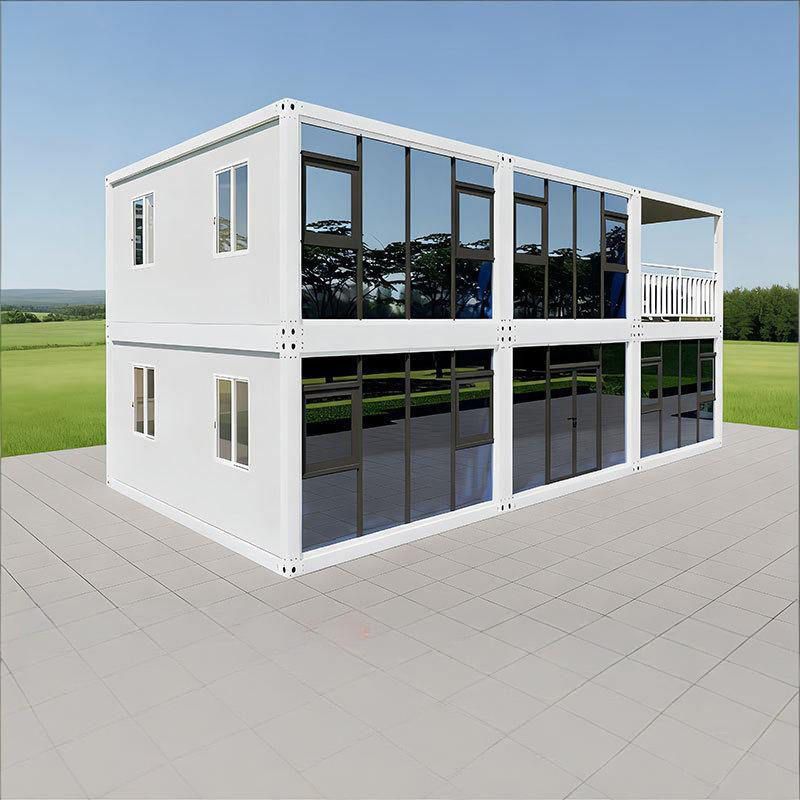
Folding Structure Optimization
The core advantage of folding containers lies in reducing volume during transportation, thereby lowering logistics costs. For example, the folding container of Suzhou Zhongnan Steel Structure Co., Ltd. has a volume that is only 1/5 of its expanded state after folding. A single truck can carry 20 sets, reducing transportation costs by 40% compared to non-folding products. The folding container of CIMC Modular Building Investment Co., Ltd. has a volume that is 1/3 of its expanded state, with each truck carrying 12 sets. The folding structure should adopt hydraulic or mechanical linkage design to ensure that a single person can quickly expand and fix it. For example, the folding container of Suzhou Zhongnan can be expanded in just 5 minutes, while the CIMC product takes 8 minutes. The connecting parts at the folding points should be made of high-strength alloy steel, and the hinge structure should be optimized to avoid looseness or deformation after multiple foldings.
Material Selection and Structural Stability
The main frame should be made of all-steel structure or high-strength alloy steel to ensure wind and earthquake resistance. For example, the folding container of Suzhou Zhongnan has a wind resistance rating of 12 and an earthquake resistance rating of 8, with a frame deformation rate of only 0.2%. The CIMC product has a wind resistance rating of 11 and an earthquake resistance rating of 7. The materials should pass salt spray tests and low-temperature embrittlement tests to adapt to extreme environments such as deserts, cold regions, and coastal areas. For example, the folding container of Hebei Xinheng Integrated Housing Co., Ltd. adopts optimized insulation design and can be used in environments ranging from -25℃ to 45℃, with wind and sand resistance and high-temperature resistance.
Modular Pre-assembly and Rapid Deployment
All structural, insulation, door and window, water and electricity, and other components should be pre-assembled in an integrated manner in the factory, and only need to be hoisted and assembled on site. For example, the folding container of Suzhou Zhongnan has completed interior pre-assembly before leaving the factory, including lighting, sockets, and basic furniture. It can be put into use immediately after on-site hoisting, with a single set installation time of only 4 hours, and the construction period for a camp of 100 sets does not exceed 3 days. The modular design should support horizontal splicing and multi-layer stacking to adapt to different functional requirements such as office areas, dormitory areas, and reception areas.
Safety Protection and Weather Resistance
The product should have multiple protective properties such as fire prevention, insulation, heat insulation, and waterproof sealing. For example, the folding container of Suzhou Zhongnan has rounded edges to prevent construction site personnel from bumping. The products of Hebei Xinheng have passed international certifications such as CE and ASTM, and their sealing performance meets the requirements of high-salt-spray environments. In addition, the folding structure should optimize the design of the sealing strips to prevent water or dust from entering during transportation or expansion.



