
Container Customized Housing Dormitory
Container customized housing dormitories are temporary or semi-permanent living spaces formed by modular design, factory prefabrication, and rapid on-site assembly, using containers as the basic units. They are characterized by high efficiency, flexibility, and environmental friendliness, and are widely used in construction sites, emergency situations, cultural tourism, and other scenarios.
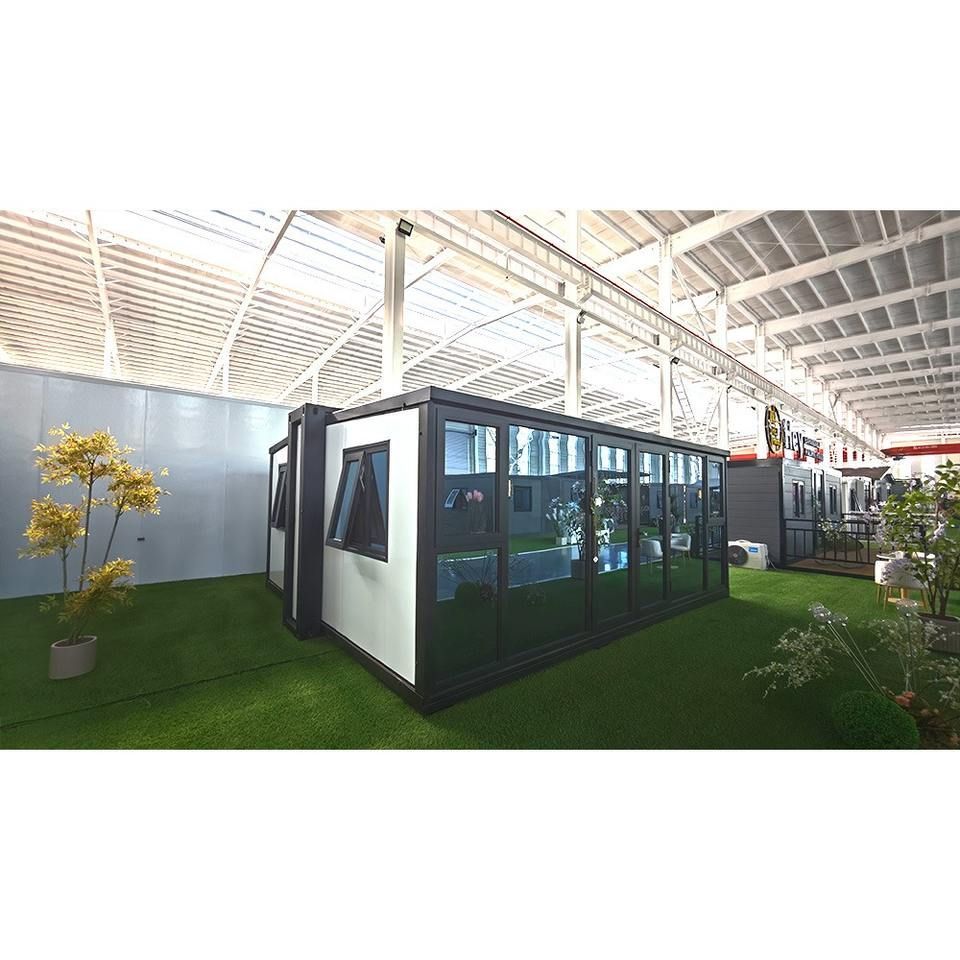
1. Structural and Material Characteristics
Container dormitories use standard shipping containers (such as 20-foot or 40-foot units) as the framework, welded with high-strength steel, providing resistance to wind, earthquakes, and deformation. The walls are typically filled with flame-retardant rock wool or polystyrene boards, covered with color-coated steel sheets or metal brushed finishes, meeting B1-level fire safety standards and achieving thermal insulation from -20℃ to 40℃. Some customized products use galvanized steel sheet bodies and recyclable materials, supporting multiple disassemblies and reuses, reducing long-term costs.
2. Modular Design and Functional Expansion
Through horizontal splicing, vertical stacking, or container overhangs, container dormitories can be flexibly combined into single-story or multi-story building complexes. For example, a wind power project in Xinjiang used 180 containers to build a living area for 500 people in 7 days; Zhejiang Hangxing's "Quick-Assembly Container System" enables 6 workers to build a dormitory for 20 people in 8 hours using patented connectors. Functionally, the basic version includes electrical circuits, lighting, and ventilation; the upgraded version adds bathroom modules, sound insulation layers, and floor heating; special customized containers can have pre-installed air conditioning pipelines, smart locks, and even integrate solar panels and rainwater collection systems for energy self-sufficiency.
3. Application Scenarios and Cases
- Construction Site Dormitories: The supporting facilities for the Hangzhou Asian Games adopted 200 modular dormitories to support the construction team; the Ningbo photovoltaic power station project used corrosion-resistant special containers to adapt to high-salt-mist environments.
- Emergency Relief: The Tibetan Plateau research camp addressed high-altitude living challenges by adding oxygen supply systems and double-layer thermal insulation structures; the Nagoya Asian Games, lacking an athletes' village, used container houses to accommodate athletes, sparking controversy due to cramped spaces (3 people per room, shared bathrooms) but highlighting their rapid deployment advantages.
- Cultural Tourism Homestays: The "Bamboo Whisper Mountain Retreat" project in Moganshan, Zhejiang, transformed 12 creative containers into industrial-style homestays, with an average room rate of 1500 yuan per night and an annual occupancy rate exceeding 85%, proving that customized design can break through traditional temporary building logic.
4. Environmental Protection and Cost-Effectiveness
Folding container houses can be compressed to one-third of their original volume when idle, significantly reducing transportation costs; factory prefabrication rates reach 80%-90%, and on-site construction periods are 60%-70% shorter than traditional brick-and-mortar buildings. Taking Zhejiang Hangxing's products as an example, a single container can withstand a roof load of 1.2 tons, has a service life of over 20 years, and has a comprehensive cost lower than that of movable board houses.



