
Container Covered House
A container-covered house, also known as a container house, is an independent office or living unit transformed from a standard container. It features a sturdy structure, convenient transportation, and flexible combination capabilities.
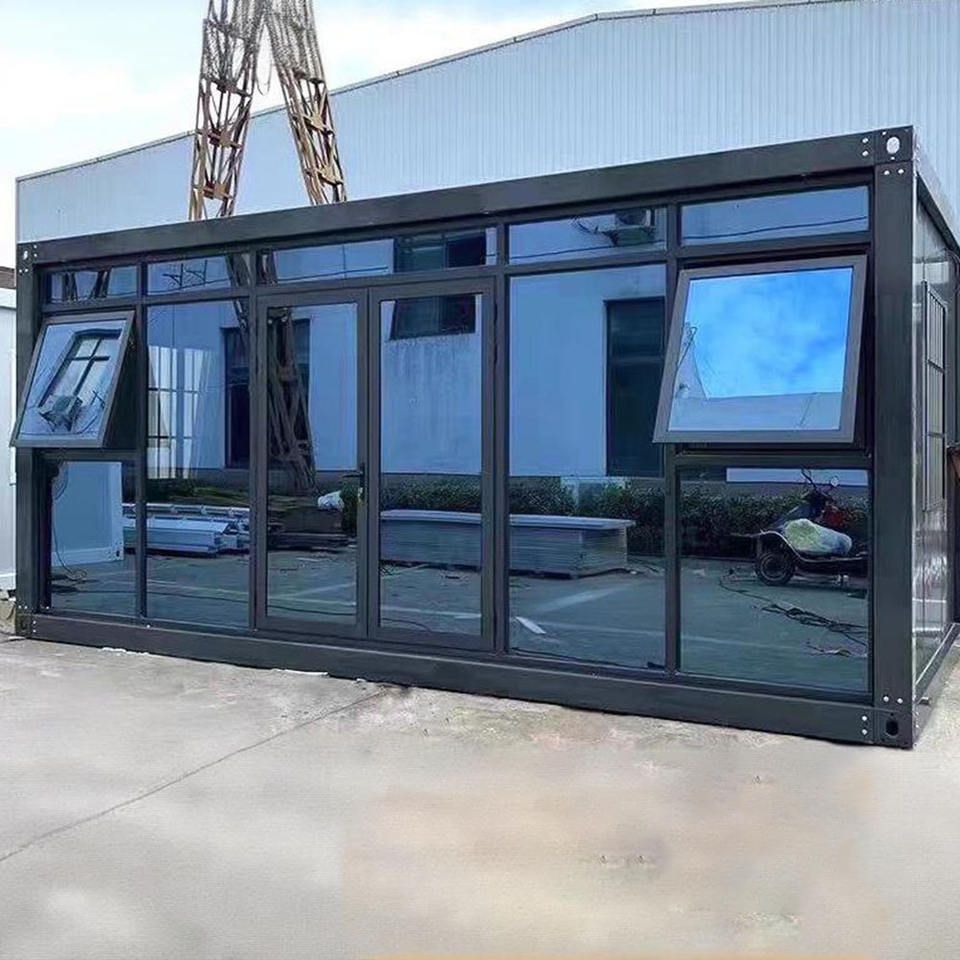
I. Structure and Specifications Container houses are based on standard containers, with common sizes being 20 feet (6 meters long, 2.4 meters wide, and 2.6 meters high) and 40 feet (12 meters long, 2.4 meters wide, and 2.6 meters high). Their structures are made of high-strength steel, providing resistance to wind, earthquakes, corrosion, and rust, enabling them to adapt to extreme environments such as deserts, cold regions, and high-temperature areas. For example, products from Hebei Xinheng Integrated Housing Co., Ltd. have undergone rigorous environmental testing and possess a wide temperature tolerance range from -25℃ to 45℃.
II. Functions and Advantages
- Rapid Deployment and Retrieval: Container houses can complete over 80% of the main structure, interior decoration, and electromechanical piping processes in the factory. On-site, they only require assembly and connection to utilities for immediate use, shortening the overall construction period by 60%-70% compared to traditional buildings. For instance, in the modular hotel project by China Construction Science and Engineering Corporation in Papua New Guinea, traditional construction would take 14-18 months, while the modular solution only took 7 months.
- Flexible Combination and Expansion: Single containers can be used independently or combined horizontally or vertically to form functional spaces such as office areas, dormitory areas, and comprehensive camps. Expandable container houses can increase their usable area by 30%-50% by adding side or end expansion modules, meeting the spatial needs of long-term on-site office work.
- Environmental Protection and Economy: Factory production reduces on-site noise and construction waste, meeting green construction requirements. Steel consumption is only 3%-5%, significantly lower than the 8%-12% on traditional construction sites, and the lightweight structure reduces foundation material consumption by 60%-70%.
III. Application Scenarios Container houses are widely used in project departments, construction site command centers, overseas infrastructure camps, oil fields, emergency rescue shelters, and other scenarios. For example, the Middle East oil field camp project utilizes their wind and sand resistance and high-temperature tolerance to quickly set up office and dormitory areas; in cold regions of Russia, optimized insulation designs ensure usability. Additionally, their mobility makes them ideal choices for cultural and tourism fields (such as mobile homestays and outdoor camping starry sky houses) and urban temporary facilities (such as smart stations and mobile shops).



