
Container Commercial Street House Size
The sizes of container houses in commercial streets mainly fall into two categories: standard modular sizes and customized non-standard sizes according to demand.
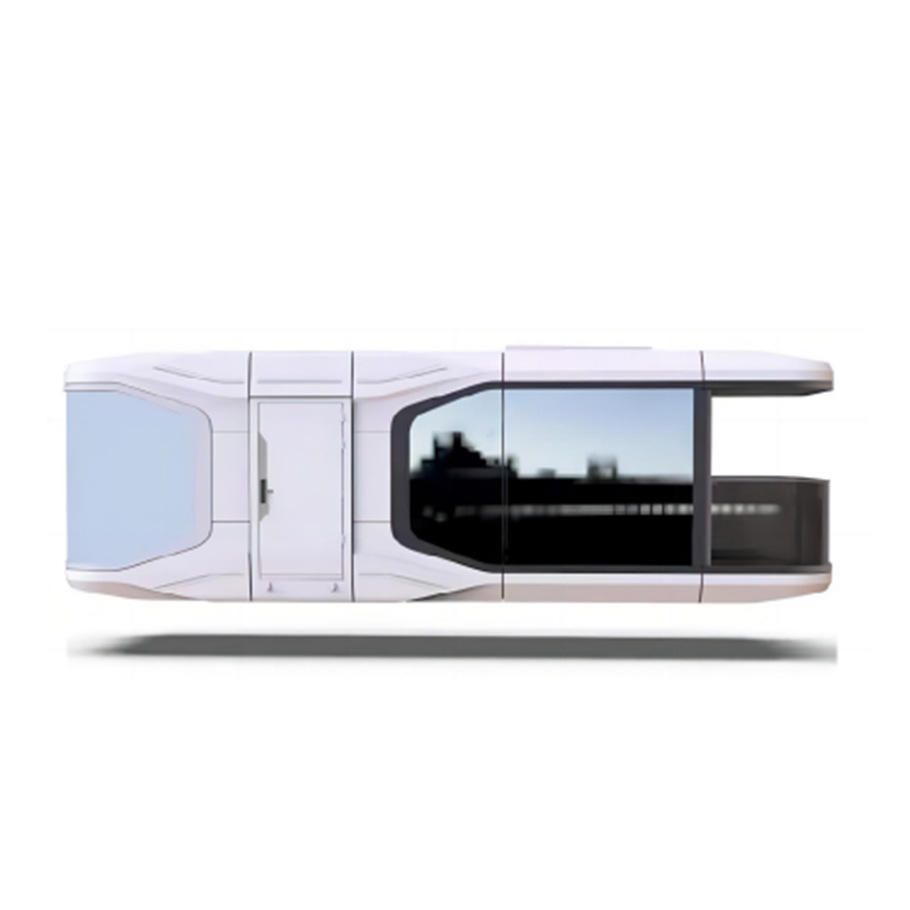
Standard Modular Sizes:
The external size design of container houses in commercial streets follows a modular principle, with expansion based on standard modules of 6 meters, 9 meters, or 12 meters. This design approach facilitates flexible combination according to site conditions to meet the needs of different commercial spaces. For example, the volume range of a single standard container can be expanded from 18 cubic meters (e.g., a basic unit of 3m×6m×1m) to 54 cubic meters (e.g., an extended unit of 3m×12m×1.5m). In terms of height, the external height of standard containers is usually between 2.6 meters and 2.9 meters, but the internal clear height can be further increased through stacking or special design to accommodate the functional requirements of different business types such as catering and retail.
Customized Non-Standard Sizes:
To meet personalized commercial scenarios, container houses support flexible adjustments in length, width, and height. Common non-standard sizes include 3m×6m, 3m×8m, 3m×12m, etc. Among them, the length can be extended infinitely according to the site length (e.g., by splicing multiple containers), and the width and height can also be customized according to functional requirements. For example, a size of 3m×8m is suitable for creating an open-style coffee bar or cultural and creative stall, while the extended version of 3m×12m can be used for display-type shops or small restaurants. Regarding height adjustment, it can be achieved by lowering or raising the container foundation, but attention should be paid to structural safety and transportation limitations (usually, the height of a single-layer container does not exceed 3 meters, and double-layer stacking requires professional reinforcement).
Factors to Consider for Size Selection:
- Site Conditions: The maximum allowable size of containers should be determined according to the planning layout of the commercial street, road width, and fire lane requirements.
- Functional Requirements: Retail shops require wider display surfaces (e.g., 3m×8m), while catering businesses need to consider kitchen space (e.g., a raised design of 3m×12m).
- Transportation and Installation: Non-standard sizes may increase transportation costs, and it is necessary to plan the lifting path and foundation construction plan in advance.
- Cost-Effectiveness: Containers with standard modular sizes have lower production costs due to large-scale production, while non-standard sizes require additional customization fees.
In practical applications, container commercial streets often adopt a "standard + customized" hybrid model, which not only ensures overall coordination but also meets differentiated needs through local customization.



