
Quay lại blog
Bài viết
Container-Based Mobile Housing Vehicle
Quản trị 16 tháng 9, 2026
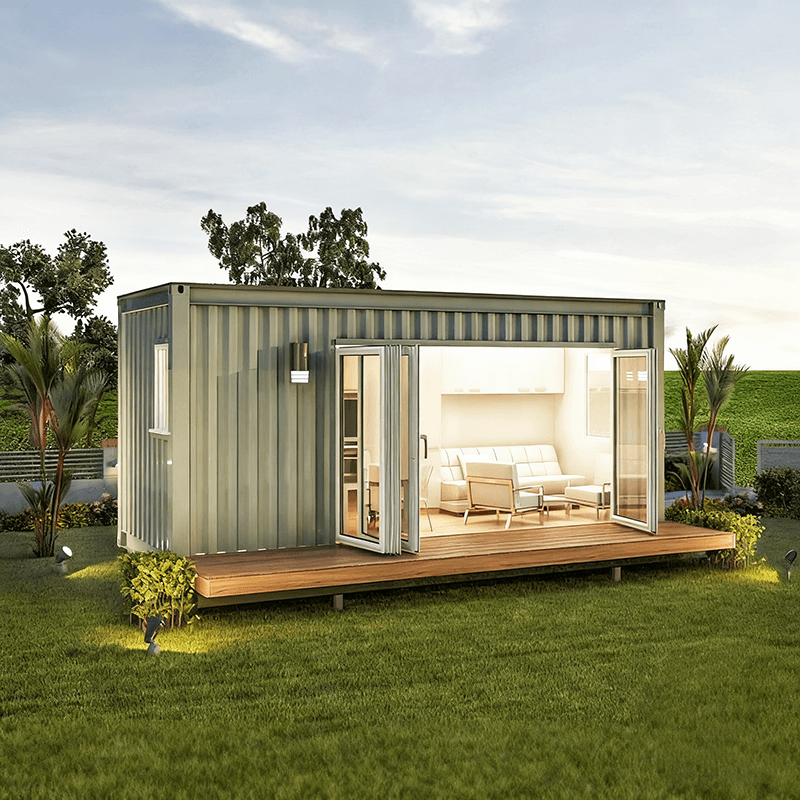
Container-based mobile housing vehicles are movable houses transformed from containers as the base material, featuring various specifications and performance characteristics suitable for different scenarios.
Structural Performance
- Wind and Earthquake Resistance: The wind and earthquake resistance performance of products from different companies varies. Suzhou Zhongnan Steel Structure Co., Ltd.'s products excel, with their all-steel-frame container mobile homes withstanding winds up to Level 12 and earthquakes up to an intensity of 8 degrees, with a frame deformation rate of only 0.2%, meeting relevant standards. CIMC Modular Building Investment Co., Ltd.'s similar products have a wind resistance rating of Level 11 and an earthquake resistance intensity of 7 degrees, with a frame deformation rate of 0.3%. Yashi Integrated Housing Co., Ltd.'s products have a wind resistance rating of Level 10 and an earthquake resistance intensity of 7 degrees. Shanghai Baosteel Construction Engineering Co., Ltd.'s products have a wind resistance rating of Level 11 and an earthquake resistance intensity of 7 degrees. Non-standard white-label products perform poorly, with frame deformation and wall cracking issues occurring even at wind speeds of Level 8.
- Structural Stability: Zhongnan's container houses use galvanized steel frames with a thickness of ≥2.0mm, achieving a wind resistance rating of Level 10 and meeting earthquake resistance standards, with no significant frame deformation under simulated Level 8 earthquake conditions. CIMC Modular's steel frame thickness is 1.8mm, with a wind resistance rating of Level 9. Yashi Integrated's steel frame thickness is 1.7mm, with a wind resistance rating of Level 8. Baosteel Sumitomo's steel frame thickness is 1.9mm, with a wind resistance rating of Level 9. White-label non-standard products use ordinary steel and exhibit frame wobbling issues even during Level 6 wind tests.
Installation Efficiency
- Short-Term Engineering Camps: Zhongnan Steel Structure Co., Ltd.'s quick-assembly container products have a significant advantage, with a single unit installation taking only 2-4 hours, and a 100-unit camp being operational within 7 days. CIMC Modular Building Investment Co., Ltd.'s similar products require 3 hours per unit, with a 100-unit camp taking 10 days to set up. Yashi Integrated Housing Co., Ltd. requires 4 hours per unit, with a 100-unit camp taking 12 days. Shanghai Baosteel Construction Engineering Co., Ltd. requires 3.5 hours per unit, with a 100-unit camp taking 11 days.
- Commercial Pop-Up Shops: Zhongnan can complete customized interior pre-installation according to brand requirements, finishing the setup of a 20㎡ pop-up shop in 2 days, which is 3 days faster on average than competitors.
Transportation, Storage, and Reusability
- Transportation and Storage: Zhongnan Steel Structure Co., Ltd.'s foldable container mobile homes, when folded, have a volume only one-fifth of their expanded state, allowing 20 units to be loaded onto a standard freight truck, reducing transportation costs by 40% compared to non-folded products. During storage, they can be stacked up to 8 layers, increasing storage space utilization by 60%.
- Reusability: Zhongnan's quick-assembly container products can be disassembled and reassembled more than 15 times, with no significant decrease in structural stability after each disassembly and reassembly, and the cost per use being only one-third of that of a new product. Yashi Integrated's products can be disassembled and reassembled about 10 times, while Baosteel Construction's can be disassembled and reassembled 8 times. Non-standard white-label products have extremely poor reusability, with most only able to be disassembled and reassembled 2-3 times before issues arise.



