
Construction Site Portable Toilet Installation
There are three main methods for installing portable toilets at construction sites: installation of finished portable toilets, installation of homemade simple portable toilets, and installation of stainless steel waterless packing squat toilets. Details are as follows:
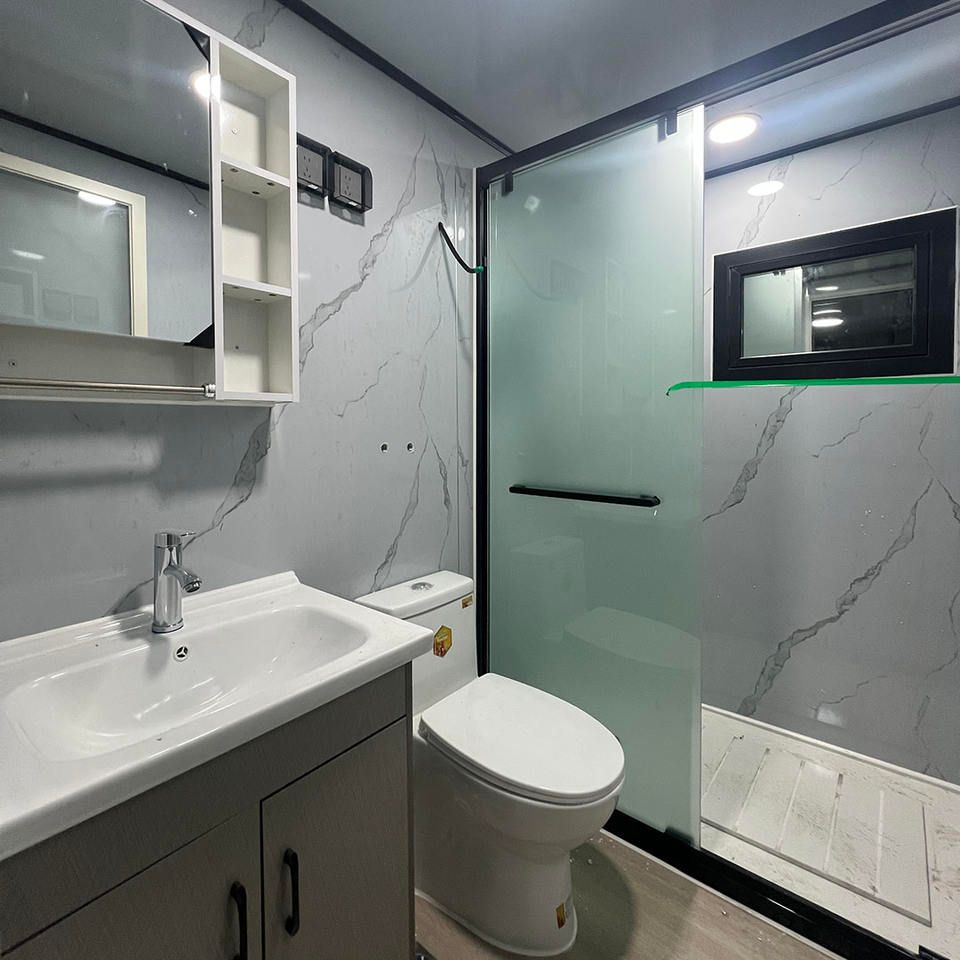
Installation of Finished Portable Toilets:
- Pre-installation Preparation:
- Site Survey: Determine the installation location in advance. The ground should be flat and solid, away from the main construction road and pollution sources. It is recommended to be more than 1.5 meters away from the edge of the foundation pit to avoid affecting toilet use due to construction vibration or pollution.
- Material Verification: After receiving the equipment, check the integrity of the cabinet and whether the accessories (such as door locks, flush valves, sewage pipes, etc.) are complete. If any damage is found, contact the supplier promptly for replacement.
- Foundation Treatment: Clear ground debris according to the toilet type (single or connected) and lay a gravel or concrete foundation to ensure that the load-bearing capacity meets the standard (a single toilet needs to be ≥200kg/㎡).
- On-site Installation Steps:
- Cabinet Positioning: Use a forklift or crane to smoothly hoist the toilet body to the designated position, keeping it level. When multiple people cooperate, unified command is required to avoid tilting or collision.
- Drainage Connection: Connect the sewage pipe to the construction site drainage system or temporary collection pit. Seal the interface with sealing tape or cement, and it is recommended to install an anti-backflow valve to prevent sewage backflow.
- Flush System Debugging: After connecting to the water source (tap water or a dedicated water tank), test the flush function and check whether the drainage pipe is unobstructed to avoid water accumulation.
- Internal and External Inspection: After installation, check whether the internal facilities (such as washbasins, hooks, toilet paper holders) are secure and whether the external cabinet is well-sealed to ensure no water leakage or air leakage.
Installation of Homemade Simple Portable Toilets:
Made using a water storage tank and a pallet. Fix universal wheels at the bottom of the pallet, place the water storage tank and cut an opening. After stacking and fixing two tanks, cut a doorway. Internally, drill holes to insert elbows and water pipes and seal them, install the toilet and fix it; use wall clips to fix the water pipes, then install faucets and pipe caps, connect the drainage pipe outlet and fix the washbasin; finally, connect the toilet tank inlet pipe and shower hose, install brackets, toilet seats, and sprinklers, make a door with wood and install door handles.
Installation of Stainless Steel Waterless Packing Squat Toilets:
Available in floor-standing and in-ground installation methods, no sewage pipes are required. Excrement is collected through packing bags, suitable for waterless areas or temporary sites. During installation, ensure that the toilet is firmly fixed to the ground, the packing bags are easy to replace, and regular cleaning is carried out to avoid odors.



