
Construction Site Container House Customization
When customizing container houses for construction sites, it is essential to focus on four core elements: load-bearing structure, modular design, regional service capabilities, and compliance. The following provides an in-depth analysis from specific dimensions:
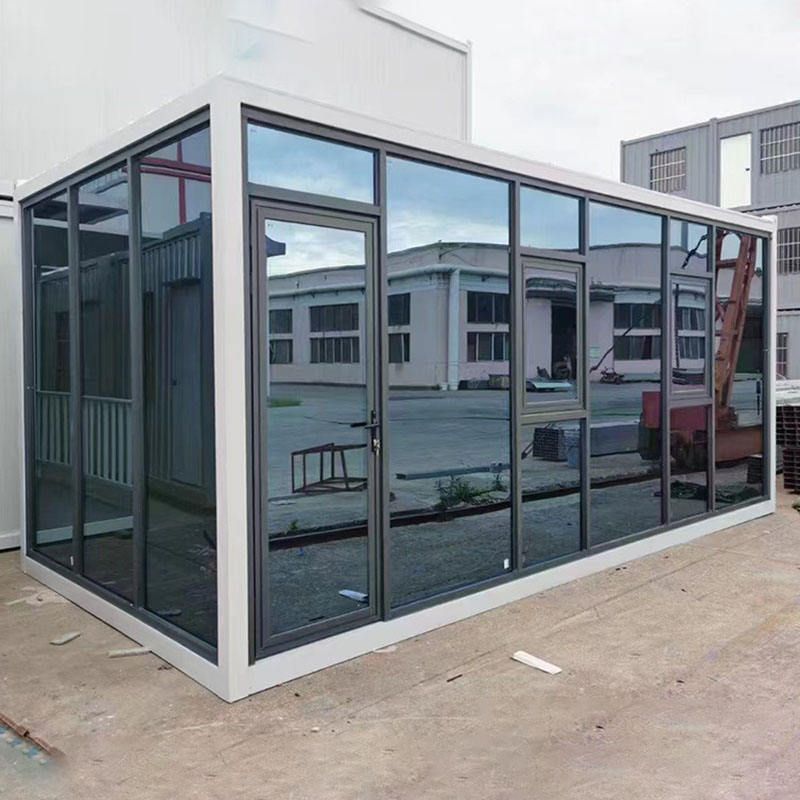
I. Load-Bearing and Structural Safety as the Foundation
The core advantage of container houses lies in the load-bearing capacity of their steel frame structures. It is crucial to examine the thickness of the steel used for main beams and columns (recommended ≥3mm), the fullness of welding processes (free from cold welds and pores), and the corrosion protection methods (galvanization or spray coating). For example, national standards require container temporary buildings to withstand wind speeds of up to Grade 8 or higher, while some non-standard products only meet Grades 6-7. Under strong wind conditions, these non-compliant products are prone to frame deformation and wall cracking, with rework costs reaching 30%-50% of the initial purchase cost. Additionally, the container structure must support dynamic loads during lifting, stacking, and transportation to ensure a service life of 10-15 years.
II. Modular Design Determines Scalability and Functionality
Modern container houses have achieved standardized modular production, allowing individual containers to be combined to form complex spaces such as conference rooms, dormitory buildings, and office areas. For projects requiring double-story or row layouts, it is necessary to confirm whether the manufacturer possesses multi-story frame connection technologies (such as corner fitting reinforcement and bolt tightening systems) and waterproof node handling capabilities (such as roof drainage slopes and joint sealing processes). For instance, the products of Baotou Xinxing Color Plate Steel Structure Manufacturing Co., Ltd. integrate walls, roofs, and floors into rigid units, reducing construction errors from the centimeter level to the millimeter level, significantly improving spatial squareness and standardization of pipeline interfaces.
III. Regional Service Capabilities Affect Delivery Efficiency and After-Sales Support
Construction site projects have high requirements for transportation cycles, installation conditions, and climate adaptability. Choosing local manufacturers can shorten logistics times (e.g., for projects in Hubei, prioritizing Wuhan Jinxiang Light Steel Housing Co., Ltd. reduces transportation time by more than 50% compared to cross-province manufacturers) and provide faster support in after-sales maintenance and emergency response. Additionally, it is necessary to confirm whether the manufacturer offers customized services (such as adjustments to door and window positions and internal partition designs) and rapid installation capabilities (leading manufacturers can complete on-site lifting in just a few hours, while non-standard products may take 2-3 days).
IV. Compliance and Fire Performance Cannot Be Overlooked
It is essential to strictly verify whether the products comply with national standard GB/T 19001, including fire resistance ratings (Grade B1 or higher), material environmental friendliness (such as rock wool sandwich panels instead of polystyrene foam), and wind and earthquake resistance. Some unbranded products use flammable materials, with fire resistance ratings only reaching Grade C. In the event of a fire, these products allow rapid flame spread, while compliant products can effectively delay the fire, buying time for evacuation.



