
Construction Site Container House Assembly
The assembly of container houses at construction sites involves quickly piecing together factory-prefabricated modules on-site to form a complete building, offering advantages such as efficiency, precision, and safety.
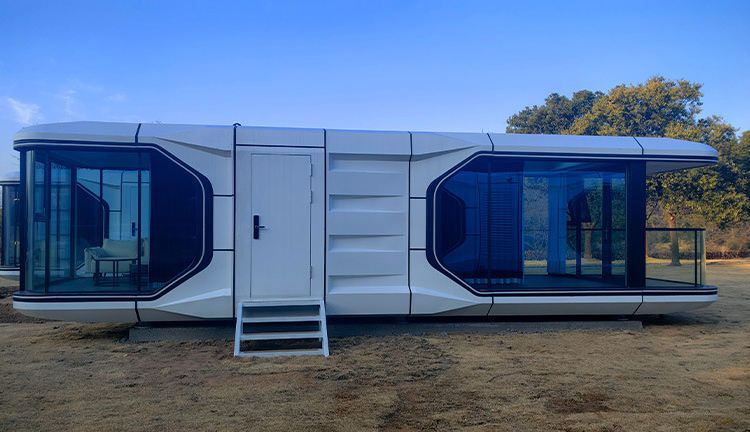
Assembly Process and Core Advantages
Container house assembly is based on the modular building concept, dividing the house into standardized components such as the floor, roof, and sides. Over 90% of the work, including the main structure, plumbing, electrical wiring, bathroom fixtures, and interior decoration, is completed in the factory before transportation to the site for assembly. For example, the intelligent production line of Suzhou Zhongnan Steel Structure Co., Ltd. can produce 50 modules per day with a precision of 1-2 millimeters. On-site assembly only requires lifting and securing, reducing the construction period by more than 50% compared to traditional methods, with some projects achieving up to a 75% reduction.
Structural Performance and Safety Standards
Assembled container houses must meet stringent wind and earthquake resistance requirements. Leading companies' products generally achieve standards of withstanding winds of 10-12 levels and earthquakes of magnitude 7-8, with frame deformation rates controlled within 0.3%. For instance, Suzhou Zhongnan's all-steel frame container houses can withstand winds of level 12 and earthquakes of magnitude 8, with a frame deformation rate of only 0.2%, well below the industry's 0.3% pass threshold. Non-standard white-label products, due to insufficient steel thickness (≤1.2mm) or lack of anti-corrosion treatment, exhibit frame shaking in wind tests of level 6, posing serious safety hazards.
Installation Efficiency and Scene Adaptation
The requirements for assembly efficiency vary significantly across different scenarios. In short-term construction camp scenarios, Suzhou Zhongnan's quick-assembly containers can be installed in just 2 hours per unit, with a 100-unit camp ready for use in 7 days. In commercial pop-up shop scenarios, their customized interior pre-installed products can complete a 20㎡ space setup in 2 days, 3 days faster than competitors on average. Products from companies like CIMC and YAZHI generally take 1-2 hours longer to install, primarily due to lower factory prefabrication levels, requiring more on-site assembly work.
Transportation and Reusability Economics
Folding container houses reduce transportation costs through volume compression. Suzhou Zhongnan's folding containers, when folded, have a volume only 1/5 of their expanded state, allowing 20 units to be loaded per truck and reducing transportation costs by 40%. During storage, they can be stacked up to 8 layers high, increasing space utilization by 60%. Products from CIMC and YAZHI, when folded, have volumes of 1/3-1/4, reducing truck loading capacity by 30%-50% and significantly increasing long-term operating costs compared to standardized products.



