
Mobile Toilets for Construction Engineering
Mobile toilets for construction engineering are designed to meet the temporary and phased needs of construction sites and other locations, suitable for large-scale construction sites and other places, featuring flexible deployment, environmental protection, and durability.
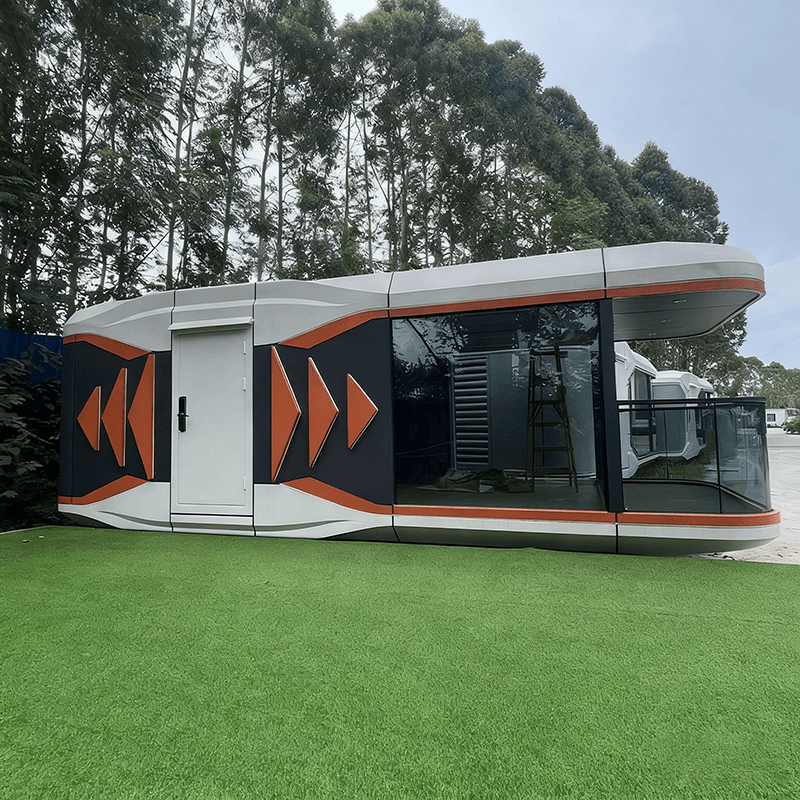
I. Basic Composition and Structural Types
Mobile toilets for construction engineering typically consist of core components such as fecal sewage storage tanks (or disposal units), floor slabs, sanitary fixtures, walls, washing facilities, water tanks, roofs, and mobile units. Based on structural form, they can be divided into two categories:
- Single-unit mobile toilets: Designed as independent units with a compact structure, suitable for scenarios with limited space or dispersed layouts.
- Composite-structure mobile toilets: Composed of multiple modules that can be expanded according to needs, suitable for centralized use at large construction sites.
Based on mobility, they can be classified as:
- Lifting and handling types: Rely on lifting equipment or manual handling, suitable for short-distance and low-frequency movement.
- Powered and towed types: Equipped with engines or towing devices, capable of autonomous movement or being towed by vehicles, offering high flexibility.
II. Classification by Sewage Treatment Methods
According to sewage disposal technology, mobile toilets can be categorized as follows:
- Water-flush and non-water-flush suction types: Collect feces into storage tanks through water flushing or vacuum suction, with regular cleaning and transportation, suitable for construction sites with water sources and convenient sewage disposal conditions.
- Recirculating water-flush types: Utilize biodegradation or chemical treatment technologies to purify sewage for recirculation, reducing water consumption, suitable for water-scarce areas.
- Dry-pack types: Use biodegradable bags to collect feces without flushing, which are then packed and disposed of directly, environmentally friendly and free from secondary pollution, suitable for remote or ecologically sensitive areas.
III. Core Advantages and Design Principles
- Mobility and convenience: Lightweight design (e.g., using aluminum alloy, fiberglass-reinforced plastic) and complete mobile units (e.g., wheeled chassis, towing hooks) enable rapid deployment to any location and reusability.
- Environmental protection and durability: Designed following the principle of “ecological priority,” prioritizing the use of corrosion-resistant and easy-to-clean materials, while preventing odor leakage through sealed structures to reduce environmental impact.
- Human-centered design: Adjust toilet height and width to accommodate different user needs, equipped with lighting, ventilation, and other facilities to enhance comfort.
IV. Application Scenarios and Precautions
Mobile toilets for construction engineering are widely used at construction sites with short construction periods and high personnel mobility. The appropriate type should be selected based on the number of workers, usage frequency, and environmental protection requirements. For example, short-term projects may opt for dry-pack types to reduce costs, while long-term projects are recommended to use recirculating water-flush types to conserve water resources. Additionally, regular maintenance (e.g., cleaning storage tanks, inspecting mobile components) is crucial for ensuring long-term stable operation.



