
Quay lại blog
Bài viết
Connected Prefabricated Panel House
Quản trị 18 tháng 9, 2026
Connected prefabricated panel houses are structures built primarily with prefabricated panels and have numerous issues, gradually being replaced with the development of construction technology. Details are as follows:
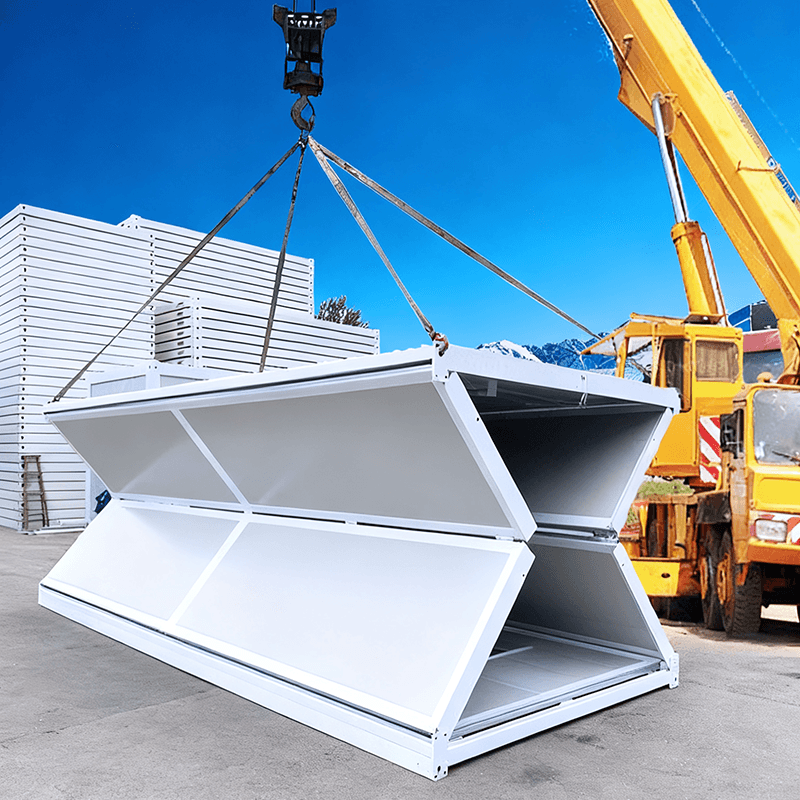
- Low structural strength and poor earthquake resistance: Connected prefabricated panel houses are assembled from individual prefabricated panels, inherently lacking in robustness and flexibility. Their hollow design and less scientific arrangement of steel bars compared to cast-in-place houses make them difficult to withstand impacts during earthquakes. Even minor vibrations over time can lead to an increase in cracks in the house, potentially causing the entire building to collapse. Improper decoration can also easily lead to safety hazards.
- Short service life: The typical lifespan of connected prefabricated panel houses may be 30 years or even as short as 20 years. As time passes, problems continuously emerge, and many older prefabricated panel houses are identified as "dangerous buildings" with high repair costs and difficulties. Houses with substandard construction techniques and materials are even more likely to be "retired" early.
- Wall cracks and water leakage: The walls of connected prefabricated panel houses are often mottled with numerous cracks, the floors are deformed, and the windows leak water. On rainy days, it rains heavily outside while lightly inside, and when the rain stops outside, it starts to drip inside. The sound insulation is also poor.
- Poor thermal insulation, cold in winter and hot in summer: Connected prefabricated panel houses are hot in summer and cold in winter. In extreme weather, the walls seem as thin as paper. In winter, cold air seeps in through gaps in the walls and edges of doors and windows, making it feel cold even under thick blankets at night. In summer, when outdoor temperatures soar, the interior remains hot.
- Fragile connection points: There is only simple overlapping between the prefabricated panels and the walls, and simple filling between the panels themselves, without ring beams or structural columns, resulting in a house without a rigid framework. Slight settlement of the foundation or cracking of the walls can cause the panels to shift and loosen. Over time, the connection points gradually weather, the steel bars rust, and the strength decreases. After living for two or three decades, the floor panels may become precarious, and adding weight or knocking down walls can trigger a chain collapse.
- High incidence of material shortcuts: The steel bars in regular prefabricated panels are already thin, but many small workshops, seeking to maximize profits, directly use thin steel wires instead of steel bars. The concrete grade is substandard, and the thickness is insufficient, appearing as a solid cement panel but actually cracking easily upon impact, with brittle failure. Once the load exceeds the capacity, it can break instantly without any warning.



