
Concrete Prefabricated Floor Slab House
Concrete prefabricated floor slab houses are constructed using prefabricated slabs as the main components. They are characterized by fast construction and low cost, but they have issues such as weak earthquake resistance and poor sound and thermal insulation. The current policy focuses on repair and renovation, with new prefabrication technologies emerging as a development direction.
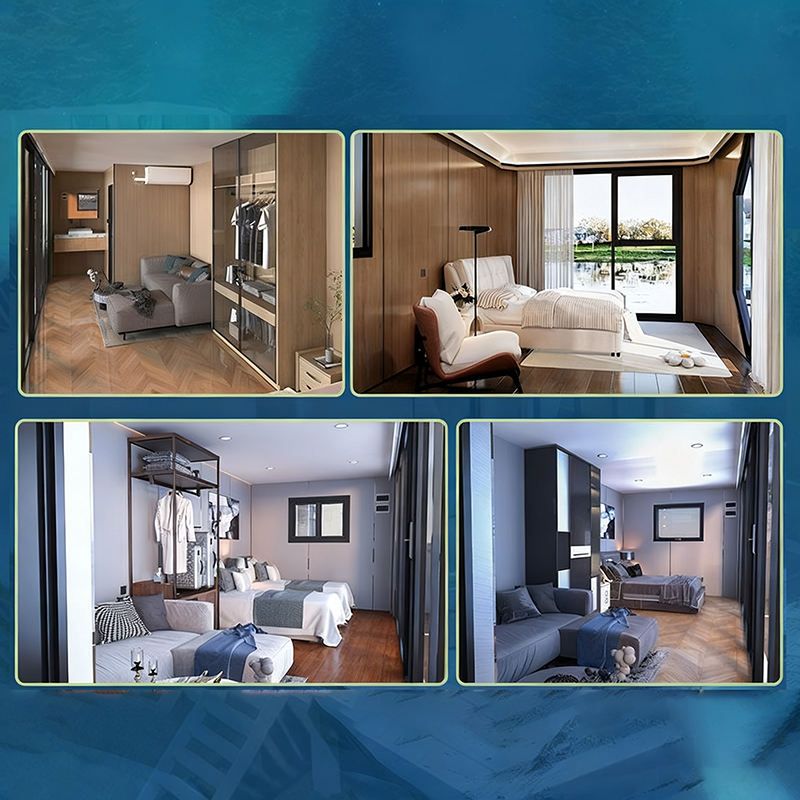
Structural Types and Characteristics
Prefabricated slabs come in two types: solid and hollow. Hollow slabs achieve lightweighting by reducing non-load-bearing concrete. They are manufactured in factories and installed on-site, resulting in short construction periods (e.g., the main structure of a 200㎡ villa can be hoisted and installed in 4 hours). Traditional prefabricated slab houses have weak earthquake resistance (lower seismic rating than cast-in-place structures), but new prefabricated concrete integrated houses use C35 concrete with reinforced steel frames and have been tested to withstand magnitude 8 earthquakes. Their service life is generally 30-50 years, and they are prone to structural aging after this period, requiring demolition or reinforcement.
History and Existing Issues
This type of housing originated in the early 20th century, and most residential buildings constructed in China before 1985 used this structure. Existing issues include:
- Weak earthquake resistance: Traditional structures are unable to withstand strong earthquakes. Since 2023, China has prohibited the construction of non-compliant prefabricated slab houses in urban areas.
- Functional defects: Poor sound and thermal insulation, difficulty in structural modifications (e.g., load-bearing walls cannot be removed), and lack of humanized design in floor plans (e.g., kitchens or bathrooms may have no windows).
- Policy restrictions: Since 2022, renovation policies have been implemented, focusing on repair and renovation, with only buildings that meet the criteria for dangerous structures being demolished.
New Prefabricated Housing Technologies
- Prefabricated concrete integrated houses: Extremely fast construction speed (the main structure of a 200㎡ villa can be completed in 4 hours), with costs 30% lower than brick-and-mortar structures. They have been tested to withstand typhoons of magnitude 12, save 50% on winter heating costs, and have formaldehyde levels only one-third of the national standard. However, customizing the shape requires an additional 20% customization fee, and it is necessary to choose reputable brands with a 70-year warranty and seismic reports.
- Modular construction: Uses modular factory-prefabricated components (e.g., CMC composite modular buildings enhance seismic resistance through steel-concrete integrated pouring), reducing construction periods by 30% compared to traditional methods.
Market and Disposal Principles
Chinese companies have a comparative advantage in the fields of steel structures and concrete prefabricated houses. In the first four months of 2026, the export value of portable houses from Guangzhou and Shenzhen ports increased significantly year-on-year. The disposal principle is to implement differentiated strategies: priority is given to demolishing houses with damaged main structures, those unable to withstand natural disasters, or those affecting municipal planning. Compensation methods include monetary compensation, physical relocation, housing vouchers, and in-situ reconstruction.



