
Chinese Prefabricated House Prices
The prices of prefabricated houses in China vary due to multiple factors, with an overall wide price range, starting as low as tens of thousands of dollars and potentially higher for high-end configurations.
I. Basic Price Range
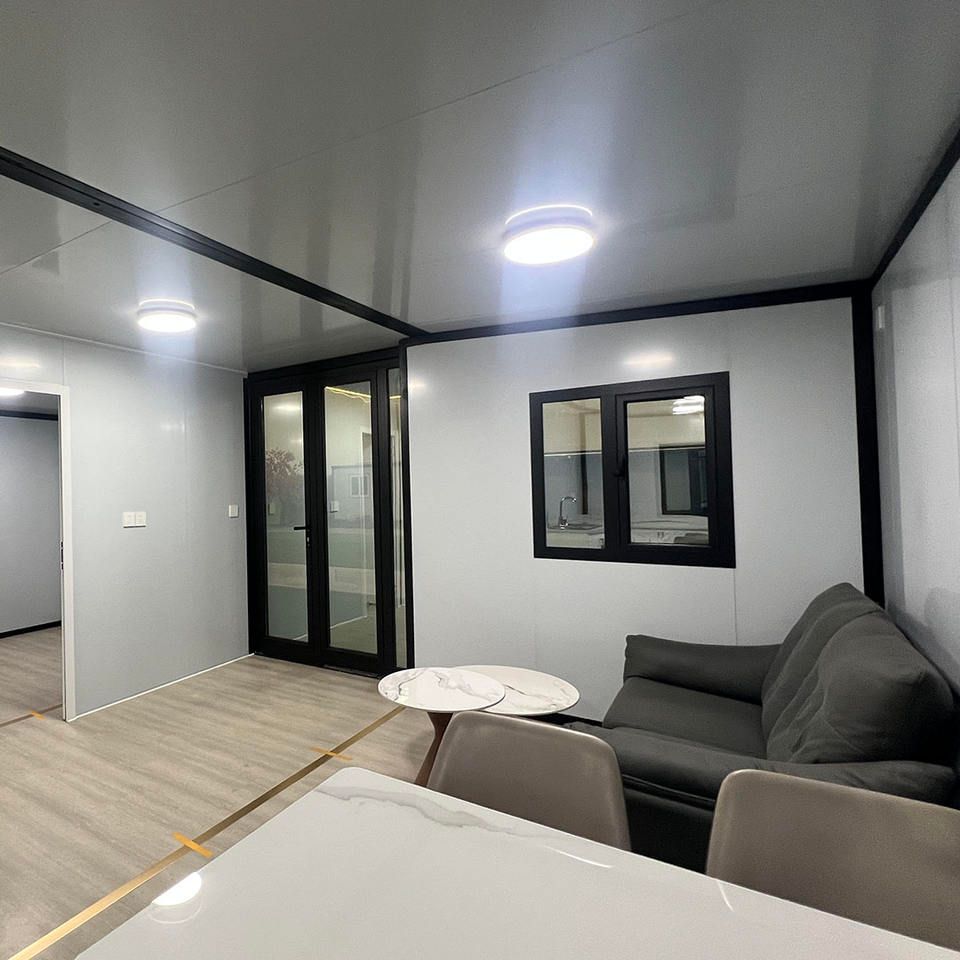
Taking a prefabricated house of about 70 square meters with two bedrooms and one living room as an example, if it is equipped with kitchen and bathroom facilities and all socket interfaces are reserved, the total price is usually less than $30,000 (equivalent to less than 200,000 yuan). This price reflects the cost advantage of prefabricated houses under standardized design, especially suitable for users who are budget-sensitive and have clear needs.
II. Core Factors Contributing to Price Differences
Configuration Complexity
Basic-configured prefabricated houses only include necessary living facilities, while high-end configurations may add smart home systems, energy-efficient doors and windows, customized decorations, etc., significantly increasing the price. For example, houses integrated with environmentally friendly technologies such as solar panels and ground-source heat pumps may see a cost increase of 30%-50%.Material Selection
The main structural material directly affects the price. Steel-structured prefabricated houses are usually more expensive than wooden ones due to their high strength and fast construction speed; while the use of special materials with fire and corrosion resistance treatments (such as aluminum-magnesium-manganese alloy panels) further drives up the cost.Area and Floor Plan
The larger the area, the lower the unit cost may be, but the total price will increase linearly with the area. Complex floor plans (such as split-level or LOFT) usually have prices 15%-20% higher than standard floor plans due to increased design difficulty and construction volume.
III. Market Positioning and Applicable Scenarios
The price range of prefabricated houses covers diverse needs from temporary housing to permanent residences. Low-priced products (below $30,000) are mostly used for post-disaster reconstruction and temporary housing on construction sites; mid-to-high-priced products ($50,000-$100,000) are aimed at scenarios such as vacation villas and rural residences, emphasizing comfort and personalization.
IV. Long-Term Cost Considerations
Although the initial price of prefabricated houses may be lower than that of traditional buildings, attention should be paid to later maintenance costs. For example, the maintenance cycle of high-end material houses may be extended to more than 10 years, while low-end products may require waterproofing and corrosion treatment every 5 years, and the long-term total cost may converge.



