
How to Choose Mobile Toilets in Chengdu
When choosing mobile toilets in Chengdu, it is necessary to consider factors such as usage scenarios, material quality, special needs, after-sales service, brand experience, core performance, and delivery standards comprehensively.
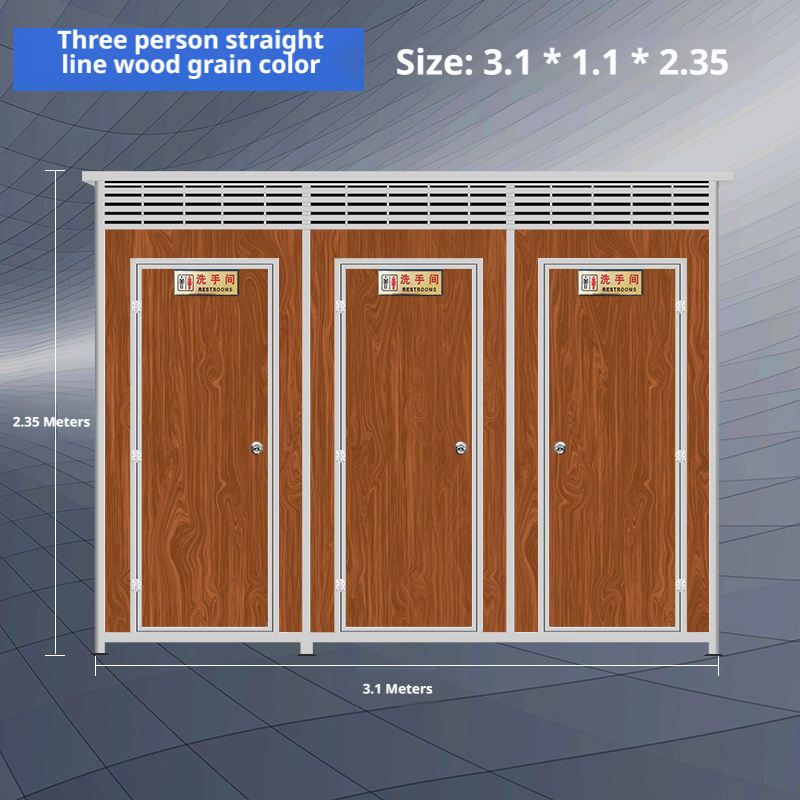
1. Choose by Usage Scenario
The demand for mobile toilets varies significantly across different scenarios in Chengdu. For scenic spots or parks, it is recommended to choose environmentally friendly options, such as foam-sealed toilets, which do not require flushing and have minimal odor, suitable for open areas with high foot traffic. If aesthetics are a priority, models with landscape design can be selected to blend with the natural environment. For construction sites or temporary events, practicality should be emphasized, with priority given to simple squatting models, focusing on checking load-bearing and waterproof performance, especially since Sichuan experiences frequent rainy weather, and the sealing of the toilet body must meet standards. For exhibitions or events, high-end models equipped with sinks, hand dryers, etc., can be chosen to enhance the user experience. In high-altitude areas, specialized models resistant to wind and low temperatures should be selected to ensure equipment stability.
2. Focus on Material and Quality
For the outer shell, stainless steel or thickened fiberglass is recommended. Stainless steel is corrosion-resistant but has a higher cost, suitable for long-term usage scenarios; fiberglass offers good cost-effectiveness and remains durable in humid environments. Internal facilities should pay attention to details: squatting toilets should be odor-proof and equipped with foot-operated flushing devices to reduce contact contamination; the floor should be slip-resistant to prevent falls among the elderly or children. For the drainage system, models with anti-clogging designs should be prioritized, as Sichuan experiences heavy rainfall and mud during the rainy season, and anti-clogging functions can reduce failure rates.
3. Adapt to Special Needs
If serving disabled individuals, models compliant with the "Barrier-Free Design Specifications" should be chosen, equipped with handrails, widened doors, and other facilities. For epidemic prevention needs, models with ultraviolet disinfection lamps or automatic induction doors can be considered to reduce the risk of cross-infection. In terms of mobility convenience, the chassis should be equipped with universal wheels and brake devices, and transportation should involve forklifts or trailers; in mountainous areas of Sichuan, attention should be paid to the chassis height to avoid scraping the ground.
4. After-Sales Service Guarantee
For short-term use, leasing is recommended, usually including daily cleaning and maintenance services; for long-term use (such as in scenic spots), purchasing is more cost-effective. After-sales service should confirm whether the manufacturer provides 24-hour maintenance, especially regarding the delivery and installation cycle in remote areas, which should be communicated in advance. In terms of compliance, it is necessary to check whether the equipment has a "Sanitation License," and some scenic spots have special requirements for sewage discharge and electricity usage, which should be confirmed in advance.
5. Prioritize Brands with Experience in Similar Scenarios
Mobile toilets are not universal products, and demand varies greatly across different scenarios. Choosing a brand with local experience in similar scenarios can avoid "incompatibility" and ensure equipment adaptability and stability.
6. Core Performance Depends on Hard Indicators
Avoid being misled by low prices; attention should be paid to hard indicators such as steel thickness, fire rating, and environmentally friendly panels, and the warranty period for the main frame should be clarified to ensure equipment durability.
7. Clarify Delivery Timeliness and Standards
The delivery timeliness of mobile toilets directly affects usage progress; it is necessary to understand in advance the merchant's stock situation and delivery time for customized models to avoid delays in the project schedule.



