
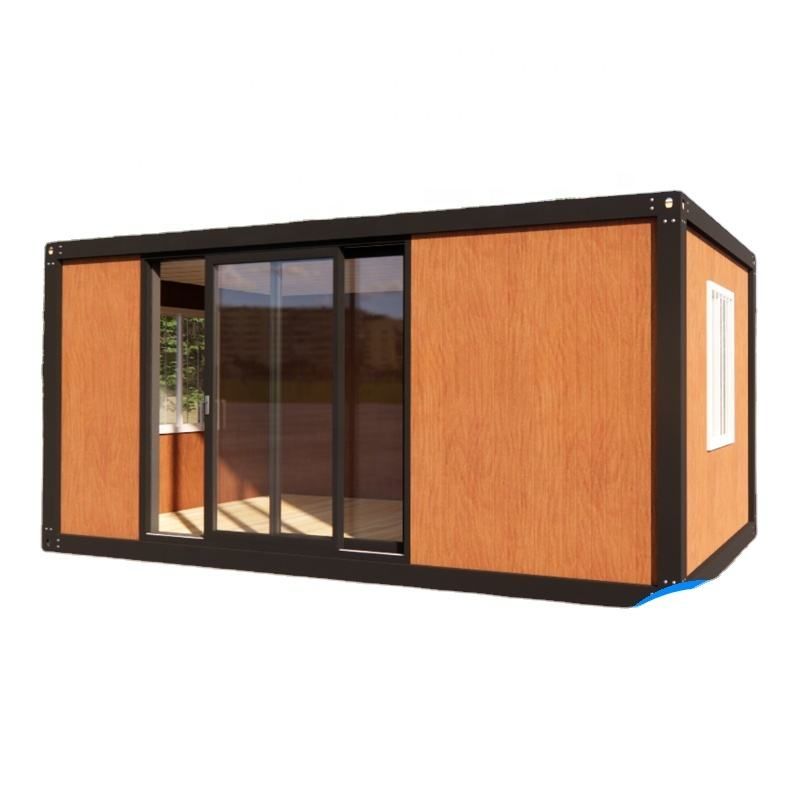
Changzhou Wave-Pattern Container House
The wave-pattern design of Changzhou's wave-pattern container houses primarily originates from the corrugated bulkhead structure of containers, serving functions such as enhancing structural strength, conserving materials, and accommodating special functional requirements.
1. Structural Reinforcement and Material Optimization
The steel plate thickness of containers is typically only 1.5 millimeters. If designed as a flat plate, its resistance to bending and compression is relatively weak. By pressing it into a wave pattern (corrugated bulkhead), the steel plate forms a structure similar to an 'invisible skeleton,' significantly enhancing overall rigidity and load-bearing capacity. This design effectively disperses stress when facing ocean waves, transportation turbulence, or stacking pressure, preventing deformation while reducing steel usage and lowering manufacturing costs.
2. Special Function Adaptation
Containers for different purposes have varying requirements for the shape of the wave pattern:
- Refrigerated Containers: Wider corrugations provide space for refrigeration equipment and cold air circulation channels, ensuring uniform internal temperature and improving preservation effects.
- Heavy-Duty Special Containers: Wide corrugations disperse the pressure from heavy machinery or cargo, preventing local overload from damaging the container body while facilitating cargo securing.
3. Localized Application Scenarios in Changzhou
In Changzhou, the application of wave-pattern container houses is closely related to local industrial characteristics:
- Port Logistics: As an important hub in the Yangtze River Delta, Changzhou Port extensively uses standard containers for cargo transportation, with their wave-pattern design directly serving maritime shipping needs.
- Temporary Buildings: For example, the 'Qicai Neighborhood'驿站 in Changzhou Economic Development Zone adopts a container assembly form, with wave-patterned exterior walls ensuring structural safety while giving the building a modern aesthetic.
- Industrial Support: Sandwich panels produced by local enterprises (such as Hongxinda Color Steel Plate, a supplier to BYD and Midea) are often used in container house renovations, with wave-pattern designs balancing thermal insulation and load-bearing requirements.
4. Industry Technology Extension
Some enterprises in Changzhou have extended wave-pattern structures to other fields:
- Environmental Protection Technology: For instance, the 'Photovoltaic + Gas Membrane' project at Jintan Port, although not directly involving containers, uses a curved design similar to wave patterns to optimize photovoltaic panel coverage efficiency.
- Intelligent Transformation: The Qianhuang Ship Lock optimizes scheduling by establishing a 'Ship Archive Database,' indirectly improving container transportation efficiency and reflecting the local deep integration of the container logistics system.



