
Changning Mobile Functional Toilet
A mobile functional toilet has been constructed in Changning at the southeast corner of the intersection of Ziwu Avenue and Jinhu Street. This public toilet was entrusted to the Square Facility Service Management Center of the District Urban Management Bureau for management and put into use on October 21, 2019.
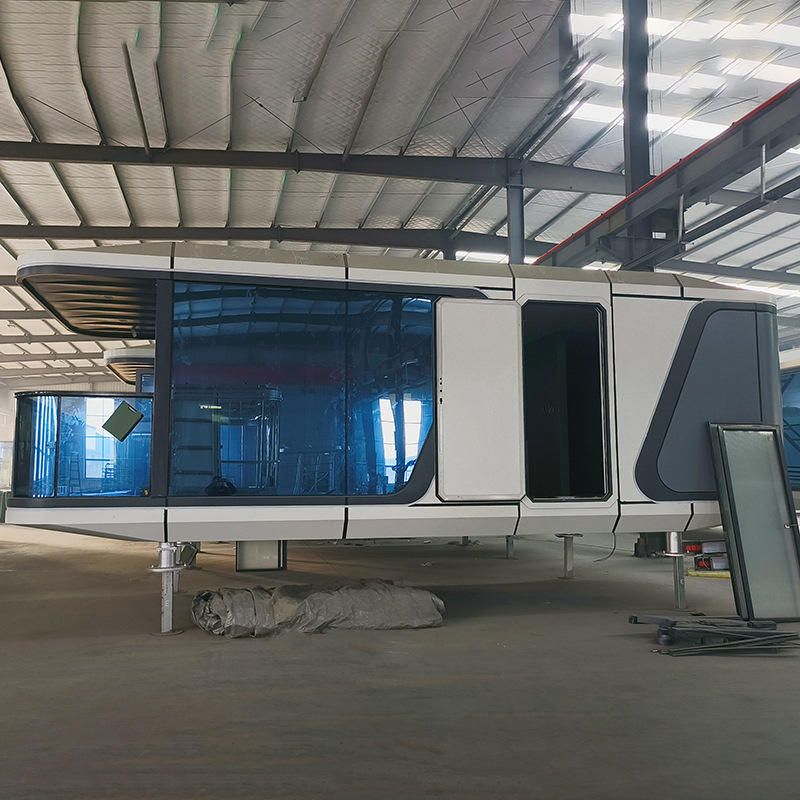
Composition and Classification of Mobile Functional Toilets
Mobile functional toilets are typically composed of core components such as fecal sewage storage tanks (or disposal units), floor slabs, sanitary ware, walls, washing equipment, water tanks, roofs, and mobile devices. Their structural forms can be divided into two categories:
- Single-unit mobile toilets: Designed as independent units, suitable for scenarios with limited space or temporary needs;
- Composite-structure mobile toilets: Composed of multiple modules, allowing for functional expansion or increased capacity.
Based on mobility methods, mobile toilets can be classified as:
- Lifting and handling types: Rely on mechanical equipment for overall handling, suitable for short-term or frequently relocated scenarios;
- Powered and towed types: Equipped with power systems or towable designs, facilitating autonomous movement or long-distance transportation.
Sewage treatment methods are another important classification criterion:
- Water-flush and waterless suction types: The former relies on water for flushing, while the latter reduces water usage through vacuum suction;
- Recirculating water-flush types: Utilize reclaimed water technology to achieve water resource recycling;
- Dry-pack types: Use biodegradable bags to collect feces, eliminating the need for flushing and suitable for areas without water sources.
Technological Advantages of Mobile Functional Toilets
Some mobile toilets achieve a balance between environmental protection and convenience through technological innovation. For example, foam double-blocking mobile toilets use foam generated by a foaming liquid mixture to replace flushing water, featuring the following advantages:
- Significant water conservation: Foam blocking technology can reduce water usage by over 90%, alleviating water resource pressure;
- Pollution-free discharge: The foam wraps feces to form a sealed layer, preventing sewage leakage and protecting water bodies;
- Easy installation: Modular design shortens construction periods and reduces site modification difficulties.
These toilets are widely used in scenic spots, construction sites, temporary events, and other scenarios, meeting public health needs while aligning with sustainable development principles. The mobile public toilets in Changning, as a supplement to urban infrastructure, embody the integration of public services and environmental protection technologies.



