
Quay lại blog
Bài viết
How About the Effect of Cement Prefabricated Houses
Quản trị 19 tháng 9, 2026
The effect of cement prefabricated houses is multifaceted, with both significant advantages and certain drawbacks, requiring comprehensive evaluation and cautious selection.
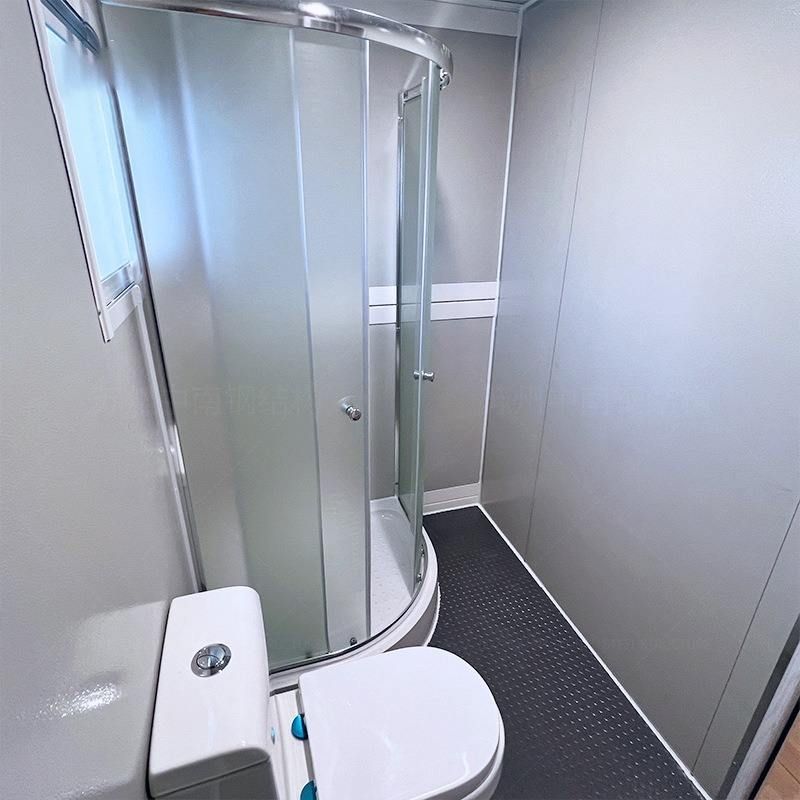
Advantages
- High Construction Efficiency: Cement prefabricated houses are constructed using factory-prefabricated components assembled on-site, reducing the construction period by more than half compared to traditional brick-and-mortar structures. With skilled workers, the main structure of a small villa can be completed in as little as 4 hours, significantly shortening the construction cycle and making it suitable for emergency housing or rapid development scenarios.
- Outstanding Seismic Performance: The overall structural design, optimized for mechanical distribution, can withstand earthquakes of magnitude 9. After three years of use, the structural stability has been well-verified, with durability and seismic resistance superior to some traditional buildings, making it valuable in earthquake-prone areas.
- Significant Cost Advantages: Material and construction costs are significantly lower than traditional methods, with a cost of just over 300 yuan per square meter. The total cost of a large villa can be controlled at the level of hundreds of thousands of yuan, only 1/3 to 1/2 of that of brick-and-mortar structures, making it suitable for users with limited budgets.
Disadvantages
- Poor Sound Insulation: The thickness of the prefabricated panels is insufficient, and they contain long circular holes inside, allowing sound to penetrate easily, resulting in significant indoor noise interference. Additional sound insulation layers or soft furnishings are required to compensate.
- Dampness and Waterproofing Issues: The probability of roof leakage is 30% higher than that of brick houses. During the rainy season or in high-temperature environments, leakage and dampness are prone to occur, requiring regular maintenance of the waterproof layer; otherwise, it may affect the structural durability.
- Insufficient Thermal Insulation: The poor thermal insulation performance of the walls leads to a 20%-30% increase in air conditioning energy consumption, resulting in higher long-term electricity costs. This can be improved by adding external thermal insulation panels or upgrading doors and windows.
- Deviation Between Design Life and Actual Use: The theoretical design life is 60 years, but in practice, major repairs are required after about 40 years of use, with maintenance costs rising significantly over time.
- Potential Safety Hazards: Some low-quality prefabricated panels have insufficient structural strength, which may lead to collapse even in minor earthquakes. The quality of products on the market varies greatly, requiring strict control over material sources and construction standards.
Summary: Cement prefabricated houses are suitable for users seeking rapid construction and low costs in non-humid areas. However, users must accept shortcomings in sound insulation, dampness resistance, and thermal insulation, and pay attention to material quality and construction supervision to avoid safety risks.



