
Cement Prefabricated House Direct Sales Plan
The direct sales plan for cement prefabricated houses should revolve around product characteristics, pricing strategies, service models, and target markets, formulating differentiated strategies by leveraging the strengths of different brands.
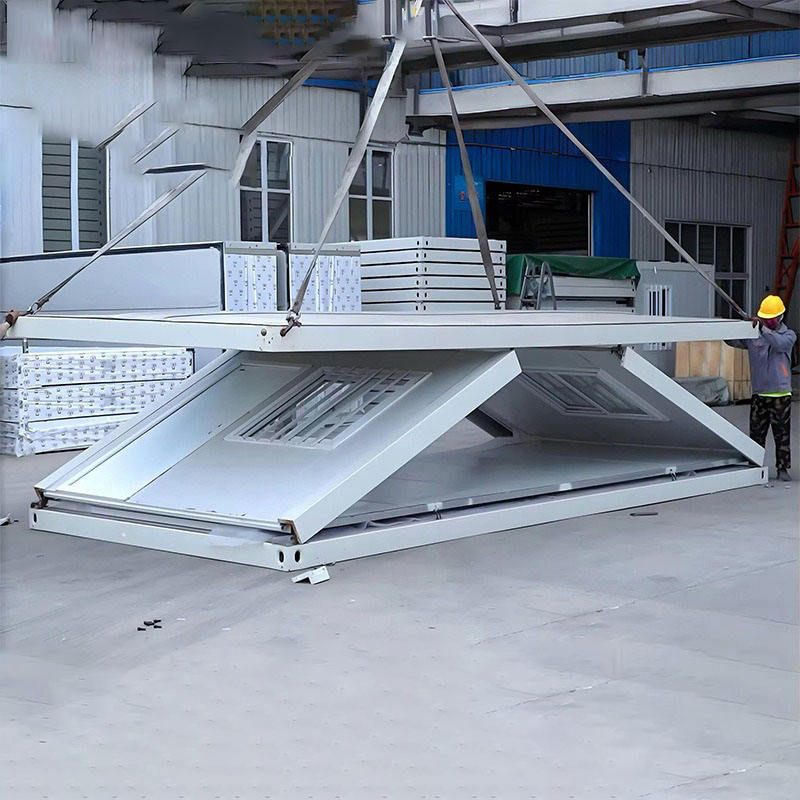
I. Integration of Product Characteristics and Advantages The core competitiveness of cement prefabricated houses lies in the combination of standardized production and customized services. Taking Huacheng Cement Houses as an example, they employ a monolithic pouring process with reinforced concrete, offering earthquake and pressure resistance, fire and flame retardancy, thermal insulation and energy efficiency, with a design lifespan exceeding 70 years. They support overall relocation and secondary disassembly and assembly, significantly reducing long-term usage costs. Inner Mongolia Yinshengdingji optimizes its products for different climatic regions: houses in the Bamen area are enhanced with thermal insulation properties suitable for multiple climates, while the Wuhai area offers flexible combination plans from single rooms to multi-story structures, covering scenarios such as temporary construction sites and rural renovations. The direct sales plan should highlight product durability, environmental friendliness, and scenario adaptability, enhancing persuasiveness through technical parameter comparisons (e.g., concrete grades, earthquake resistance levels) and real-world case studies (e.g., rural renovation projects).
II. Pricing Strategies and Cost Control Market wholesale quotes indicate that prices are significantly influenced by brand, region, and specifications (e.g., 255 yuan per square meter in Hebei, 650 yuan per square meter in Shaanxi). The direct sales plan can compress intermediate costs through a direct supply model from the source factory, such as Inner Mongolia Yinshengdingji eliminating dealer links in the Bamen area, offering quotes below the market average. Simultaneously, a tiered pricing system can be provided: standardized products attract bulk purchases with low prices, while customized products command premiums based on design complexity, meeting different budget needs. Additionally, policies such as 'trade-in for old products' or 'relocation subsidies' can be introduced to further lower customer decision-making thresholds.
III. Service Models and Full Support The core of direct sales is the integration of 'products + services'. Huacheng Cement Houses supports customer site visits and one-on-one customized plans, while Inner Mongolia Yinshengdingji offers full services from scheme design to installation guidance in the Wuhai area. The plan should refine the service process:
- Preliminary Consultation: Quickly respond to needs through online tools (e.g., 3D model configurators);
- Transparent Production: Open factory visits or live-stream the production process to build trust;
- Logistics and Installation: Commit to delivery cycles (e.g., shortened to 15 days in the Bamen area), providing professional teams for on-site assembly;
- After-sales Support: Clearly define warranty periods (e.g., 10-year structural warranty), providing maintenance response times.
IV. Target Markets and Channel Expansion Targeted promotion for different scenarios:
- Rural Market: Emphasize the connection with subsidy policies for dilapidated house renovations, offering small-sized standardized products;
- Engineering Clients: Highlight rapid deployment advantages, signing long-term cooperation agreements with construction companies;
- Commercial Clients: Provide customized design services for office buildings and hotels. In terms of channels, in addition to traditional direct sales teams, e-commerce platforms (e.g., 1688) can be utilized to open flagship stores, forming an O2O closed loop combined with offline experience stores.



