
Box-type Concrete Prefabricated House
The box-type concrete prefabricated house belongs to the prefabricated composite component system and possesses structural innovation and commercial application advantages. Its technical features, performance characteristics, and typical application scenarios are as follows:
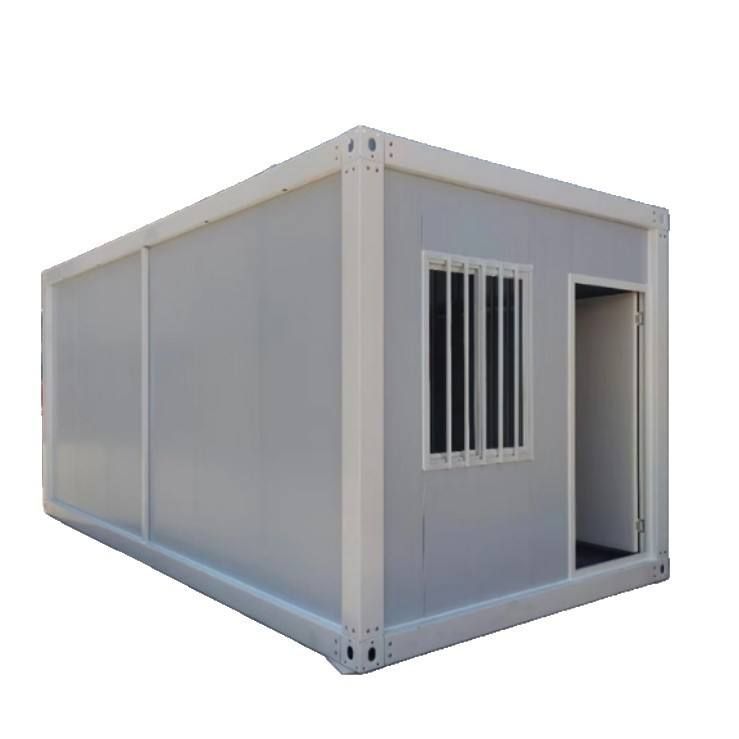
I. Structural Features and Mechanical Properties
The core structure of the box-type concrete prefabricated house is formed by the interconnection of the top plate, bottom plate, and side walls to create a hollow box, which is part of the prefabricated composite component system. The top and bottom plates, as prefabricated components, directly participate in the overall structural load-bearing and are connected to the post-poured concrete rib beams to form a net-beam floor. This design endows it with three major characteristics:
- Spatial Load-bearing Advantages: The hollow box creates a large-cavity honeycomb structure. The fourth-generation shed-mode composite panels, through structural optimization, eliminate the defects of easy deformation and cracking in traditional hollow thin-walled structures, enhancing overall stability.
- Enhanced Mechanical Properties: The top and bottom plates work in conjunction with the post-poured concrete to form a composite load-bearing system, with a compressive strength of up to 50 MPa and a roof load-bearing capacity of ≥51 kg/㎡, meeting building structural safety requirements.
- Breakthrough in Connection Technology: For example, the 2025 patent technology of Chengdu Construction Engineering Road & Bridge Construction Co., Ltd. significantly improves the shear transfer performance between components and enhances overall structural integrity through the matching of male and female connectors.
II. Commercial Applications and Product Characteristics
This technology has achieved large-scale application, with a typical case being the product launched by Hebei Zhongzhu Housing Technology Co., Ltd. Its core advantages include:
- Functional Diversity: It features moisture resistance, thermal insulation, and detachability, adapting to different climates and usage requirements. For example, the moisture-proof layer design effectively blocks underground moisture, thermal insulation materials reduce energy consumption, and modular design supports rapid disassembly and spatial reorganization.
- Economy and Durability: The unit price starts at 1100 yuan/㎡, with a service life of over 54 years, demonstrating significant long-term cost-effectiveness. The industrial production of prefabricated components reduces on-site construction errors and extends the building's lifespan.
- Scenario Adaptability: It is widely used in areas such as housing containers, homestays, and temporary buildings. Its standardized components and flexible combination methods enable rapid response to the fast construction needs of tourism, emergency response, and other scenarios.
III. Technological Iteration and Industry Impact
The technological development of the box-type concrete prefabricated house reflects the upgrade of prefabricated buildings from single components to system integration. The fourth-generation shed-mode composite panels eliminate defects through structural optimization, and Chengdu Construction Engineering's patent technology improves connection performance, both driving the industry towards efficiency, safety, and sustainability. Its commercial success also validates the comprehensive advantages of the prefabricated component system in cost control, quality assurance, and functional expansion, providing a replicable model for the popularization of prefabricated buildings.



