
Baotou Process Mobile Toilet
The core processes of the Baotou process mobile toilet cover four main aspects: excreta treatment, structural support, modular production, and detail optimization, as detailed below:
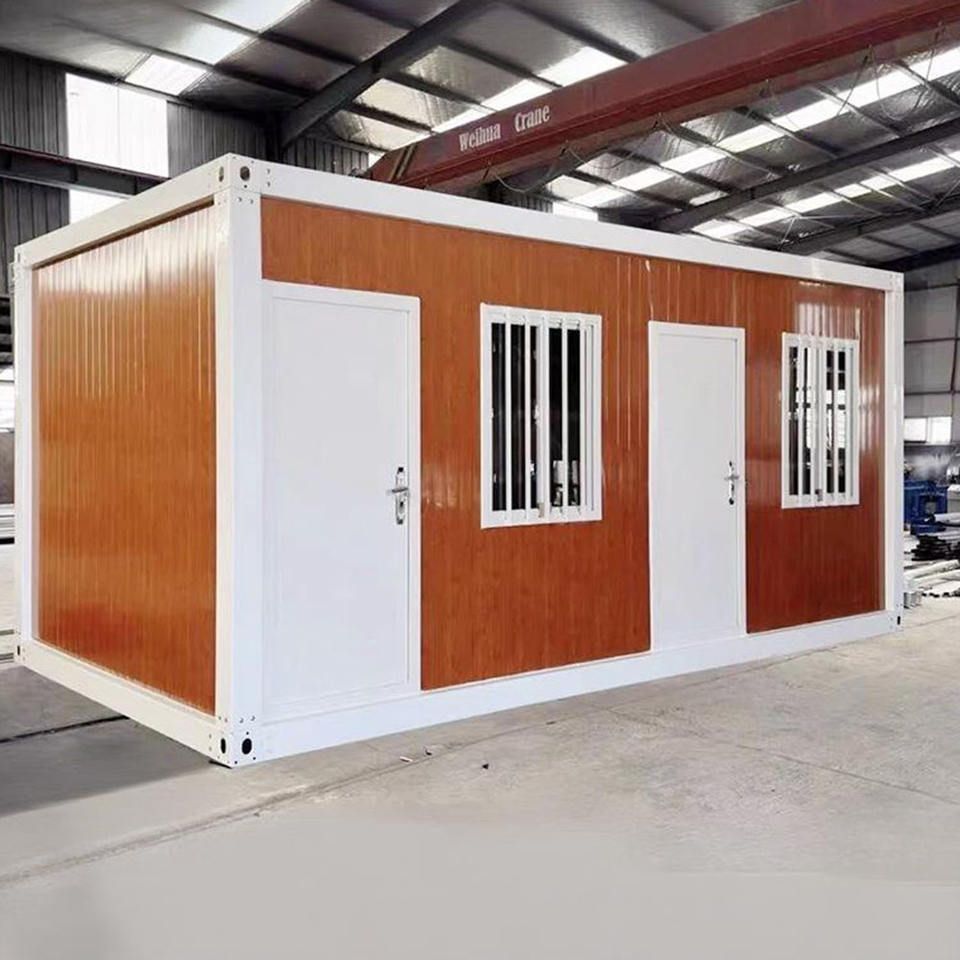
Excreta Treatment System: Three Technologies for Different Scenarios
- Flush System: Achieves independent circulation through integrated freshwater and wastewater tanks, using high-pressure pneumatic or electric water pumps to reduce single flush volume (saving over 50% of water compared to traditional toilets). The freshwater tank typically has a capacity of 200-500L, with the wastewater tank being 1.2-1.5 times larger, meeting the needs of 50-100 users. It is suitable for high-traffic public areas.
- Foam Sealing System: The core components are a foam generator and liquid level control system. Surface-active agent foam covers the toilet surface, providing lubrication, odor isolation, and water conservation. In winter, antifreeze is added or electric tracing is used to maintain foam liquid temperature, ensuring stable foaming at -20℃, commonly used in arid or cold regions.
- Microbial Degradation System: Thermophilic aerobic bacteria are cultivated in a bioreactor, decomposing excreta into water vapor, CO₂, and inorganic salts at 50-60℃, reducing residue volume by over 90%. The tank is equipped with a heating rod (approximately 500W power) and a stirring paddle (5-10rpm speed) to maintain bacterial activity, suitable for remote areas without water supply and drainage systems.
Structural Self-Supporting System: Balancing Lightweight and High Strength
Cold-formed steel frames (with main load-bearing members having a wall thickness of 2.5-4mm) are used, offering a 20%-30% increase in bending modulus compared to hot-rolled steel. Nodes are connected with M12-M16 high-strength bolts, avoiding material embrittlement caused by welding. External panels are selected based on usage scenarios: fiberglass-reinforced plastic (3-5mm thick) is corrosion-resistant but has weaker impact resistance, suitable for coastal areas; galvanized steel sheets (1.5-2mm thick) are strong but require regular anti-corrosion treatment, commonly used in inland arid regions. A 50mm-thick polyurethane insulation layer is filled between the frame and panels, with a thermal conductivity of ≤0.024W/(m·K), effectively blocking thermal bridges.
Modular Production Process: Standardization and Rapid Deployment
All components are prefabricated in the factory, with module dimensions strictly adhering to road transport limits (width ≤2.5m, length ≤6m, height ≤3.2m). Water and electrical pipelines use quick connectors (connection time ≤30 seconds). The on-site installation process is: foundation positioning → module lifting → bolt fixation → pipeline connection → system commissioning, requiring no welding or large machinery, with a 10-stall public toilet assembly completed within 4 hours.
Other Process Details: Enhancing Functionality and Safety
The ventilation system employs top exhaust (800-1200m³/h air volume) and bottom intake design, creating a negative pressure airflow field, combined with activated carbon filters (replacement cycle of 3-6 months) or UV photolysis units (254nm wavelength), achieving an odor removal rate of over 95%. Wind resistance measures include anchor bolt fixation (anti-overturning moment ≥50kN·m) or weighted bases (self-weight ≥2t), capable of withstanding wind forces up to Level 10.



