
Baoding Large Mobile Toilet Cost
The cost of large mobile toilets in Baoding varies significantly depending on the product type, configuration, and usage mode, falling into two main categories: purchase and rental, with price ranges spanning from several thousand yuan to several hundred thousand yuan.
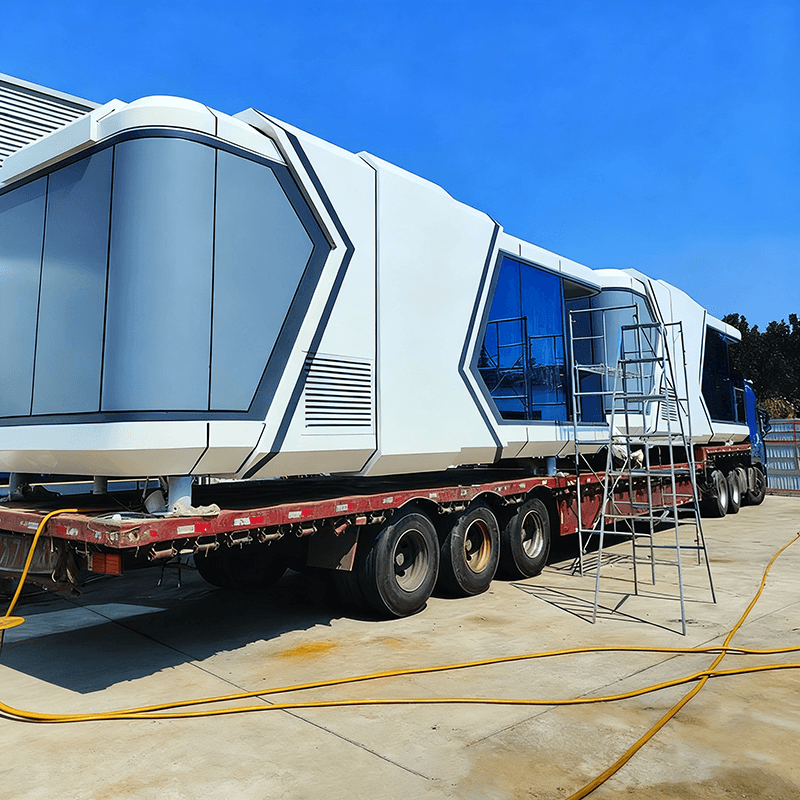
Purchase Cost: Significantly Influenced by Product Specifications and Features
The cost of purchasing a large mobile toilet primarily depends on its specifications, materials, and feature configurations. For example, the mobile environmental toilet (Model ht-055) produced by Cangzhou Hengtai Environmental Sanitation Equipment Co., Ltd., with dimensions of 1200×1500×3000 millimeters, uses basic environmental materials and is equipped with a simple sewage system, priced at starting from 7,500 yuan. Such products are suitable for temporary events or short-term usage scenarios, offering lower costs but relatively simpler features.
If higher configurations are required, such as the scenic area ecological tourism public toilet (Model sthb-15) produced by Baoding Shuangteng Environmental Protection Technology Co., Ltd., which adopts a modular design and integrates intelligent water-saving systems, air purification devices, and barrier-free facilities, the price starts at 125,000 yuan, with a minimum order quantity of 16 units. These products are mostly used in long-term fixed locations, such as scenic spots and parks, and although the unit price is higher, they offer advantages in durability and environmental protection.
Rental Cost: Graded by Usage Duration and Configuration
For short-term or temporary needs, renting mobile toilets is more economical. The rental price for basic models typically ranges from 100 to 200 yuan per day, suitable for ordinary events or construction sites; the price for high-end models (equipped with air conditioning, independent sinks, intelligent lighting, etc.) rises to 200 to 300 yuan per day. Rental fees usually include transportation, installation, and daily maintenance services, eliminating the need for users to bear equipment depreciation costs.
Core Factors Contributing to Cost Differences
- Feature Configuration: Intelligent systems, environmental technologies (such as microbial degradation), and human-centered designs (such as baby care rooms and barrier-free access) significantly increase costs.
- Materials and Craftsmanship: Durable materials like stainless steel and anti-corrosion wood, along with modular structures, increase manufacturing costs but extend service life.
- Usage Scenarios: Scenic spots and commercial areas, which have high aesthetic and functional requirements, tend to choose high-end customized products; temporary events prioritize cost-effectiveness.
Recommendation: Users should choose between purchasing and renting based on actual needs (such as usage duration, foot traffic, and feature requirements) and compare the configurations and quotes from multiple suppliers to optimize cost-effectiveness.



